

Still Dancing … Warhawks Advance to Sweet 16 for Fourth Consecutive Season

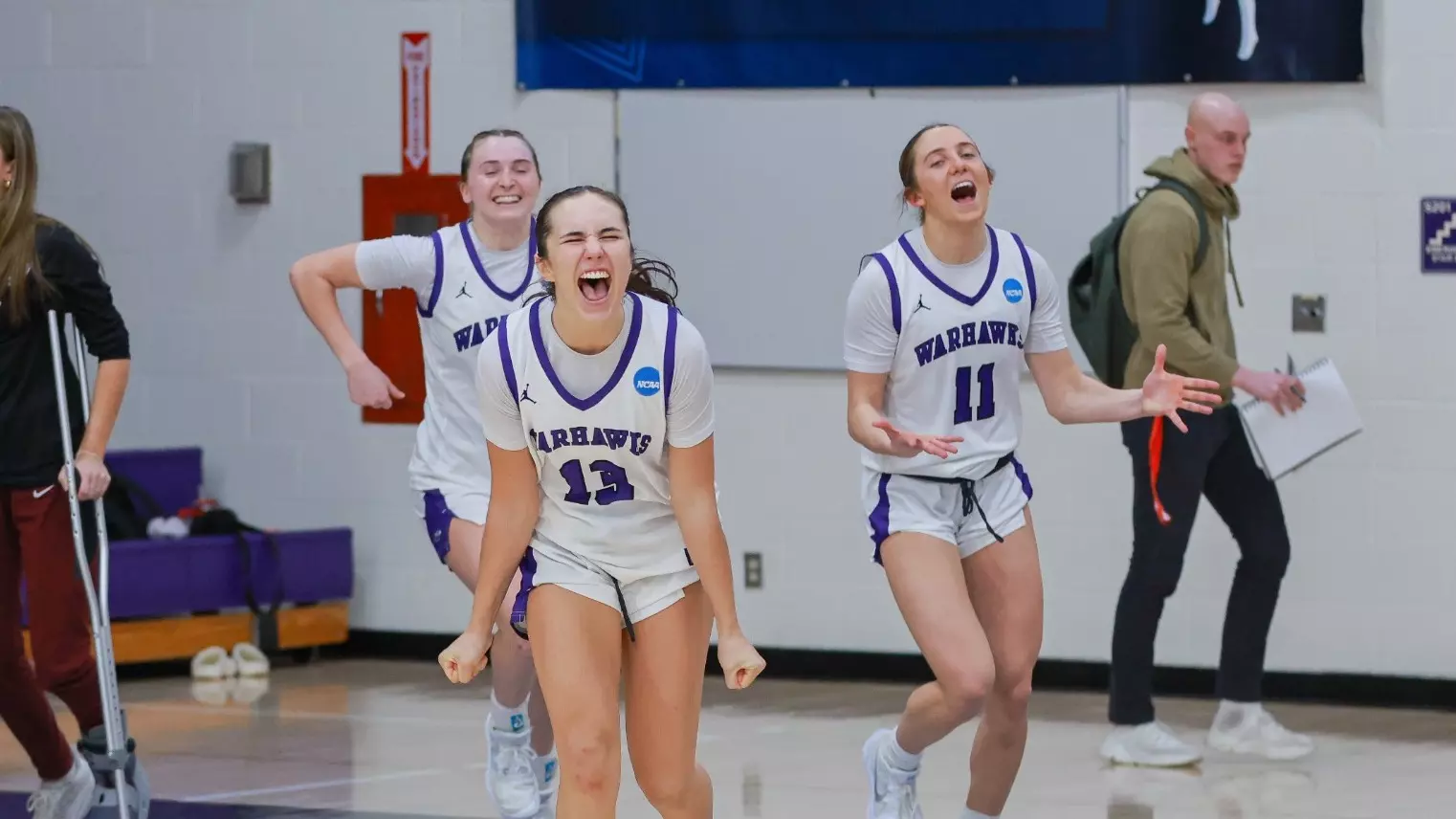
(Above photo courtesy of Olivia Zinanni: Kacie Carollo, Maggie Trautsch and Bri McCurdy celebrate after defeating UW-La Crosse in the second round of the NCAA Division III Tournament)

Still Dancing … Warhawks Advance to Sweet 16 for Fourth Consecutive Season


The UW-Whitewater women’s basketball team punched its ticket to the Sweet 16 for the fourth consecutive season with a thrilling 50-49 win over UW-La Crosse Saturday night in Kachel Gym. 

The Warhawks advance to face another familiar foe – UW-Stout. This time UWW will be on the road heading to Scranton, Pennsylvania for their Sweet 16 matchup. Tipoff against the Blue Devils is set for 4:30 PM Central on Friday, March 14. In the other game of the sectional, Johns Hopkins will take on the host university, Scranton at 7 PM. More information will be posted when available.

Saturday’s game was the epitome of a WIAC battle – fast pace, physical play and stifling defense from both squads. The first half score was indicative of the shutdown defenses as the teams went into the locker room tied 20-20. 

The second half was a continuation of the first, with ties and lead changes abounding. By the end of the third the Eagles had the upper hand by just one, 37-36. 

Bri McCurdy (St. Croix Falls, Wis./St. Croix Falls) turned phenomenal defense into offense early in the fourth. Poking the ball away from the Eagle guard just a second into the quarter, her steal led to a wide open layup for Mallory Oloffson (Normal, Ill./Normal Community) off a Katie Hildebrandt (McFarland, Wis./McFarland) assist to give UWW the lead, 38-37. Hildebrandt scored on the next possession with a layin for a three-point Warhawk advantage less than a minute in forcing a quick UWL timeout. 

On the other side of the break, the Eagles drained a three-pointer to knot the game, 40-40. Oloffson broke a two-minute scoring drought with a layup to hand the Warhawks the lead, 42-40, with just over six minutes to play. Two minutes later, Oloffson made one of two at the line to extend the lead to three with 4:19 to go. 

The Eagles registered their first points in nearly five minutes with a layup at the 3:15 mark to cut the gap to one. They hauled in a defensive board and knocked down a three for a quick five-point swing to reclaim the lead, 45-43, with 2:37 on the clock. 

Kacie Carollo (Whitewater, Wis./Whitewater) answered, driving hard to the basket for a layin to tie it up, 45-45 with two minutes left. Both teams got to the basket in the final two minutes trading layups. The Eagles took the lead – Whitewater countered to tie it up. UWL once again grabbed a two-point advantage and, once again, the Warhawks responded. Carollo found Hildebrandt down low for a layin on that final layup that tied it 49-49 with 33 seconds remaining. 

As the game came down to the wire, the atmosphere in Kachel was electric. UW-La Crosse called timeout after Hildebrandt’s layup to plan an offensive set. They opted for a three-pointer as the clock ticked down. As the shot went up, it had a chance but just found the front rim and Carollo elevated for the rebound. Head Coach Keri Carollo immediately called for a timeout to advance the ball. 

Inbounding from the near side, right by their home bench, the Warhawks looked for Carollo but the Eagles had her tightly guarded. Instead, Hildebrandt took the inbounds pass, immediately drove to the rim and was fouled on the shot. The senior forward hit the first free throw to give the Warhawks a 50-49 lead with 2.3 on the clock. Her second shot hit the back rim, bounced near the top of the backboard and was tipped around before landing out of bounds as the final horn sounded. The officials signaled for replay to check both time and possession. 

After the review, the officials put 0.3 seconds on the clock and the call on possession stood – the Eagles had the ball. UWL called timeout to advance the ball, choosing to inbound from near their bench. 

The inbounds pass was a lob near the basket, but Carollo jumped in front and swatted the ball away as the horn sounded and Kachel erupted. 

Rebounding has been a huge piece of the Warhawks’ philosophy this season and it paid off Saturday. UW-Whitewater held a 41-28 advantage on the glass and allowed just a single offensive rebound for UWL. The Warhawks hauled in 14 offensive boards scoring 15 second chance points in the contest. 

Hildebrandt led the way with 14 points. Carollo set another career record Saturday in a fitting way – hitting her number, twice, for a double-double. Wearing jersey number 13, Carollo scored 13 and pulled down 13 rebounds to break the program record for career double-doubles with 29. Oloffson also posted double digits in the scoring column with 11 on 5-6 from the floor. 

Local Student Named to University of Minnesota Twin Cities Dean’s List

The following student has been named to the 2024 fall semester Dean’s List at the University of Minnesota Twin Cities, the university announced.

To qualify for the Dean’s List, a student must complete 12 or more letter-graded credits while attaining a 3.66 grade point average.

Whitewater, WI

 Aidyn Amundson, Freshman, Carlson School of Management

Walworth Ave. Utility Work a Sign of Road Construction to Come

By Lynn Binnie
Whitewater Banner volunteer staff
whitewaterbanner@gmail.com

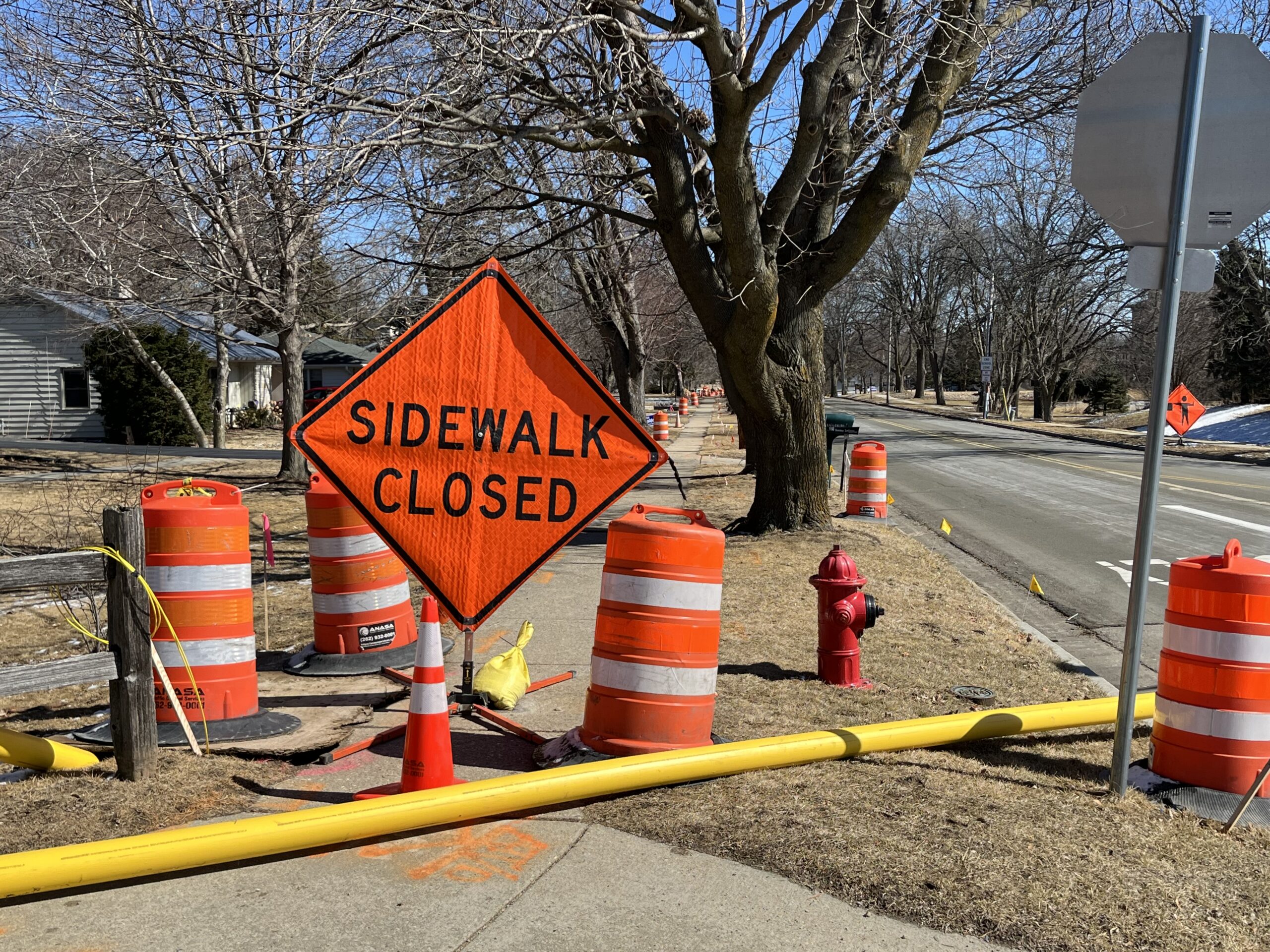
A major road reconstruction project will be taking place on Walworth Avenue this summer, and the installation of a new gas line that’s currently underway by We Energies is a forerunner. Public Works Director Brad Marquardt told The Banner that the Wisconsin Department of Transportation, which is managing the road construction, gave the utilities in the area a heads-up encouraging them to perform any needed upgrades beforehand.

Marquardt indicated that the construction on a short road segment west of Highway 12 is scheduled to begin in late May. After the school district’s summer break begins, the construction will proceed east from Highway 12 to Janesville Street.

Normally road construction in the city is its own responsibility. The Walworth Avenue project, however, was selected to be included in the funding provided to the state under the federal Infrastructure Investment and Jobs Act. Consequently, the state will be responsible for 80% of the cost, leaving the city with only 20%.

Of course, the road construction will necessitate a “local traffic only” order for an extended period of time. Regular users of the street have probably felt for a long time that the road needed help.

.

Spring Forward – Daylight Savings Time begins Sunday @ 2 a.m.

Remember to “spring forward” this Sunday morning. Once again in the past year there have been calls for eliminating daylight savings time. Polling shows that a majority of Americans detest the practice: 62% would prefer to end it, according to a March, 2023 poll by YouGov, but respondents were divided between those (50%) who would like to have permanent daylight time (DST) and those (31%) preferring permanent standard time. 

What’s the status of that Senate bill to end time changes? (From NPR)

In March 2022, the Senate passed the Sunshine Protection Act. The intent behind the bill was to make daylight saving time permanent starting in the spring of 2023.

And at first, it looked as though it might become a reality. The Senate passed the bill through an expedited process and with unanimous consent — legislative rarities in this day and age.

But the bill wasn’t taken up in the House. Members cited higher priorities, like a budget deficit and the war in Ukraine, but there was also a growing chorus of criticism about the bill’s approach.

Every year since 2022, including 2025, the Sunshine Protection Act has been reintroduced. To be enacted it would have to pass both houses and be signed by the President.

So for now, the tradition remains intact.

The site called savestandardtime.com promotes making standard time permanent. It states, “Permanent Standard Time is the hon­est, nat­u­ral clock, set to the sun. Day­light Sav­ing Time is a false clock, designed to wake us an hour ear­lier than Stand­ard Time eve­ry day. Da­ta and his­to­ry show per­ma­nent Stand­ard Time is best for health, mood, safe­ty, ed­u­ca­tion, pro­duc­tiv­i­ty, wages, en­vi­ron­ment, and civ­il lib­er­ties. Ditch DST! Save Stand­ard Time!“

******************************************************************

As Daylight Savings begins, it is a perfect time to “spring ahead to safety” and tackle a few critical emergency preparedness updates for the coming spring season.

  • Smoke Detectors and Carbon Monoxide Detectors: All residences are required to have both types of detectors on every level, including the basement, but not the attic or storage areas. Now is a good time to replace the batteries in your detectors and push the test buttons to be sure they’re working properly. Replace your detectors every five years.
  • Emergency Go Bags: Be sure to have a basic emergency kit in your home with supplies, food and water to last you and your family for at least three days. Other items like a battery powered radio, flashlights, additional batteries, and first aid kit should also be included. For more information, please visit https://www.ready.gov/build-a-kit
  • Emergency NOAA Weather Radio: Spring brings the threat of tornadoes. Make sure you have an emergency weather radio. It’s like having a tornado siren in your home. When it goes off, go to a safe place. Remember, the outdoor warning sirens are only intended for people to hear outdoors.
  • National Weather Service Wireless Emergency Alerts: Wireless Emergency Alerts are emergency messages sent by authorized government alerting authorities through your mobile carrier. Government partners include local and state public safety agencies, FEMA, the FCC, the Department of Homeland Security, and the National Weather Service. No signup is required. Alerts are sent automatically to WEA-capable phones during an emergency. For more information, please visit https://www.weather.gov/wrn/wea

Seniors in the Park Presents “A Real Pain”

Two more Oscar nominees!

“A Real Pain”

Tuesday, March 11, 1 pm

(Comedy/Drama) Rated R (language); 1 hour, 30 minutes (2024)

On a Seniors tour to Poland to honor their grandmother, two mismatched cousins reunite, but their travel leads to misadventures for this familial “Odd Couple.” Golden Globe for Best Supporting Actor, Kieran Culkin; Oscar nominations for Culkin and Jesse Eisenberg (Best Original Screenplay). A fun and touching film. 

Seniors in the Park is located in Starin Park, 504 W. Starin Road. Although there is no charge to attend, regular participants are encouraged to join Seniors in the Park. The annual fee for residents of the Whitewater Unified School District is $10 and non-residents is $15. The funds support about half of the cost of our front desk staff person for 15 hours per week. The rest comes our of our fundraising monies. If you cannot afford the fee, we have a fund that will cover it for you. Fees are accepted at the Starin Park Community Building or online at https://schedulesplus.com/wwtr/kiosk/

Captimes.com: Whitewater an example of how immigrants don’t increase crime

site-logo

 Opinion | Whitewater shows how moral panic distorts immigrant debate

  • By Julien Grayer, Michael Friedson and Tabitha Whitehead | guest column Julien Grayer and Michael Friedson are assistant professors of sociology and criminology at UW-Whitewater. Tabitha Whitehead is an undergraduate research assistant at UW-Whitewater. 
  • Feb 27, 2025
Mackenzie Britton 042123 07-04242023100626 (copy) (copy)
In this 2023 photo, a student walks on the UW-Whitewater campus. RUTHIE HAUGE

“Whitewater has been a focal point in our country’s ongoing politicized hysteria concerning immigration. This town of approximately 15,600 has seen a recent influx of migrants from Nicaragua and elsewhere in Latin America. This influx has captured the attention of the national media, starting with coverage of a letter in December 2023 addressed to the White House from municipal police chief Daniel Meyer.

The rhetoric of prominent politicians has framed Whitewater as a site of a social crisis stemming from crime in the immigrant community. We are given pause about this rhetoric by past research on immigration and crime.

We reviewed decades of academic articles and did not find evidence linking increases in a place’s immigrant population to greater levels of serious criminal offending. We discovered instead an abundance of findings to the contrary, indicating that greater immigration is associated with lower offending rates.

Immigrants have a 60% lower chance of being incarcerated than those born in the US, according to a recent study by Stanford University economist, Ran Abramitzky and colleagues. In Texas, arrests for violent crimes are more than twice as common among U.S.-born individuals than among undocumented immigrants, claims research sponsored by the National Institutes of Justice.

The concentration of the immigrant population may have spillover effects making a place as a whole safer. Studies have repeatedly found that crime tends to go down when immigrants move into a previously distressed city neighborhood. Immigrants often come to an area with an eagerness to start small businesses, improve their skills and attain upward social mobility, thereby enhancing demand for properties, property value and the local tax base. All of this is a formula for urban revitalization and safer streets.

In Whitewater, we have recently witnessed a burgeoning number of small businesses, many catering to the international migrant population, and a concomitant increase in local property values.

As sociologists and criminologists, we are also familiar with how crime is portrayed in media and public discourse and how these portrayals fuel fear in the popular imagination. In Whitewater, we have observed what our field calls a moral panic, or the framing of a minor or nonexistent problem that sensationalizes it into a societal crisis. A moral panic draws its power from real public anxieties about complex issues like cultural change, inflation or declines in sectors of the economy. It displaces those anxieties by blaming easily identifiable and unpopular scapegoats who lack power to resist their demonization.

Immigrant groups have been a common target for these social problem campaigns through much of U.S. history. In Whitewater, Aurora, Colorado, Springfield, Ohio, and elsewhere we have recently observed similar processes of scapegoating these groups for allegedly being a drain on public resources and for committing a litany of violent crimes. The isolated crimes that are committed by members of the groups are sensationalized and taken to represent the behavior of the groups as a whole. Latinos, being overrepresented among immigrants, are especially hard hit currently by the resulting stigmas.

As a moral panic progresses, the anxieties at its origin are amplified or, some might say, blown out of proportion. For instance, in crime-related panics like that which has transpired in Whitewater, it is typically assumed that crime and public endangerment are rising, even when this is contrary to available evidence. Official crime statistics, provided by the FBI, do not support claims of an upward trend over the past several years in Whitewater’s crime rates. We will focus here primarily on a selection of the so-called “index crimes,” which are a set of serious street crimes designated by the FBI.

Homicide, the most severe of crimes, remains extremely rare in Whitewater. The tragic killing in August of a university coed was Whitewater’s first known homicide since 2016. Four robberies (i.e., thefts by force) were reported in 2023, one more than in 2021 or 2022, but a number that was matched or exceeded in each of the five years from 2013 to 2017.

Of greater concern, regarding violent crime in Whitewater, are the 31 aggravated assaults recorded in 2020. This is more than double the average number of assaults taking place annually in the prior decade and is the highest number recorded in Whitewater during the past 40 years. But it predated — and thus was not caused by — the immigrant influx, which started in 2022.

Aggravated assault numbers have fallen rapidly since, with 18 being recorded in 2023. This translates to a 2023 aggravated assault rate (i.e., assaults per 10,000 residents) roughly consistent with Whitewater’s longer-term average.

Recent property crime figures similarly do not raise cause for concern about a crime surge in Whitewater. The number of burglaries in 2023, though greater than in either of the prior two years, were less than half the annual numbers reported a decade earlier. Auto theft remained rare in Whitewater in 2023, with just five reported for the year, half the number of cars reported stolen in 2016 or 2018. Just 120 thefts (of items other than motor vehicles) were reported in 2023, while it was typical for 200 or more thefts to be recorded annually in the early 2010s. Note that these counts include only property crimes reported to the city police, and reports to campus police are typically small in number.

An influx of immigrants, such as that experienced by Whitewater, inevitably creates possibilities and challenges. An increase in serious street crime is not one of these challenges in Whitewater. To address Whitewater’s actual challenges in a practical and proactive fashion, scarce public resources should not be wasted on imagined problems.

Saddling immigrants with the stigma of perceived criminality will make it harder for them to earn a living and otherwise adjust to their new environment. Greater difficulties in adjusting create real costs for the public and police.”

Julien Grayer and Michael Friedson are assistant professors of sociology and criminology at UW-Whitewater. Tabitha Whitehead is an undergraduate research assistant at UW-Whitewater. The Banner appreciates having the authors’ permission to republish this article.

Editor’s note: The Banner reached out to Police Chief Dan Meyer with the offer to comment on this article. We appreciate his response, which follows unedited.

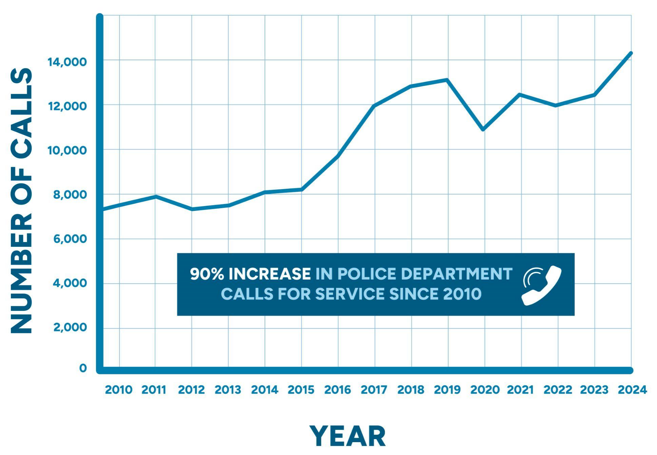
“While index crimes are an important consideration when determining the safety of a community, noting solely those statistics does not paint a holistic picture. Here in Whitewater, only 3% of our calls for service ultimately result in a incident that will be tallied by the FBI as an index crime. The larger impact for our community has been the increase in overall call volume, up 90% from 2010 to 2024, with no increase in staffing during that time. That has significantly decreased our ability to proactively police. As our staff becomes increasingly reactive, we become less capable of preventing crime, and it becomes more challenging to form the types of positive relationships necessary for a highly functioning police department. Police presence or lack thereof, more than anything else, is what determines the relative feeling of safety in a community.”

Editor’s note: Per the following graph, which was provided by the police department, their calls for service were increasing significantly before the surge of immigrants into the city. It is noteworthy that the COVID-19 pandemic began in the United States in 2020. Studies indicate that crime declined that year nationally overall, with the notable exception of violent crime, especially homicides. UW-Whitewater student local residency was also reduced. Our significant increase in immigration is generally believed to have begun in late 2021 to early 2022.

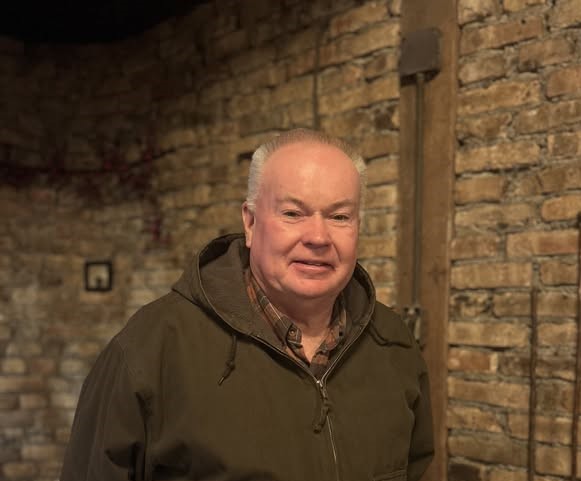
Introduction: School Board Candidate Wayne Redenius


Hello, I am Wayne Redenius, a 5th generation Richmond resident, retired teacher, and partner of a owned and operated farm with my brother Carl. I am a 1978 graduate of WHS. During my high school years I was very active in the FFA organization participating in various activities and judging teams that competed at the state and national levels. Those activities provided me with numerous opportunities to travel nationally and develop leadership skills that I am extremely grateful for. My education continued at UW Platteville receiving a BS degree in Agriculture Education in 1982 and I also had the opportunity to serve as a graduate assistant there and earn a MS degree in 1983.

A teaching career began in the Agribusiness Department at Janesville Craig HS. While there I assisted two other department members in leveraging DPI approval of Ag. courses to meet the general Science requirement, wrote curriculum and restructured classes to a semester framework. That model and adaptations of the curriculum are still being used in many Ag. departments.

I enrolled in UW Whitewater Special Education courses in 1989, was hired by CESA 2, and subsequently became DPI certified in multiple areas of Special Ed and also Alternative Ed. For the next 27 years I instructed elementary and secondary students from a wide array of social, economic, and ethnic backgrounds; first at Rock County Adolescent Day Services and then at the Rock County Juvenile Detention Center. That position enabled me to work directly with Social Services, Juvenile Probation, Juvenile Corrections and numerous school districts in southeast Wisconsin. My teaching career ended after 32 total years of educational service.

During the years from 1999-2013 I also served as the Town of Richmond Chairman. Some of my duties included: oversight of daily operations, development of the town budget with the clerk, and collaboration with neighboring towns and Walworth County on land planning/zoning, fire, rescue, and other services. I am especially proud of the town board’s fiscal responsibility during those years. We were constantly planning for the future and never operated over the approved taxpayer budget and had zero debt.

I have attended various Whitewater School Board committee meetings and nearly all of the regular board meetings for the past two and a half years; listening and learning how the board and district operates as well as listening to issues and concerns of the residents. Communication, accountability, student achievement, transparency, fiscal responsibility, and the desire for a greater opportunity for community engagement are items that people want addressed, and which I would work towards.

Residents want to feel the district respects them. They want their and board member’s
issues/ concerns heard, discussed, and answered at open board meetings. Each board
member should feel equally important. The reason(s) why large numbers of parents are enrolling their children in neighboring schools needs to be openly discussed and corrective actions taken. This also holds true to the above average number of administrators, teachers, and support personnel leaving the district.

Curriculum and student achievement needs constant attention and evaluation. The district needs to use its limited resources in a responsible manner to improve not only academic results but better prepare students with adult life skills. This also entails balancing services and opportunities to students at all ability levels and areas of interest ranging from academics to vocational technical. We need to explore what is making neighboring districts successful and collaborate more extensively with UW Whitewater and the local Technical Colleges.

Fiscal responsibility is another area I would like to address. While past board spending cannot be revisited, residents are asking for greater involvement of the board members in development of the budget, planning for future capital improvements and maintenance, and to better communicate how and where their local school tax payments and the State and Federal aid payments the district receives are being spent. Why has the district’s Citizen Financial Advisory Committee been inactive and only met one time over the past five years? The current school facility referendum, city referendum, impact of potential housing developments, and
recent and future property reassessments in the Townships are all weighing heavily upon the community members.

I believe there is a wealth of talent, expertise, and willingness in the community to become more involved and supportive of the school system. We must all work together to restore the district to a level of educational excellence and athletic competitiveness which the community can be proud of. My work ethic, knowledge and experience in education, local government, and business ownership well qualify me to assist in this process. Please vote, Wayne Redenius, Whitewater School Board.

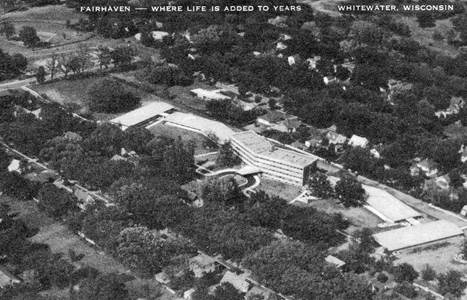
#FlashbackFriday with the Historical Society: Fairhaven c. 1962

It’s time once again for #FlashbackFriday with the Whitewater Historical Society. This month we will celebrate a Whitewater institution–Fairhaven. Our first image is an aerial view of the Fairhaven complex when it was first built in 1962. The concept of an old age home that provided independent living grew after World War II. As early as the late 1940s, the Congregational Church Conference in Wisconsin began talking about building such a home. In February of 1960, the conference announced they would build an old age complex, known as Fairhaven, in Whitewater. Preliminary planning began in 1960-61 and formal construction began in 1962. In November, the first residents moved into the complex, which consisted of four one-story buildings and one four-story building.

Join us next week for more history of Fairhaven from the Whitewater Historical Society.

(2128PC, Whitewater Historical Society)

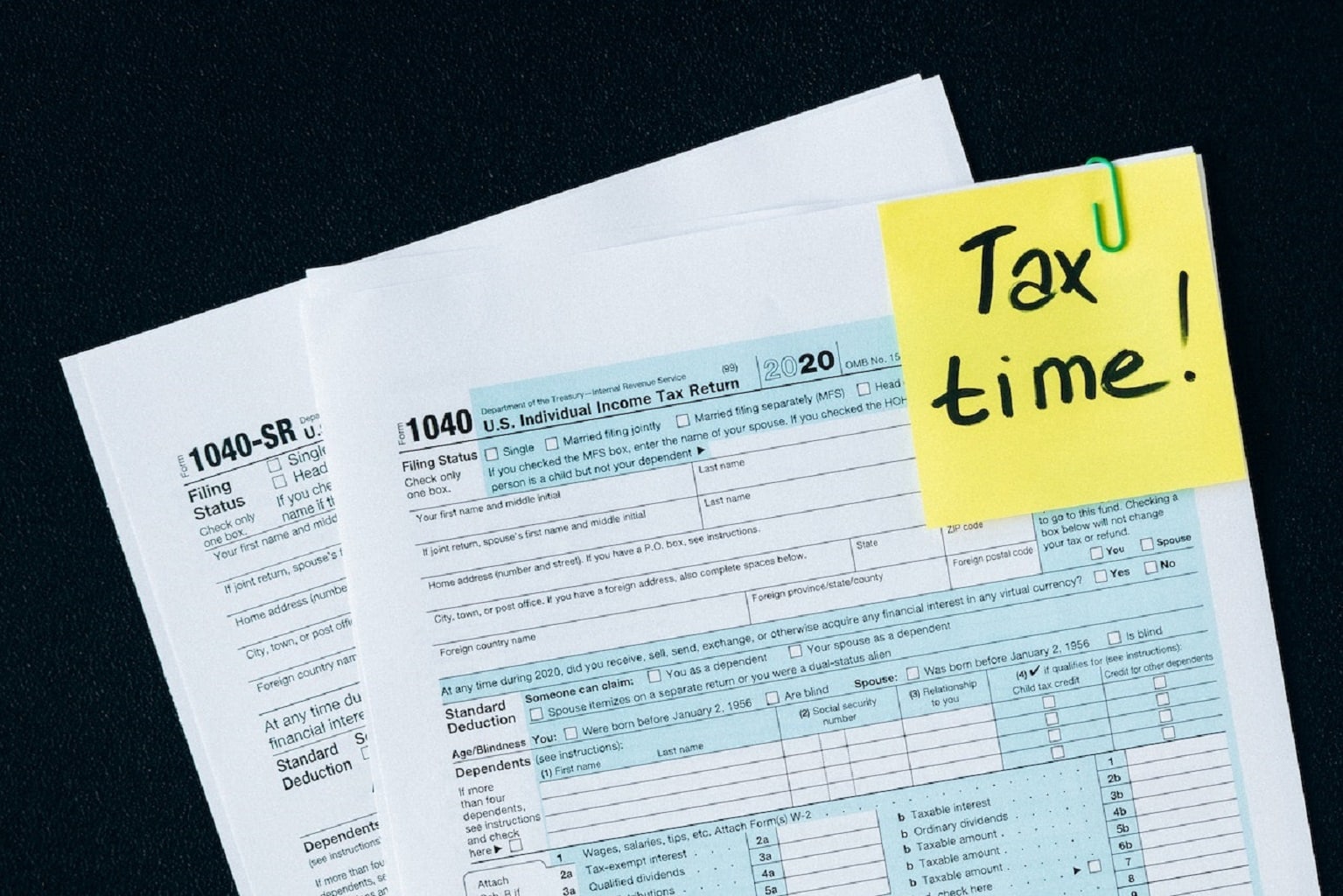
Volunteer Income Tax Assistance / Free D-I-Y Online Program Also Introduced

The Volunteer Income Tax Assistance (VITA) program that has previously been provided by accounting students from UW-Whitewater is not available this year. They indicate that it might resume next year.

The only nearby volunteer service that still has appointments available is offered through AARP Foundation Tax-Aide, which provides tax assistance to anyone, free of charge, with a focus on taxpayers who are over 50 and have low to moderate income. You don’t need to be an AARP member to use the service.  The closest location is at Elkhorn Matheson Memorial Library, 101 N. Wisconsin St. in Elkhorn. The service is also available at the Delavan public library. Appointments are required and may be made on Mondays and Tuesdays between 10 a.m. and 3 p.m. Call 262-723-2678 to make an appointment.

This site provides a list of documents that should be brought to an appointment.

***************************************************************

Do-It-Yourself (D-I-Y)

New free federal/state online program is available for those wishing to complete their own returns

Gov. Evers, DOR Announce Start of Tax Season, Encourage Wisconsinites to Use New Direct File Services
Wisconsin taxpayers can file their taxes online directly for free with WisTax and new Direct File programs
Gov. Tony Evers, together with the Wisconsin Department of Revenue (DOR), announced that the individual income tax filing season began on Mon., Jan. 27, 2025, and encouraged Wisconsin taxpayers to use the state’s WisTax and new federal Direct File services to file their state and federal income taxes online for free. 

“We’re working to make sure filing your taxes is as easy and as accessible as possible, and through these programs, we’re giving hardworking folks the option to file securely, easily, and directly—hopefully saving folks time and money and giving them some peace of mind,” said Gov. Evers. “This year, we’re also thrilled to be providing nearly $73 million in annual tax relief to over 110,000 Wisconsin taxpayers thanks to our new expanded child care tax credit. So, don’t wait, Wisconsin! Check out our new direct file program and file your taxes securely and directly this tax season.”

Last August, Gov. Evers, along with U.S. Sen. Tammy Baldwin (D-Wisconsin) and DOR, announced that Wisconsin would join the Internal Revenue Service (IRS) Direct File program for filing season 2025, enabling eligible Wisconsin taxpayers to file their taxes online directly with the IRS for free. According to the U.S. Department of Treasury, the average taxpayer spends approximately 13 hours and $270 to prepare their taxes each year. Direct File simplifies that process, saving taxpayers time and money.

Additionally, when Wisconsin families file their taxes this year, they will see additional tax relief thanks to legislation signed by Gov. Evers last March to expand the current child and dependent care tax credit from 50 percent to 100 percent of the federal credit. This will help reduce the tax burden for families struggling to afford the high cost of child care and care for adult dependents. Over 110,000 Wisconsin taxpayers will see an average benefit of over $656 per filer, totaling nearly $73 million in annual tax relief. Wisconsinites can check to see if they qualify for the expanded Wisconsin child and dependent care tax credit here.

The Direct File program was made possible by the Biden-Harris Administration through the Inflation Reduction Act, a landmark piece of legislation that was passed by Democrats in 2022, including Sen. Baldwin, who championed the Inflation Reduction Act and has been a staunch advocate for launching Wisconsin’s Direct File program to give taxpayers a no cost filing option for their federal taxes. Launched as a pilot program in a dozen states in 2024, Direct File users claimed more than $90 million in refunds and saved an estimated $5.6 million in tax preparation fees. The platform’s success and positive feedback encouraged the IRS to move forward with a rollout nationwide for the 2025 tax filing season.

Direct File utilizes robust security measures to protect taxpayer information. Key security features include:
Secure Data Transmission: Tax information is transmitted securely to the IRS using SSL 3.0 128-bit encryption. This creates as many combinations as the number of water molecules in 2.7 million Olympic-size swimming pools;
Identity Verification: The program employs rigorous identify verification procedures to ensure the authenticity of filers. Direct File uses ID.me to help prevent identity theft and to protect taxpayer data; and Ongoing Security Monitoring: The IRS continuously monitors the system for any potential security threats. “We understand that tax information security is paramount,” said DOR Secretary David Casey. “The IRS has implemented strong safeguards to protect sensitive information throughout the Direct File process.”

Eligible taxpayers can file using a smartphone, laptop, tablet, or desktop computer. For eligibility requirements and additional information, visit directfile.irs.gov and revenue.wi.gov. After completing their federal returns in Direct File, Wisconsin taxpayers will be taken to WisTax to complete their state taxes quickly and easily for free. WisTax offers a modern web-based experience that is intuitive, easy to use, and mobile-friendly. This free platform was created to simplify the tax filing process for Wisconsinites and eliminate burdensome costs. Should taxpayers encounter problems while filing, a knowledgeable DOR customer service representative will be available to answer questions and help troubleshoot the issue.

In addition to the Direct File and WisTax, Wisconsinites have other options for filing their taxes, including:
Tax Filing Software: Numerous software options are available, ranging from basic to advanced, offering varying levels of guidance and support;
Tax Preparer: Enlisting the help of a qualified tax professional can be beneficial for those with complex tax situations or who prefer personalized assistance; and Volunteer Income Tax Assistance (VITA): Free tax preparation assistance is available to eligible taxpayers through the VITA program, which is offered by community organizations and IRS-certified volunteers. To locate a site near you, use the VITA/TCE Locator Tool or the AARP Site Locator Tool. 

DOR’s Where’s My Refund tool is the quickest way for Wisconsinites to check their refund status, as it gives taxpayers instant access to the same information call center agents provide.

To further assist taxpayers during this busy time, DOR’s Customer Service Call Center is extending hours in the weeks leading up to the filing deadline. Tax specialists will be available from 7:45 a.m. to 5 p.m. from April 1 to 3, April 7 to 10, and April 14 to 15 to accommodate taxpayers’ schedules.

Individual tax filers are encouraged to visit the DOR website’s “Individuals” page, where they can find answers to common questions, forms and instructions, tax credit information, payment options, instructional videos, and other resources.