The Whitewater Kiwanis Breakfast Club is sponsoring a writing project during this spring’s home-based schooling. It is designed for current Whitewater 8th grade students only, and consists of two parts, complete either or both: 1] A short story of 500 words or less on any subject and 2] An essay on the person influencing me the most, also up to 350 words. Both can be sent via an e-mail attachment and each will be read and evaluated by at least three Kiwanians. Do not identify a person in the body of the work; use a pseudonym. Your work will be read without your identification to eliminate bias. Include your name, address and phone number. Readers will be evaluating content, originality and a completeness of thought.
Submit by May 29; reading to be done by June 19 with awards made the week of June 22, 2020. Awards are: First place $50.00, second place $20.00, third place a Kiwanis certificate.
For any questions call 262-473-6710. Send your e-mail and attachment[s] to ajnuhous@gmail.com
On May 1st, 2020, the Whitewater Arts Alliance launched a virtual exhibition on the WAA website of work created by members of the Madison Watercolor Society (MWS). This virtual exhibition will be on display through May 31st, 2020. The show will be made available here: https://www.whitewaterarts.org/madison-watercolor-society-virtual-exhibition
A quote from MWS President, Elizabeth Sawyer Kelly: “Founded in 1983, the Madison Watercolor Society (MWS) promotes an interest in watercolor painting as well as the promotion of watercolor painting as a unique and lasting form of artistic expression. MWS provides a supportive environment that encourages the development and enhancement of each member’s technical skill and creative journey. Activities of MWS include monthly member critiques, networking and information sharing, workshops led by nationally recognized artists and regular group exhibitions. MWS’s dynamic strength is evidenced by the rich diversity of visual voices represented by the membership.
Membership in the MWS is obtained through a jurying process: prospective members must attend a minimum of three meetings prior to applying for membership and then, once the application is received, the prospective member must present a sample of their work to the jurying committee that makes the final membership decision. For more information about MWS and the art its members create, please visit our website at http://madisonwatercolorsociety.org/members.htm.
The May 2020 Whitewater Arts Alliance Virtual Show represents MWS’s first virtual show. We are excited to provide art to our community, as well as a wider community, through these virtual images. At this time when so many of our normal day-to-day activities have been disrupted by COVID-19 we are glad that we can provide these images as both “balm” and distraction. There is no question that the arts community and artists have been impacted by the coronavirus: we cannot gather for meetings; we cannot have Gallery Nights; we cannot market our art in our regular, normal way; and we know that it is a new challenge to make it possible for others to see what it is we do. But, in the midst of these challenges and hardships, there are also possibilities for growth and development: finding out how to reach a broader community that may find art is restorative, art brings peace, and art heals is a potential benefit to the trials we all face; learning and using technology new to us may well expand our abilities in all sorts of previously unrealized and unexpected ways; thinking of new ways to support our arts community and recognizing what our arts community does for the human soul may well be a hidden outcome to these dark and troubling days; and, finally, making new friends through the medium of technology will enrich our lives. MWS is grateful for the Whitewater Arts Alliance support of the arts and their committed support to make it possible for MWS to show their work in the midst of a pandemic. Thank you.”
Big thanks to our sponsor, First Citizens State Bank!
The mission of the Whitewater Arts Alliance is to promote the visual and performing arts through an alliance of artists, individuals, educational resources, and organizations to promote creativity and diversity that will serve to educate and enrich the lives of the residents of the Whitewater community and surrounding areas.
Searching for a Kind Heart in Times Like This by Kathy Ross
I am reading Walking Home from Mongolia, an account of two men’s walk from Mongolia to Hong Kong. Early in the book, its author, Rob Lilwall, reflects on how he hopes to manage the challenges of their walk. He sets his intention for the journey this way. If “… I found myself in the thick of hard times, and I let my heart become embittered and turned to stone, that really would be a big failure.” He goes on to say that he prays for “a kind heart” as they begin this three thousand mile journey in the dead of winter.
Although that adventure is very different from our current circumstance, the notion of how I come out of this, “kind heart” or not, has made me think about this unique time.
My heart is lightened by my Whitewater family’s attention – errand runs without my asking and frequent contact. (I do, however, join, other grandparents who agree that no electronic communication replaces a hug!) As a Prairie Village resident, I am grateful for front yard conversations, a neighborhood walk, and plenty of walking trails. I am equally as grateful for the generosity of Fairhaven for a front-door delivered Easter lunch, grocery delivery, and electronically-enabled Sunday Night Vespers. I appreciate our Whitewater library being available by phone during this time – and soon open for hold pick-ups. Throughout all of this, the library’s Little Free Food Pantry has been available for donations or for those in need. (Have you noticed the library has added Hoopla, a free streaming service?). I know that our School District, teachers, and staff are working in amazing ways to support students.
My regular walks are more frequent and longer these days. Starin Park’s closing was one of the first things that made this very real. The elementary schools’ play grounds just aren’t “right” without kids. Walking around campus and seeing almost nobody is reasonable during the summer, but not in April. There certainly have been times when I could walk right down the middle of Main Street and not see a single moving car. Empty churches on Sunday mornings –who would have ever thought? And cheap gas – I’ve no idea when I’ll ever need any again, but it’s interesting to consider the cost of a fill-up. Special thanks, fellow Whitewater walkers, for safe distancing and saying hello.
I have a sister in a long term care facility in North Carolina who calls regularly to say she’s on lockdown, and she’s worried about all the news. Just as regularly, I remind her that she’s not the only one whose movement is currently restricted and encourage her to stop watching the news. I have a friend in North Carolina who’s scheduled a haircut since some places of business are reopened there. I asked her to see if the hairdresser would come to her for “a carport cut.” Am I being kind enough to them? They are adults; they can make their own decisions. They really don’t need my input. These are situations that make me consider what a “kind heart” really means.
I will continue to ponder and pray for a kind heart. There are many possibilities where it’s easy to be kind – contributing to programs that are helping those in need, calling or writing (yes, the joy of snail mail) friends. Then there are those times when I feel “water boarded” by the news (mind you, that’s the news I tell my sister not to watch!) or am concerned whether others are making smart decisions. I lapse into “what if’s,” and wonder what my family, friends and I’ll do in the “new normal.” Hopefully, I’ll join the author of my book and emerge from this without letting “my heart become embittered and turned to stone.” But I know I have work to do.
— Our thanks to Kathy Ross for sharing her thoughtful reflections.
— Our Readers Share: We hope that you might have something that you’d be willing to share. Anything that’s been created by someone else should, of course, be credited, and you should ask their permission if you’re able. We cannot post copyrighted material without permission. We can’t guarantee that we’ll have space for all submissions, and contributions will be subject to editorial board approval. The one definite exclusion is anything politically oriented. We will assume that you’re willing for us to include your name as the submitter unless you indicate that you prefer to remain anonymous. Send to whitewaterbanner@gmail.com or click on “submit a story” near the top right of our homepage. Thanks for thinking about this!
Susan Bresser, Pastor of the First United Methodist Church, was awarded the WUL Hometown Hero Award on Friday “For leading with joy, clarity, good humor, compassion and love, and for empowering people to care for all in need.”
Hometown Hero Award Susan Bresser
Amy Waelchli said, “Susan Bresser is a hometown hero of mine. Susan impacts our community with her joy, good humor, love, and compassion that cannot be contained. She empowers people to serve this community – her congregation is feeding so many people. She supports fellow clergy like me. She leads with clarity that does not falter in difficult times or when facing opposition. She speaks the truth that God loves ALL people and she lives it out. On top of it all, she is an excellent wife, mother, and grandmother, and friend. Susan is my hometown hero and, I believe, is one for all who know her.”
When asked why she does such good work, Susan said, “I love people! It is important especially now, we have to be here for one another and fortunately I can be here for people. Whitewater is amazing! This is awesome! Thank you.”
WUL (Whitewater Unites Lives) is a locally-focused civil and human rights group that works to connect the people in our community and to create opportunities for all people to learn and support each other in our common humanity.
Anyone who would like to nominate a local hero of any age should send their nomination, with a short description, to whitewaterunites@gmail.com
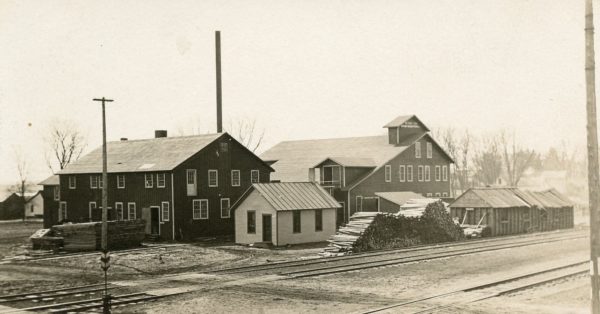
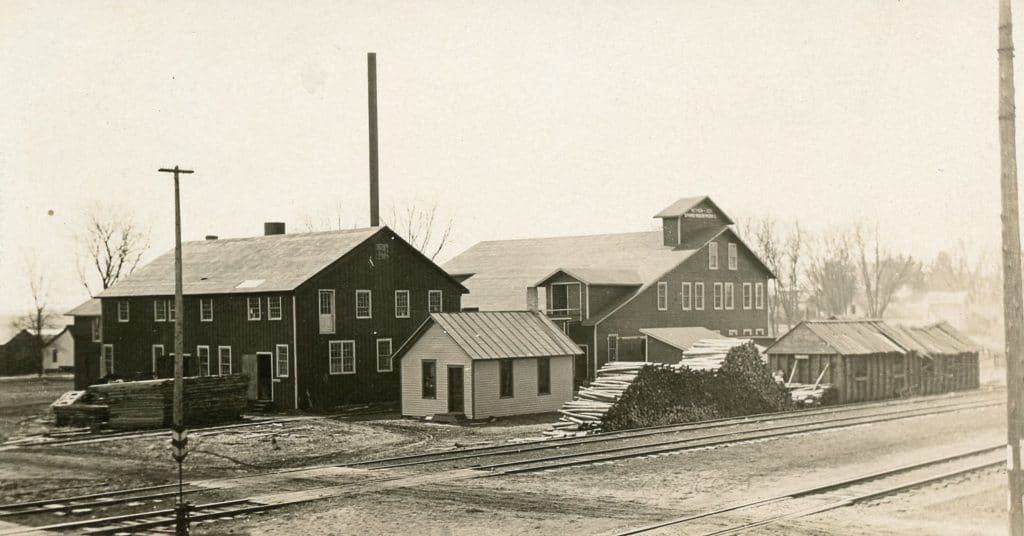
Whitewater Canning Factory in operation from 1914 until around 1962. It specialized in canning peas, corn, and tomatoes. It was located on Ann Street.
By Carol Cartwright, Whitewater Historical Society
Today’s COVID-19 pandemic has brought some food supply questions as food processing plants have become hotspots for the virus. A question was raised as to what happened with the food supply during the last pandemic in 1918 in Whitewater. The only disruption in food supplies came from rationing brought about by World War I. This involved primarily wheat flour and sugar. No other shortages in food supplies were reported.
The main difference between Wisconsin in 1918 and Wisconsin in 2020 is that the food supply chain then was primarily local, as local as your own home garden to the much higher number of small food processing plants that provided canned and other processed goods that needed only to be transported short distances.
In Walworth County, twice the population lived on farms than lived in towns. Dairying was the most important type of farming at the time and farmers’ milk was processed primarily at small, local, creameries and cheese factories or at the relatively new McNeill, Libby & McNeill condensery (later the Hawthorn-Mellody milk plant) in Whitewater.
Many, if not most, farm families grew most of their own food. There were cattle, of course, for beef, and many farmers grew pigs for home use or to sell. Most farms had chickens that provided both eggs and meat. Surplus eggs were often traded in town for the few supplies farmers did not grow themselves. Egg production was often the sphere of farm women who took any profits as income to use as they pleased.
Most farm women were also responsible for growing vegetables in a large garden. Many older people today had relatives on family farms in Wisconsin and can remember their large gardens. Many Wisconsin farmers also grew extra food crops like potatoes or cabbage to sell locally. Women canned or stored large amounts of vegetables including making their own pickles and sauerkraut.
Even in town, where most people relied on local grocery stores for their food, it was very common for families to have home gardens or to be able to purchase local produce from grocers. Many women in town also canned and preserved food they acquired locally.
In the early 20th century, Wisconsin had a robust local meat and vegetable processing industry. Milwaukee was a center for large meat processing, but across the state, there were many regional processing plants, particularly in the area of pork processing. This changed after World War II. For example, in Milwaukee, 3,750,000 cattle and 4,500,000 pigs were processed in 1946. In 1978, only 165,000 cattle and 49,000 hogs were processed in Milwaukee.
In the early 20th century, canning factories were built across the state to process the large numbers of vegetable crops grown by Wisconsin farmers. By 1920, there were 126 canning factories in Wisconsin, including the Whitewater Canning Company, established in 1914. Peas, green beans, corn, and cabbage were all popular crops canned in Wisconsin in small plants.
In the late 20th century, most small town canning factories and meat processors closed as the food processing industry consolidated.
The main disruption to the food chain during the 1918 pandemic was World War I-related. Wheat flour and sugar was strictly rationed and people were urged to use meat sparingly, but all other foods were plentiful. The federal government also encouraged people to develop “war gardens,” and there were several references in the Whitewater Register of people doing just that.
When the 1918 flu pandemic hit Whitewater, there may have been shortages of flour and sugar due to the war, but fresh vegetables and other produce was not affected due to the largely local food production chain in the state.
— Our thanks to local historian Carol Cartwright, President of the Whitewater Historical Society, for this additional report on the local impact of the 1918 Influenza Pandemic.
The U.S. Congress is not well prepared for continuing its work during a pandemic. The Constitution requires both houses to have a quorum — a majority of members — to conduct business. Any member can call for a quorum in her/his chamber, and if a majority is not present, the Senate/House cannot vote on any legislation until there is a quorum. Under House and Senate rules, only members who are present in the chamber count toward a quorum. If at least half of either chamber is quarantined or otherwise unable to attend a session, the legislative process could stall in the middle of a crisis. Of course, when the Constitution was adopted there was no conception of technology that would permit virtual attendance.
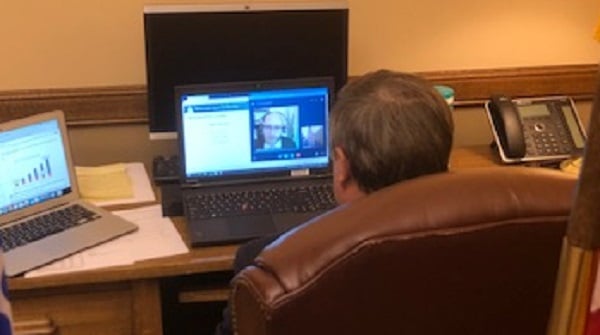
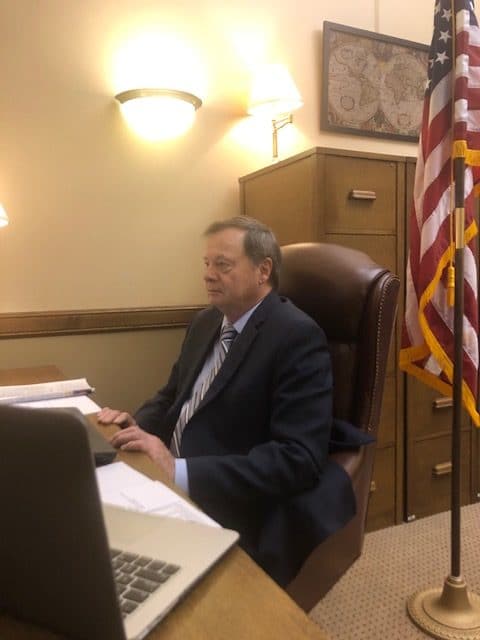
Rep. Don Vruwink participating in the Assembly floor session virtually on April 14
Wisconsin’s legislature does allow for meeting virtually. Rep. Don Vruwink participated in the Assembly floor session via computer on Tuesday, April 14. The Assembly met in “virtual session” rather than in person due to distancing requirements. Vruwink joined 97 of his colleagues in voting in favor of legislation addressing some of the challenges of the coronavirus pandemic. The State Senate passed the bill the following day, and Gov. Tony Evers quickly signed it.
Whitewater’s city government also allows for virtual meetings. Three City of Whitewater bodies met virtually in the last two weeks: Plan & Architectural Review Commission, Common Council, and Board of Review. It appears that these are the first times ever that city meetings have occurred virtually. Though there were a few technological glitches, in general the meetings proceeded quite routinely and necessary business was conducted. There was virtually no active public participation. It is hoped that as virtual meetings continue to occur in the coming weeks citizens will feel comfortable expressing their opinions on the phone or online as they would have done in person.
While this May looks a little different for all of us, your Whitewater farmers market managers wanted to update the community and let you know we’ll still be here for you with the local foods and fresh produce that you have come to know and love.
Whitewater City Market and Whitewater Farmers Market have been working closely together throughout this time to modify market operations to keep our communities safe. We’ve tapped into a variety of state and national resources to ensure that we adjust operations as needed to prioritize safety. A list of our market modifications are listed below.
These operational changes will be in effect through the May 23 market, at which point they will be re-evaluated, based on the status of the Safer-at-Home order and local conditions.
General market operations
Only vendors with consumable, essential food or cleaning items like produce, honey, eggs, coffee, baked goods, soap, etc. are allowed.
In order to discourage eating on site (which is risky because peoples’ hands often touch their faces when they eat), no sampling or food service of any kind is allowed. Food carts are not allowed, even for take-out only service.
In order to encourage people to shop as quickly as possible and to discourage market-goers from lingering, there will be no social activities. This includes tables, games, live music, and beer service.
Market managers and volunteers, when on site, will be there only to help market operations and enforce market rules.
What the markets are doing
Providing a station with free hand sanitizer and face masks.
Placing signs throughout the market to remind people to keep at least 6 feet apart from others, to wear a mask and indicating free ones are available, to not hand reusable bags or totes to vendors, and to shop as quickly as possible.
Reducing our vendors spots to 20 max, eliminating more than every other spot so vendor stands will be at least 10 feet away from each other.
What we are asking vendors to do
Vendors who are feeling ill or exhibiting symptoms are asked to stay at home.
We strongly encourage vendors to wear face masks.
Vendors must enforce physical distancing at their stands so that market-goers cannot come within 6 feet of the vendor.
Vendors must use hand sanitizer between every transaction. Wearing gloves is discouraged unless they are changed every time the vendor handles paper money or a credit card. Vendors are encouraged to sanitize their tables frequently.
Vendors must use their own bags to bag items purchased and then place them on the clean buffer table and step back. Market-goers can then approach the table and pick up their purchases and place them in their totes.
Vendors must offer at least one contactless payment option, including prepayment online or over the phone, a dropbox system for cash or checks, or apps like Venmo, Paypal or Zelle, which allow market goers to pay by phone from a safe distance.
Vendors must have a sign indicating that market-goers may not handle any products, that they should wait at least 6 feet away from other market-goers if there is a line of people waiting, and that lists which contactless payment options the vendor has.
What the markets are asking market-goers to do
If you are feeling ill or exhibiting symptoms, we ask that you stay at home.
We strongly encourage you to wear a face mask; free masks and hand sanitizer are available at a station at the market.
Keep at least 6 feet away from other shoppers and from vendors. Shop as quickly as possible and avoid conversations or other social interaction.
Pick a designated shopper in your family when possible, to reduce the number of people at the market.
Bring your own totes, if you like, but do not hand them to vendors. Vendors will bag items and place them on a table, which you can then pick up and place in your totes.
You are encouraged to use apps like Venmo, Paypal or Zelle when possible for contactless payment.
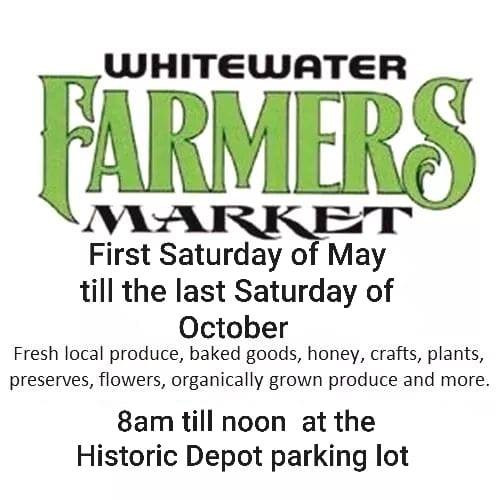
As a reminder, Whitewater City Market runs every Tuesday, rain or shine, May through October from 4 to 7 p.m. by the Historic Train Depot. The Whitewater Farmers Market every Saturday rain or shine, May through October, 8 a.m. to noon in a new location this year: the parking lot beside the Historic Train Depot, across from the Fire Department. The physical address for the train depot, for new patrons, is 301 W. Whitewater Street.
We invite you to follow our Facebook accounts for Whitewater City Market and Whitewater Farmers Market to find vendor lists, market highlights, seasonal recipes, and the most up-to-date market information weekly. Stay safe, and thank you for supporting our local farmers and producers.
Kind regards,
Lisa Dawsey Smith, Karl Knuteson, and Kristine Zaballos
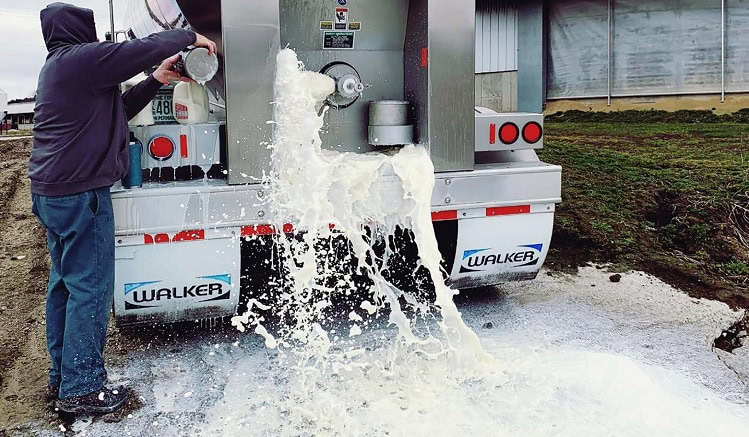
Last year Wisconsin lost nearly 800 dairy farms, or nearly 10% of the farms. The COVID-19 pandemic is making matters worse, as evidenced by reports of farmers dumping milk. Per USA Today, Dennis Rodenbaugh, executive vice president at Dairy Farmers of America, the largest U.S. dairy cooperative, told the Wall Street Journal for an April 9 story that as much as 7% of the milk produced in the U.S. the prior week was dumped. This video explains some of the reasons why. Schools represent approximately 7% of milk consumption, and most of them have moved to online instruction. Early in the pandemic there were shortages of milk in retail stores, which were partly due to a lack of bottling lines set up to fill plastic jugs instead of the small cardboard containers used in schools. Restaurants in many parts of the nation are not currently able to serve dine-in customers, reducing the consumption of milk as well as non-liquid dairy products such as butter, sour cream, and cheese.
As was indicated in a previous Banner post, Whitewater Future Farmers of America (FFA) is selling yard signs supporting dairy farmers. The proceeds will be used to purchase Wisconsin cheese and other dairy products to be donated to the Whitewater Food Pantry and the Community Space.
The Whitewater Unified School District has been distributing bags containing five breakfast and five lunch meals every Monday to children in the district. Lisa Griep, Food Service Director for the Whitewater Unified School District, told the Banner 860 bags were distributed on April 20, each one containing a half gallon of milk. When asked how that quantity of milk compares with the regular school year’s consumption, Ms. Griep stated, “A rough estimate would be about half (60%) milk consumed compared to a regular school day/wk. Reduced consumption is due to less meals being distributed than served daily (regular school day), and ala carte and snack milk sales/consumption are not realized.”
As for the milk that you purchase, here’s a little known fact: milk that is bottled in WI has a code 55 in the circled position on the jug. As Ron Binning pointed out on FaceBook, the only problem is that some WI dairy farmers’ milk is bottled in IL or MN, but is still WI milk.
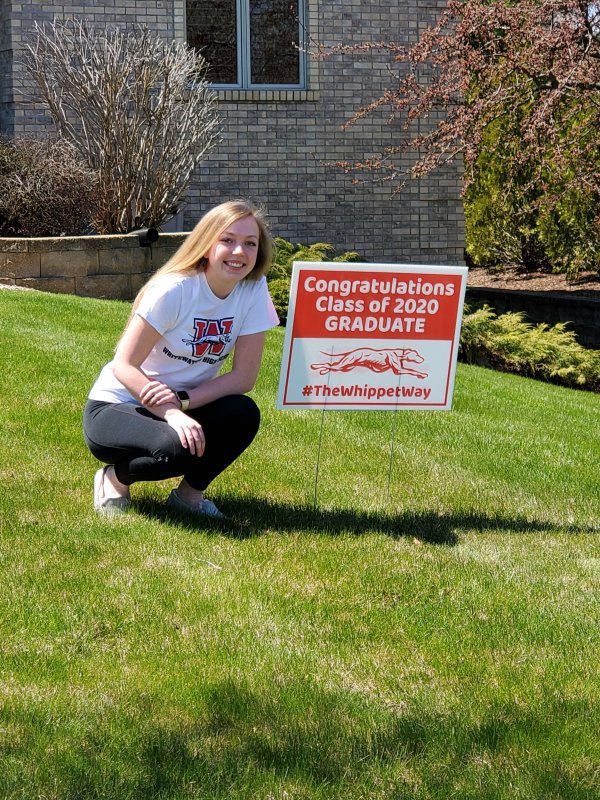
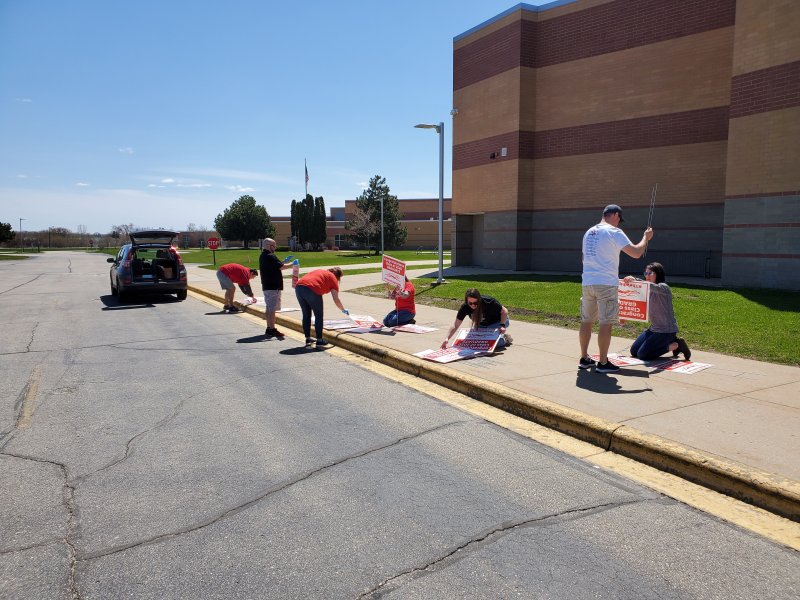
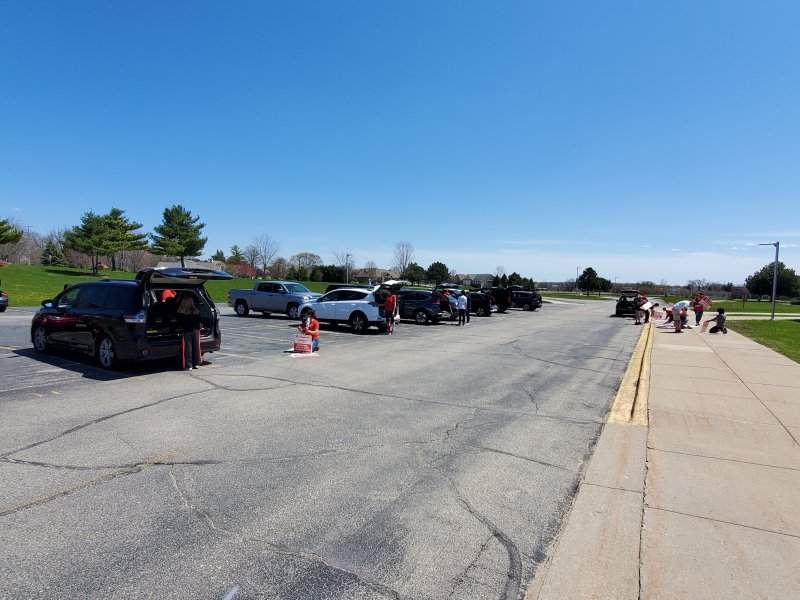
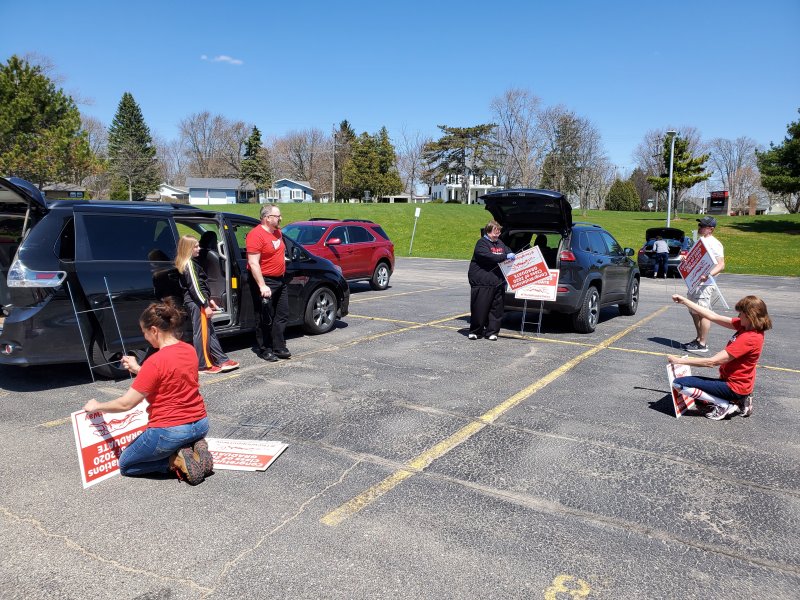
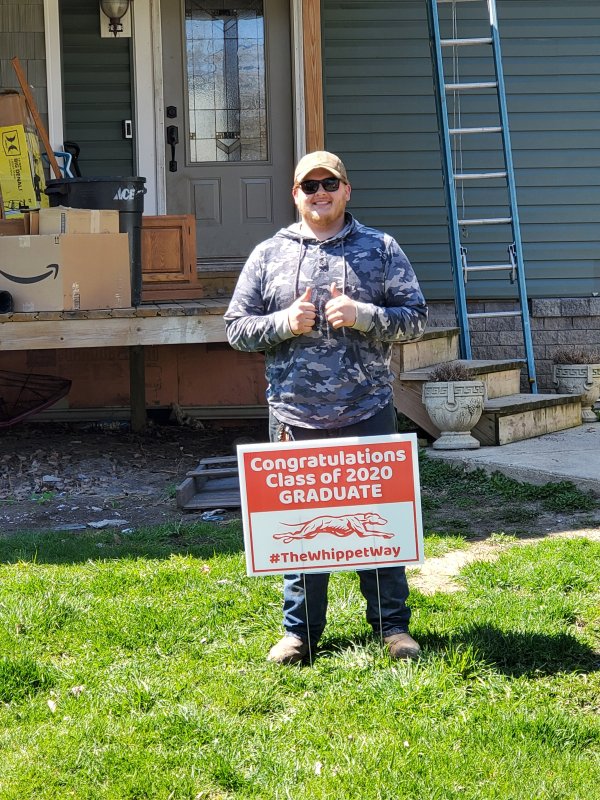
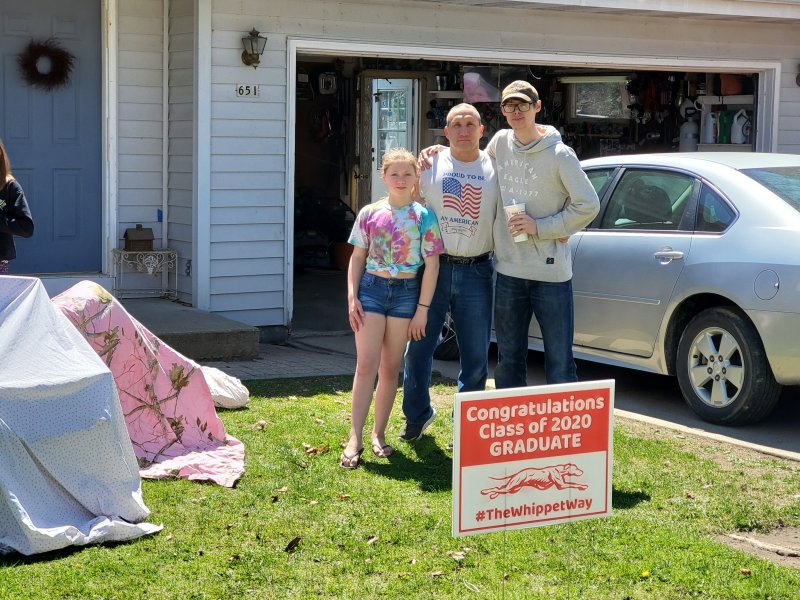
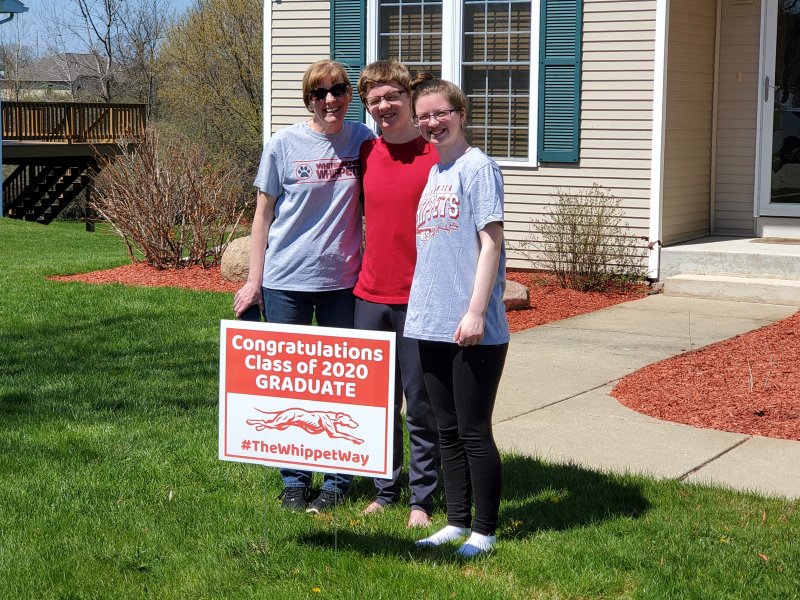
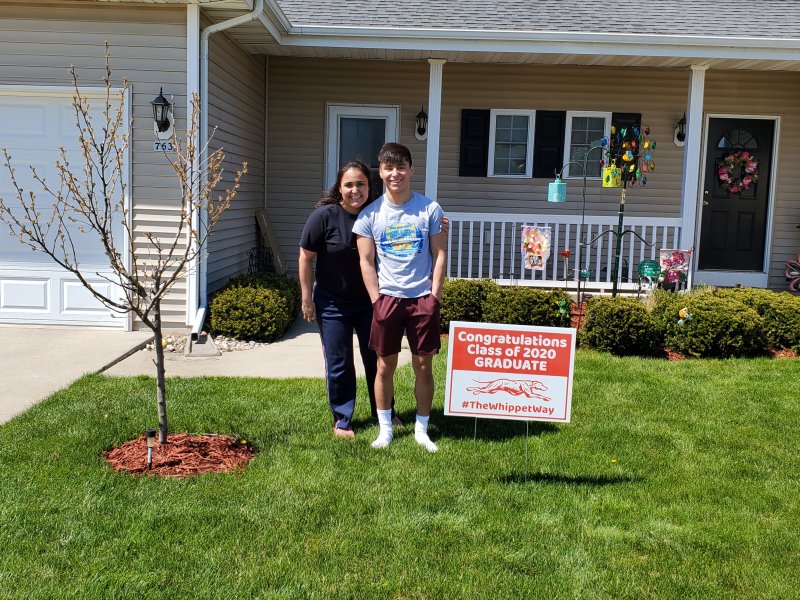
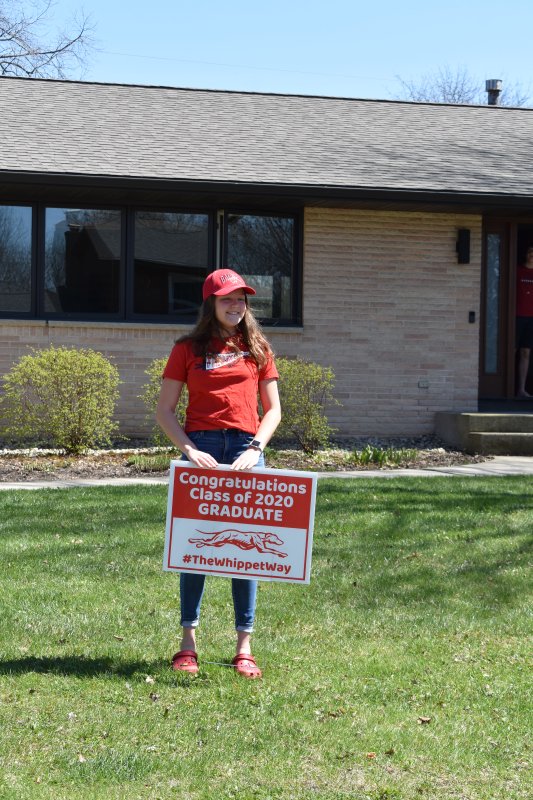
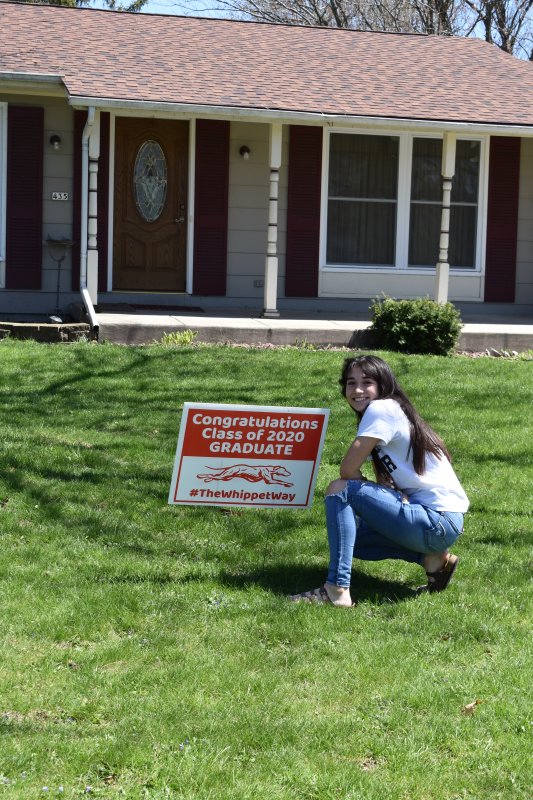
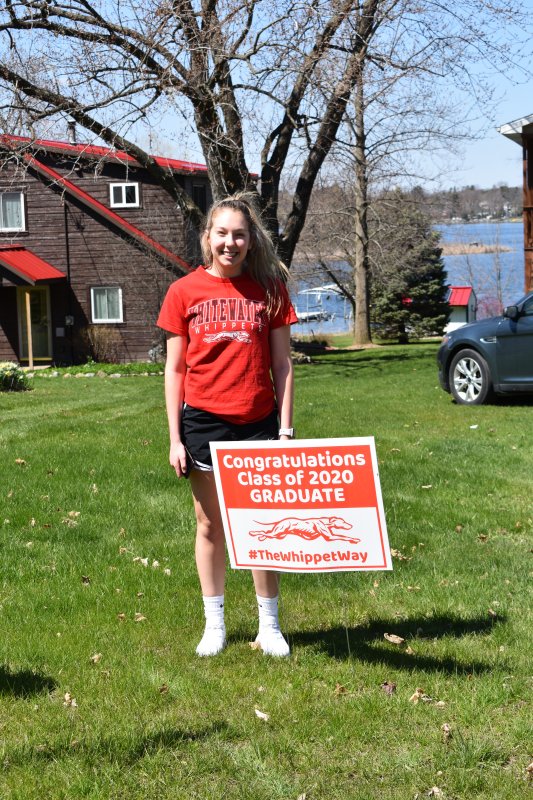
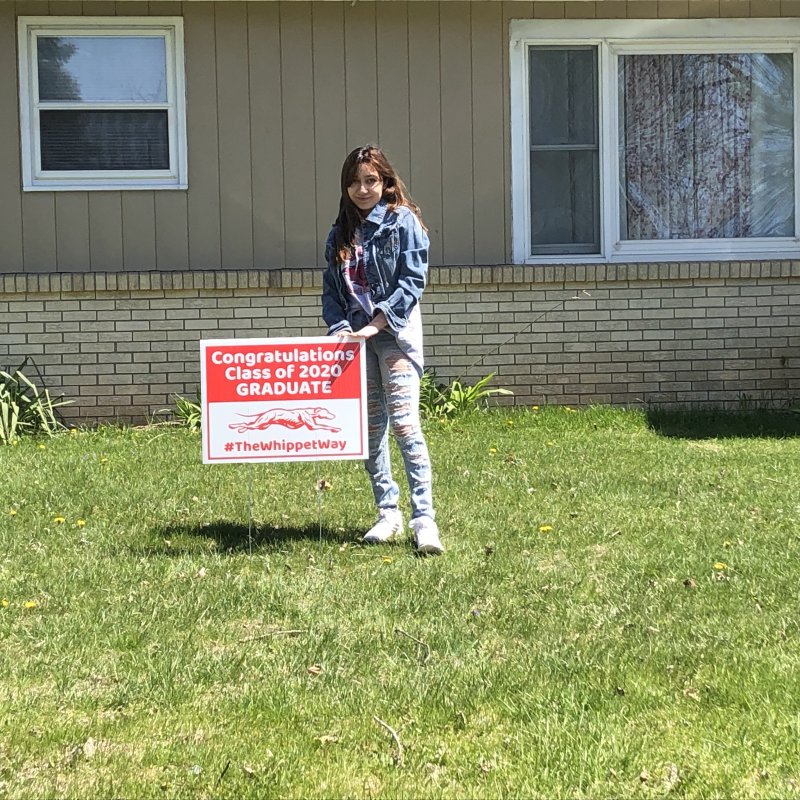
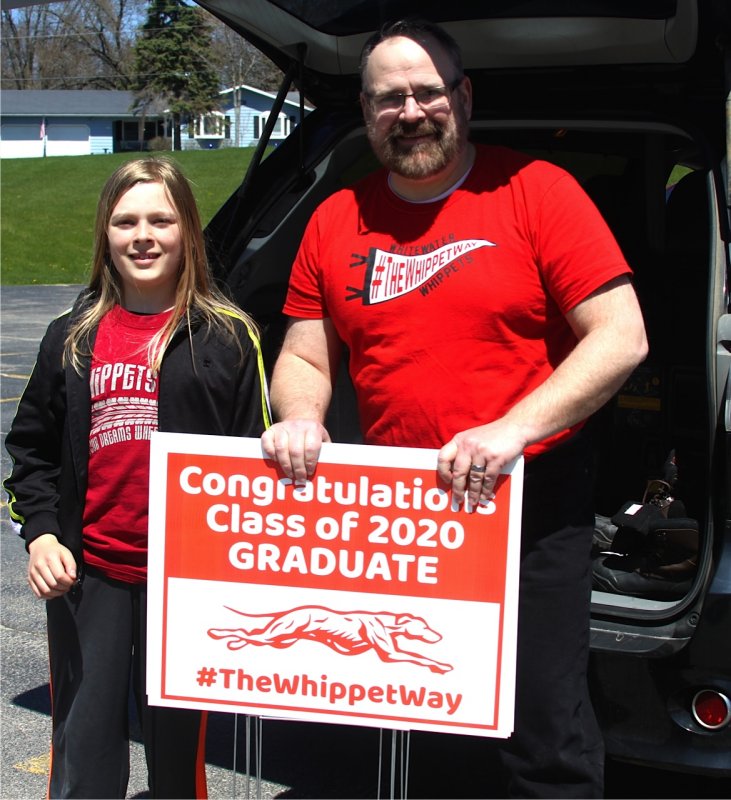
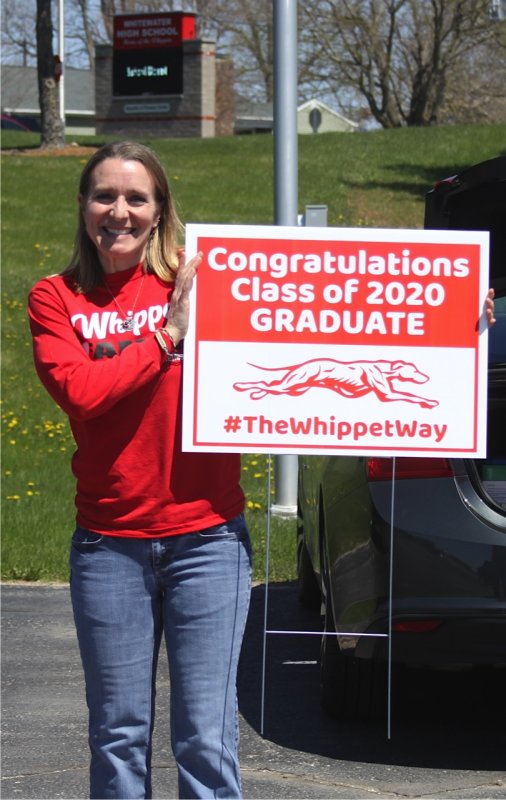
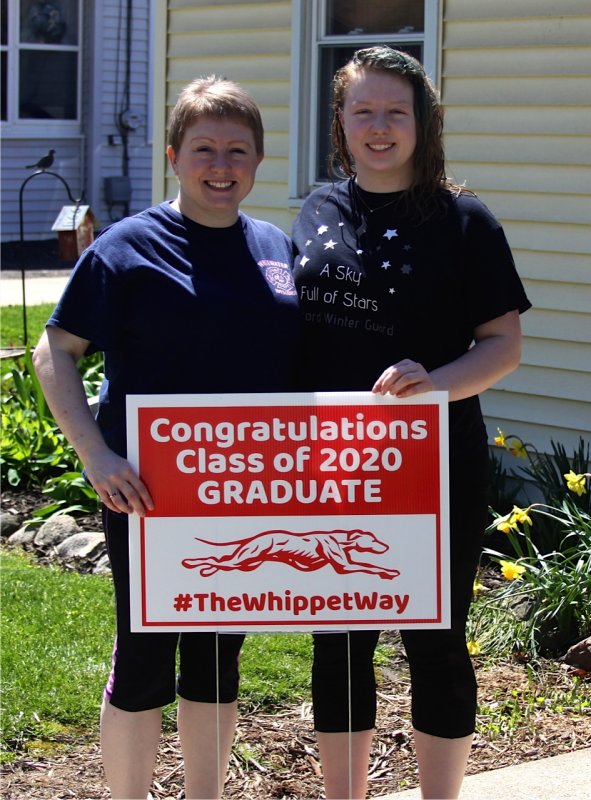
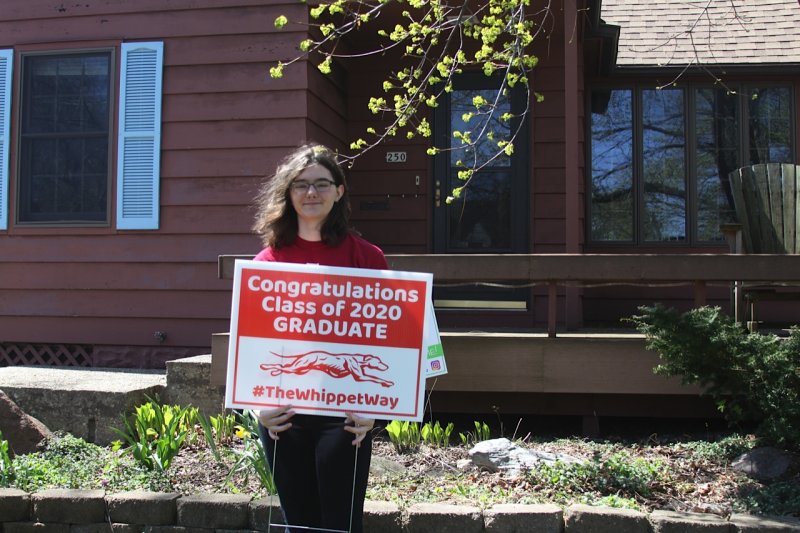
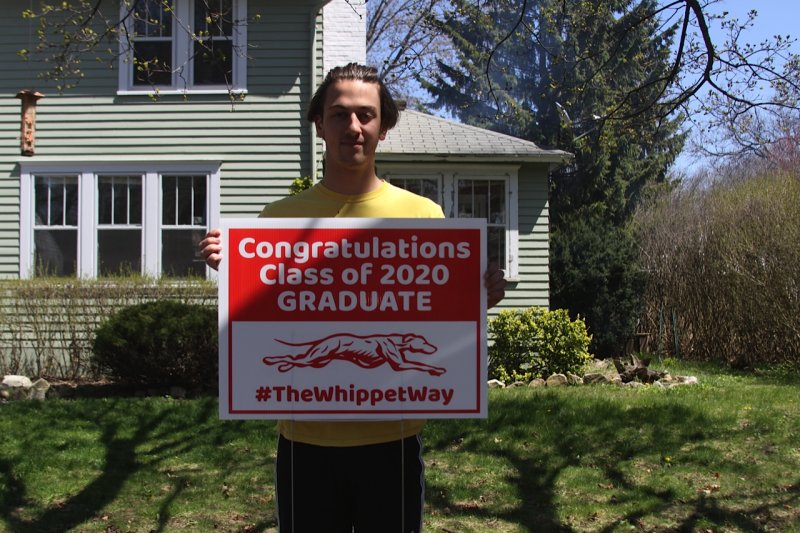
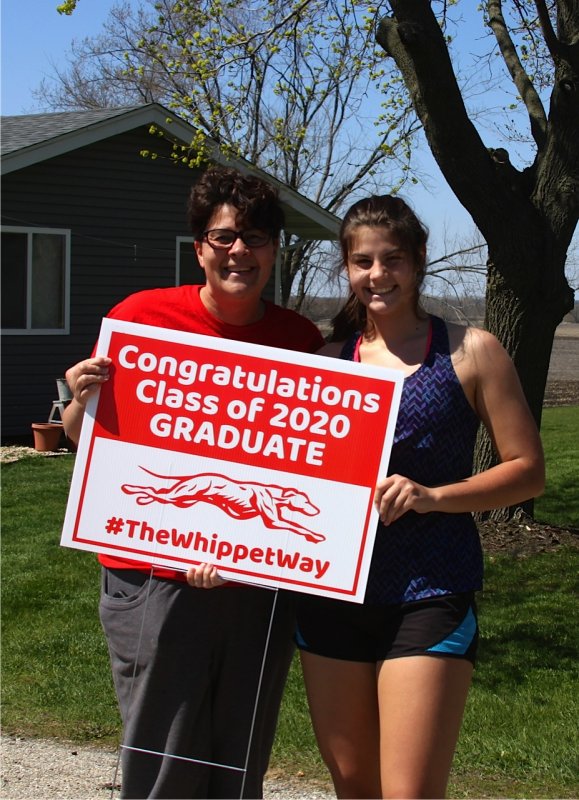
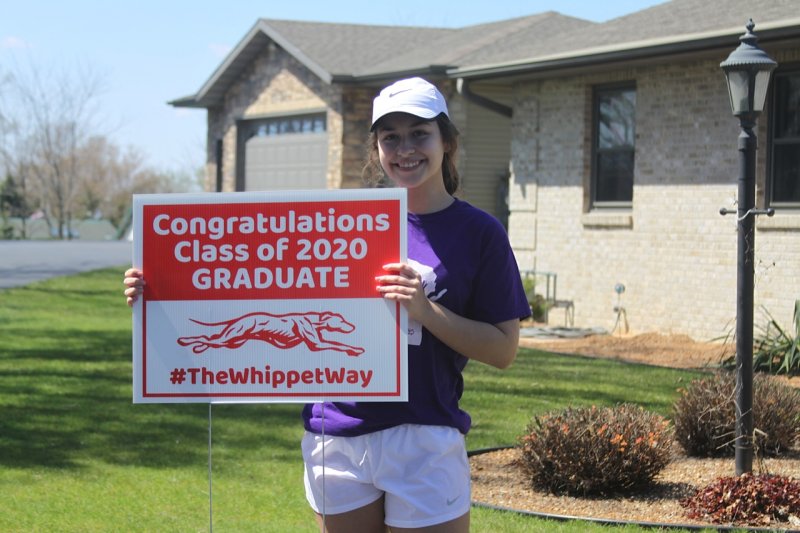
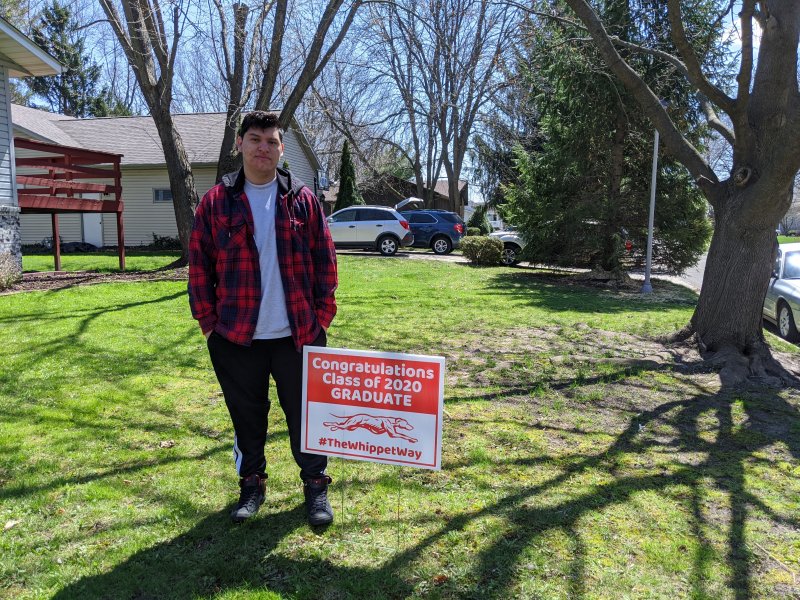
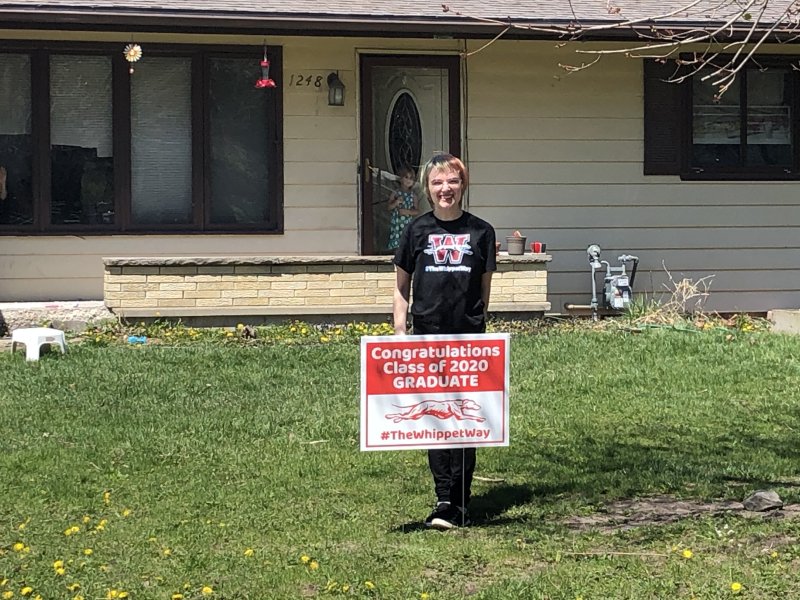
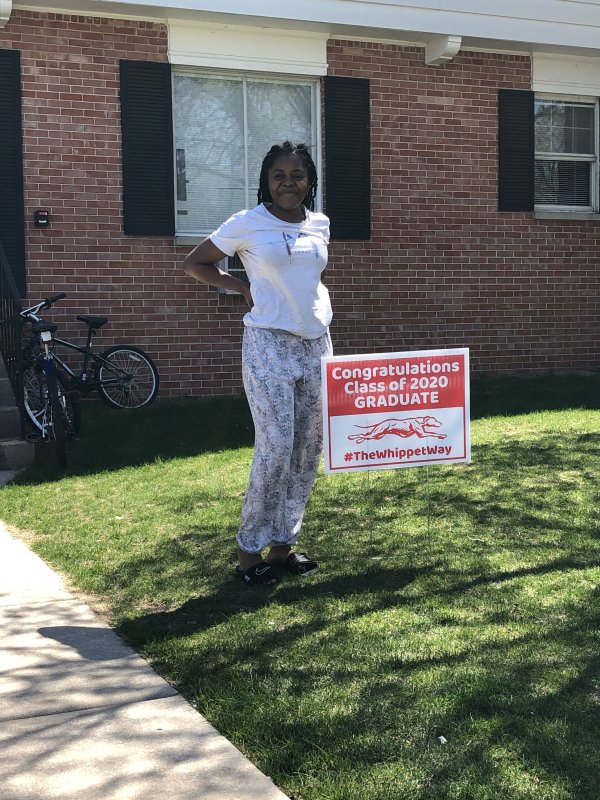
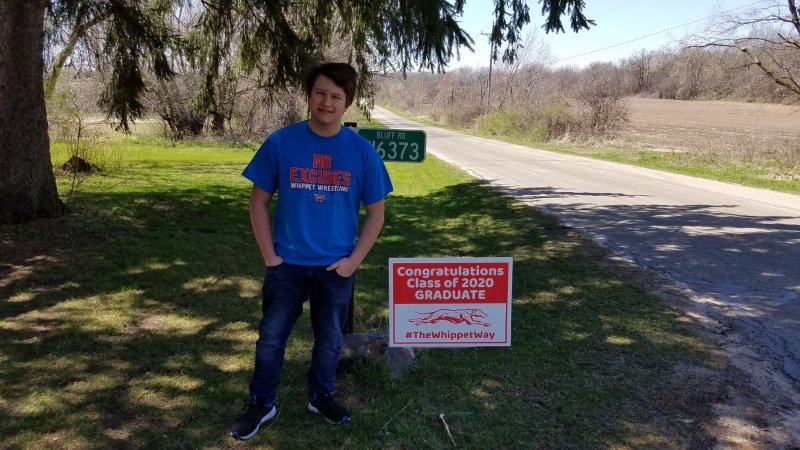
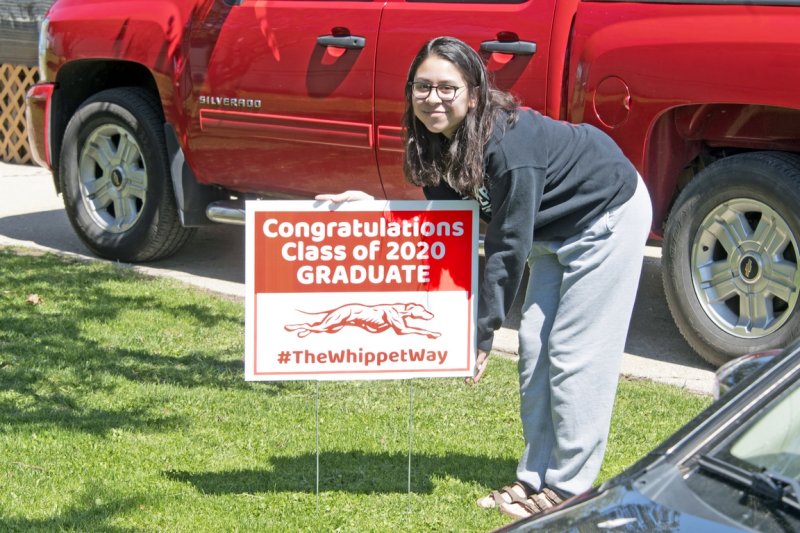
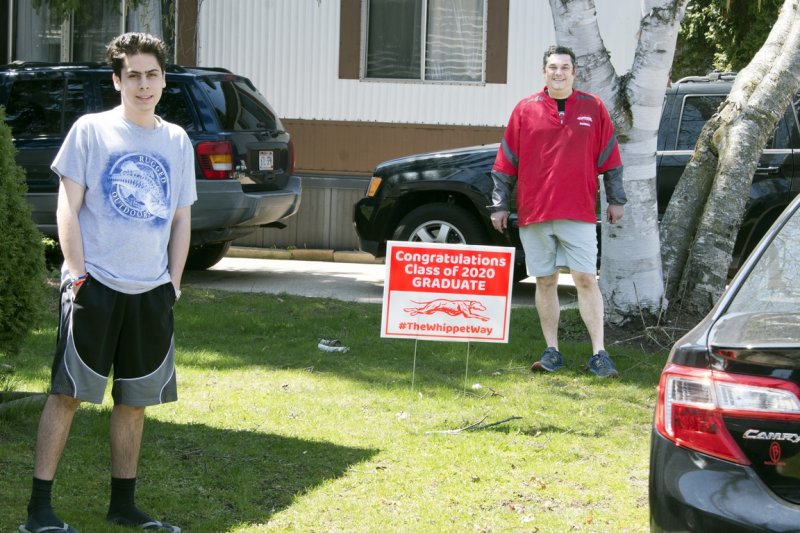
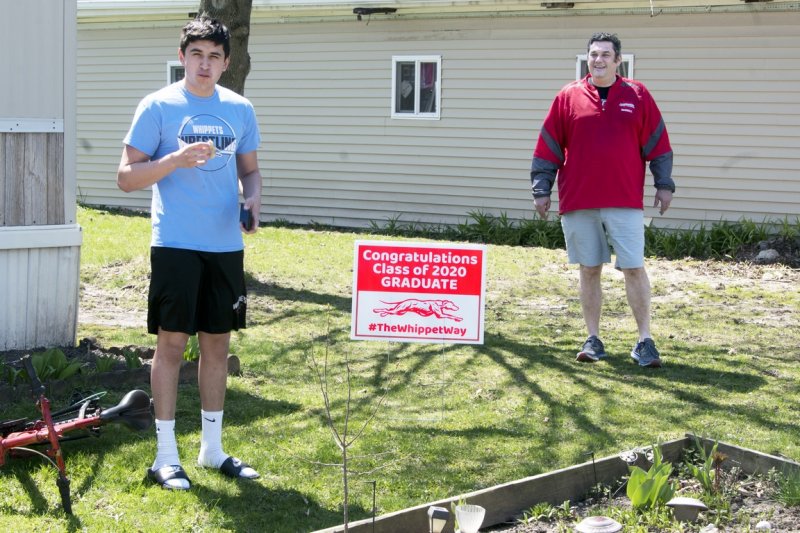
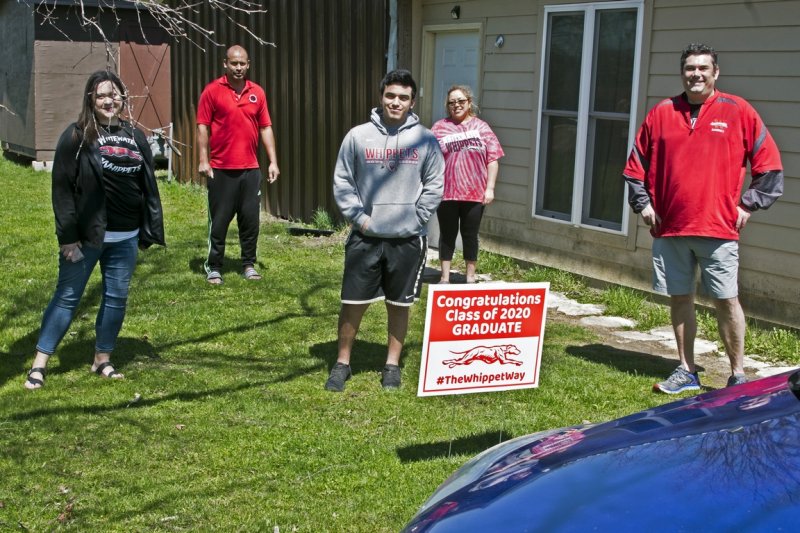
In the gorgeous sunshine of Sunday afternoon, April 26, approximately 25 Whitewater High School staff members and some of their family members met in the high school parking lot to pick up yard signs to be delivered to each of the 150 seniors in the Class of 2020.
Ms. Kate McNulty and Ms. Teri Hamilton, senior class advisors, had carefully divided the graduates into groups based on the proximity of their addresses, and staff members set off individually or in pairs to make as much noise as possible and celebrate the members of the senior class while maintaining social distancing guidelines.
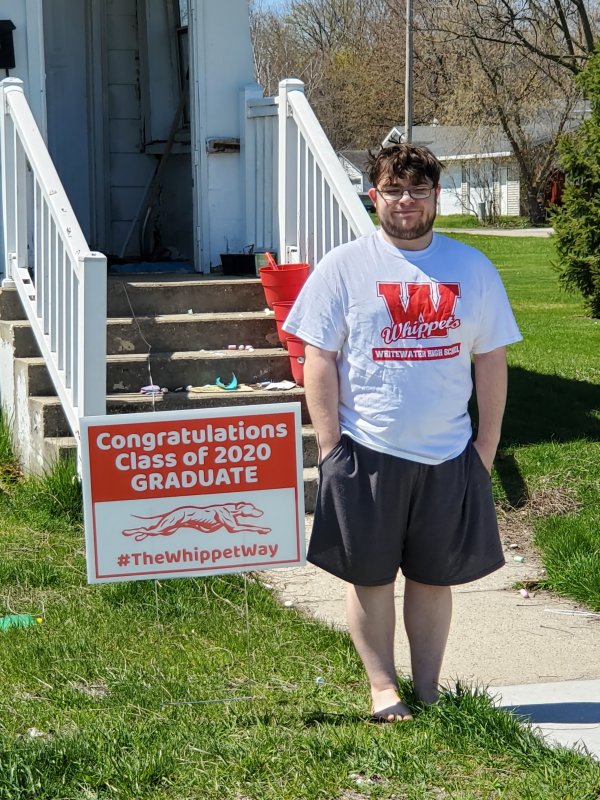
Seniors and their families received messages at 12:15 letting them know to put on their Whippet Wear and get ready for a surprise delivery between 1:00 and 3:00 p.m. Although a few of the graduates were at work during that time, the vast majority of families were home and came out to take photos with their signs after being alerted to the delivery by the honking of car horns, the banging of pots and pans, and the ringing of bells.
Whitewater High School is proud to celebrate the Class of 2020! Go, Whippets!