

Written by Abigail Dotzler | Photos by Craig Schreiner and submitted
Motivated by a passion for learning about the surrounding environment and a love of birds, the University of Wisconsin-Whitewater Department of Biology built a tool with the potential to captivate audiences and support valuable hands-on learning opportunities for students.
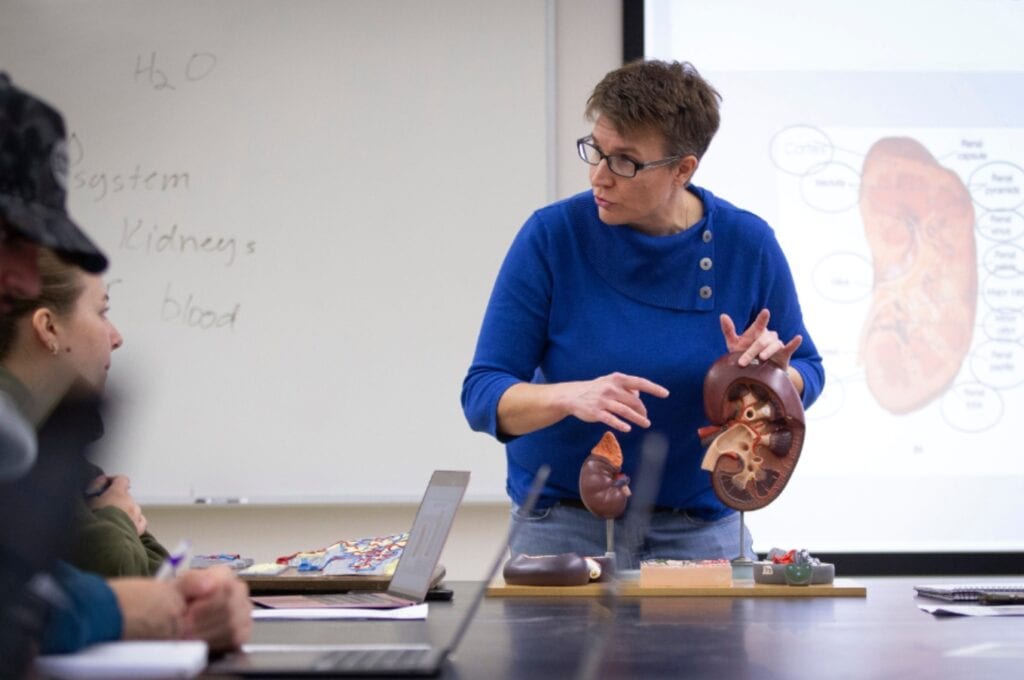
In May of 2025, the department launched a “nature cam” livestream on YouTube. Inspired by the bird cams that exploded in popularity during the COVID-19 pandemic, Susan Devries, professor of biology, led the charge to create the livestream.
“There isn’t really a major bird cam, especially one affiliated with a university, in Wisconsin,” Devries said. “Why can’t we do one of our own to showcase the birds that we get here in the Midwest?”
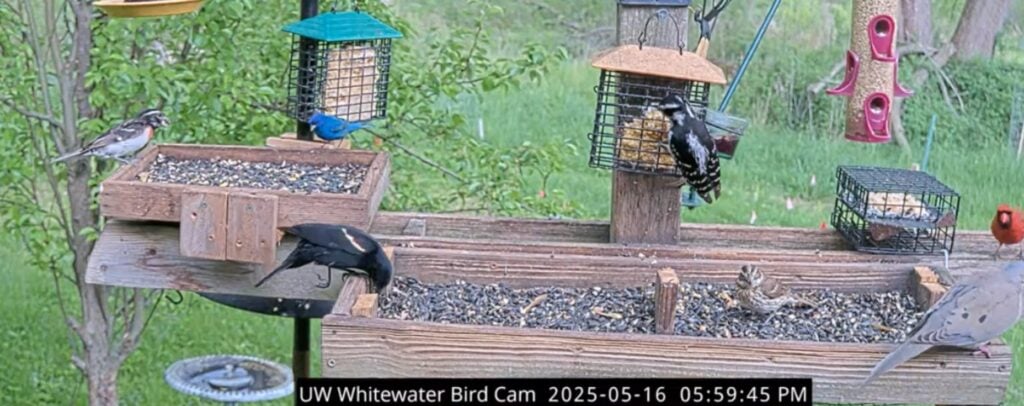
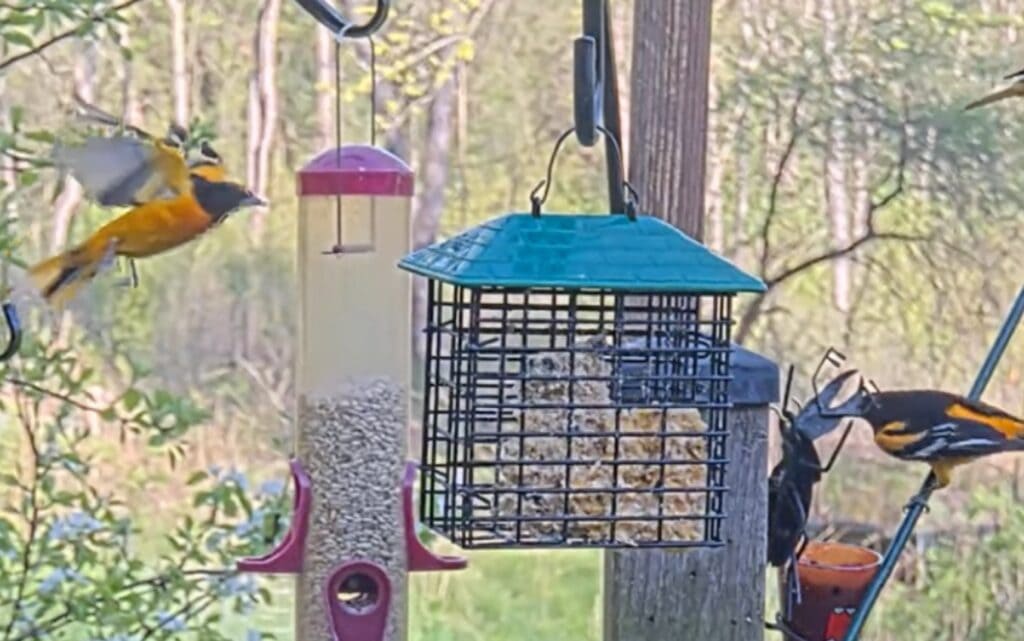
Following guidelines provided by the acclaimed Cornell Lab of Ornithology at Cornell University, the biology department set up a bird feeder and camera in the Kettle Moraine State Forest. The feeder provides food for a variety of local species.
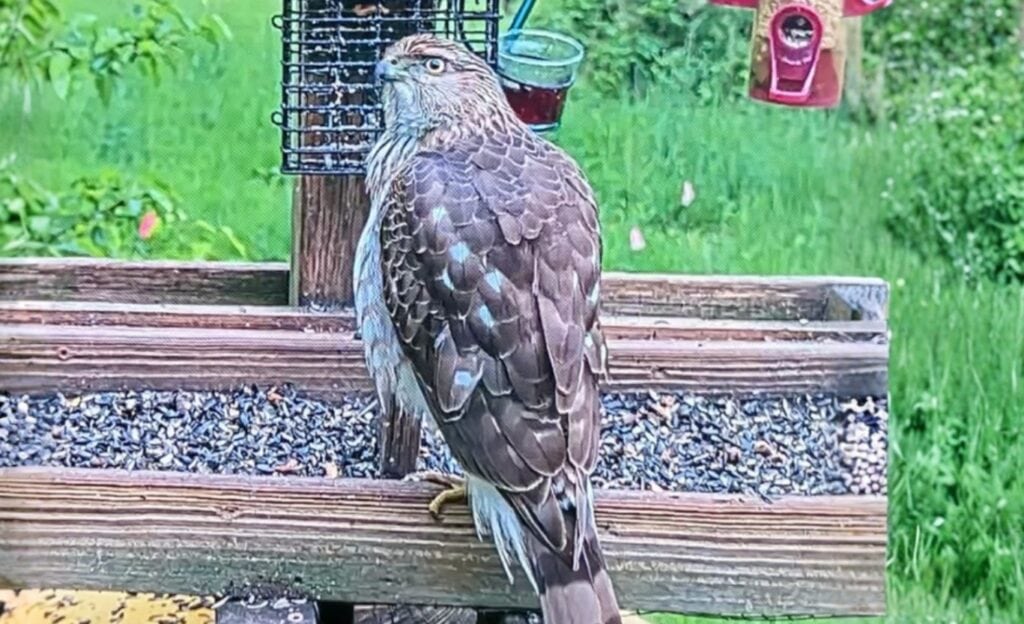
The livestream has recorded more than 40 distinct bird species to date. Devries and her colleagues monitor the stream when they can, but viewers are more than welcome to identify a visitor new to the feeder, and Devries or one of her colleagues review the footage to confirm the identification.
The UW-Whitewater Biology Nature Cam channel boasts over 100 subscribers, and Devries was pleased to report more than 4,000 hours of watchtime.
Devries stressed that, while these stats are incredibly encouraging, garnering views and subscribers were not primary goals of the nature cam. Instead, the focus was on sharing a love of birds and promoting the hard work and talents of those in the department.
The livestream makes nature more accessible — viewers are able to study the local fauna from the comfort of their couches. Through the biology department’s bird cam, everyone can learn a little more about the local bird populations.
Local K-12 schools are using the livestream in their classrooms to foster a love of nature in their students, and UW-Whitewater professors are employing it to encourage hands-on learning for biology students.
“Students are watching the cam, and they’re learning how to identify birds and how to quantify animal behavior, all from the comfort of wherever they happen to be parked,” Devries said.
The department always seeks new ways to innovate and improve their students’ experiences.
“We could always do better,” Devries said, “because that’s our goal. We always strive to do better and keep our finger on the pulse of what young people need to be successful in the workforce.”
Students are not currently involved with the management of the livestream, but the biology department has plans to include students on the content creation side of things in the future.
“We wanted to make sure that we knew what we were doing before we brought in a student, so we could train them well,” Devries said.
Eventually, students will be able to use the livestream in their undergraduate research projects. Devries sees promise in the livestream as a survey tool, clueing researchers in to what species inhabit the area during each season. Additionally, student researchers could monitor species populations from year to year.
In the meantime, undergraduate students have plenty of other opportunities for research. Every professor in the biology department is an active researcher, and the Undergraduate Research Program is thriving. Whether a student’s interests lie in mammals, birds, and insects, or molecules and medical school applications, the biology department has a research opportunity for them.
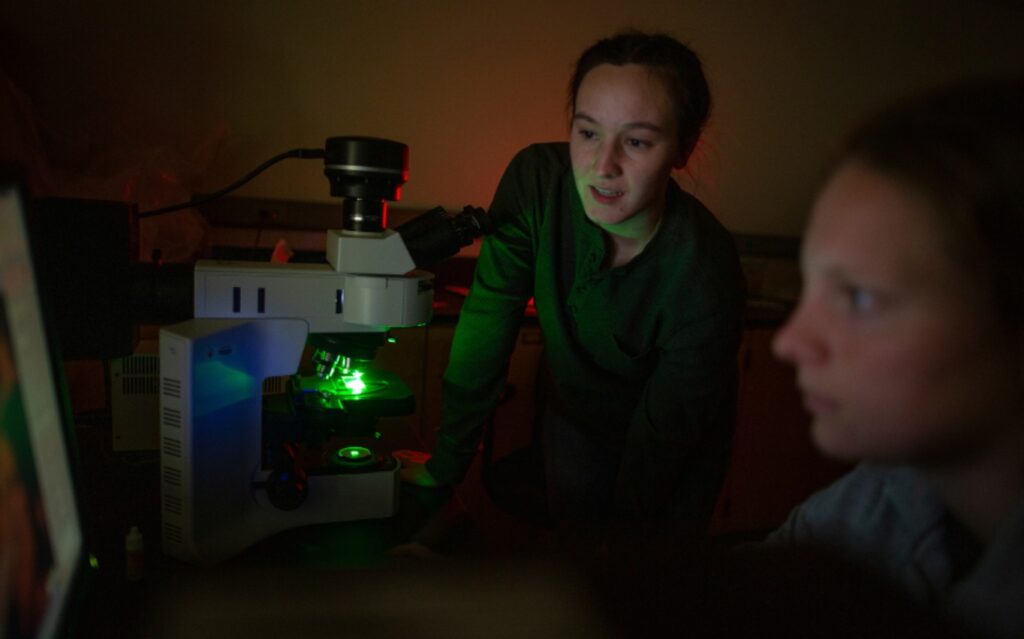
“Just about every lab has at least one to two undergraduates working in it,” Devries said. “So if folks want hands-on research experience, [they can] come see us.”
As winter closes in, the birds consume seed at a much faster pace. All seed is purchased and provided by Devries and her colleagues. Anyone interested in supporting the livestream can donate or leave a “Like” on the livestream to help the biology department fulfill its educational mission.
Editor’s note: This article was posted to the UW-Whitewater website.