




Written by Jeff Angileri | Photos by Craig Schreiner
People in rural southern Wisconsin will benefit from expanded access to diagnostic imaging services and a stronger pipeline of local healthcare professionals thanks to a new grant awarded to the University of Wisconsin-Whitewater.
Over the next five years, $3,211,351 in funding through the Rural Health Workforce Expansion Initiative will allow the university to expand healthcare education, strengthen partnerships with regional providers and prepare more students for high-demand careers serving communities throughout Rock, Walworth, Green, Jefferson and surrounding counties.
The project includes the purchase of a mobile imaging laboratory, renovations to university instructional and simulation spaces, hiring of faculty, and the development of new clinical partnerships with rural hospitals and outpatient imaging centers. Each year, the university expects to admit at least 10 students in diagnostic medical sonography and 10 students in radiologic technology as they begin the clinical portion of their education.
The centerpiece of the project is a mobile imaging laboratory that will travel to rural communities, giving students hands-on clinical experience while providing free or reduced-cost diagnostic imaging services where they are needed most.
“This expansion reflects UW-Whitewater’s commitment to removing barriers to higher education while meeting one of our region’s most pressing workforce needs,” said Corey King, chancellor. “Students will gain an exceptional education without leaving southern Wisconsin, our healthcare partners will benefit from a stronger talent pipeline, and rural residents will see greater access to essential diagnostic services. It’s a powerful example of the university using its expertise and resources to improve lives in our communities.”
According to the U.S. Bureau of Labor Statistics, employment of diagnostic medical sonographers is projected to grow 13% over the next decade, while radiologic technologists continue to see strong demand nationwide. At the same time, rural healthcare providers across Wisconsin face persistent vacancies in imaging positions, contributing to delayed diagnoses, longer wait times and increased patient transfers.
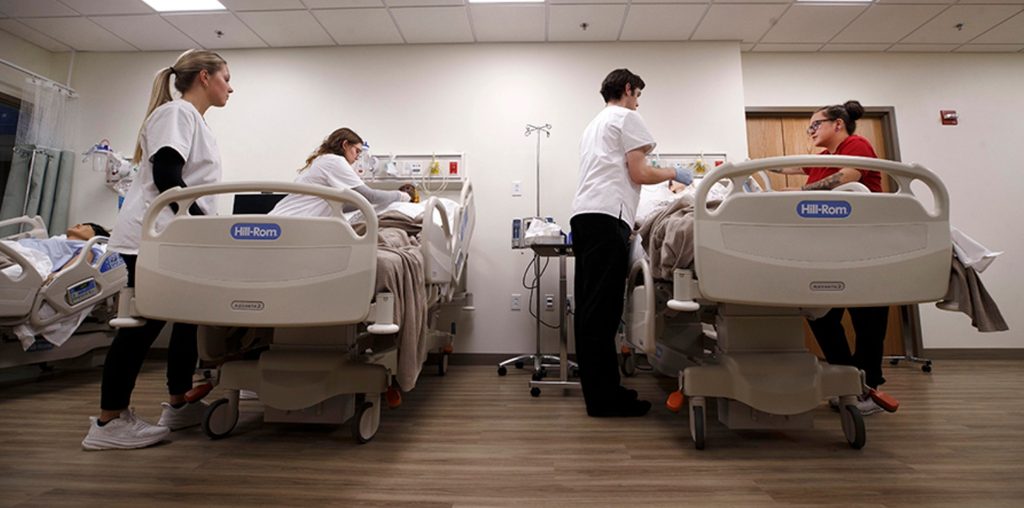
The initiative strengthens UW-Whitewater’s growing healthcare education ecosystem. The university already offers a bachelor’s degree in medical science, nine pre-healthcare certificates, and a collaborative nursing degree. Existing investments, including the Mercyhealth Medical Sciences Hub, provide a strong foundation for expanding healthcare education and creating additional pathways into healthcare careers. The grant will further support renovations to campus facilities, including new simulation imaging laboratories, technology upgrades and accessibility improvements that will enhance student learning for years to come.
Students will complete coursework through a combination of classroom, laboratory and hybrid instruction before participating in clinical rotations with rural healthcare partners.
“Our Whitewater and Rock County campuses have built a strong foundation for healthcare education, and this grant allows us to take the next step,” said Pieter deHart, provost and vice chancellor for academic affairs. “Students will have access to cutting-edge training close to home, and our healthcare partners will gain graduates who understand rural communities and are prepared to serve them. By creating a sustainable model for community-based clinical training, UW-Whitewater’s program represents a significant investment in the future of rural healthcare throughout southern Wisconsin.
The Rural Health Transformation Program, including grants for the Universities of Wisconsin, is a federal funding opportunity provided to states through the Centers for Medicare and Medicaid Services (CMS) of the U.S. Department of Health and Human Services. The Wisconsin Department of Health Services (DHS) received a first-year award from CMS for $407,365,094.25 with 100 percent funded by CMS/HHS to invest in rural capacity, sustainability, and innovation across three major initiatives: Strengthen the Rural Healthcare Workforce, Drive Rural Technology and Innovation, and Transform Rural Care Through Partnerships. The contents are those of the author(s) and do not necessarily represent the official views of, nor an endorsement, by CMS/HHS, or the U.S. Government.
Editor’s note: This article was provided by UW-Whitewater.