



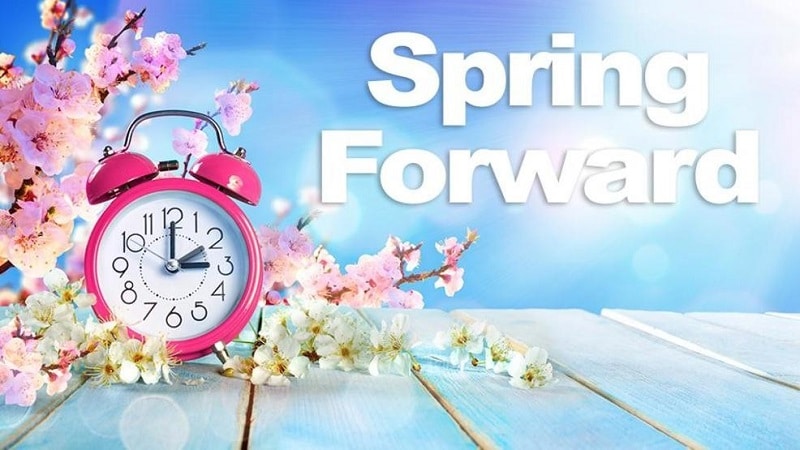
Remember to “spring forward” this Sunday morning. Once again in the past year there have been calls for eliminating daylight savings time. A 2025 survey by Stetson University, conducted nationally with a representative sample of 1006 U.S. adults, found that 75% supported the idea to stop changing their clocks twice a year. When asked which system they preferred, 54% favored year-round Daylight Saving Time, which would result in later sunrises and more sunlight in the evening. Another 21% supported a permanent switch to standard time, meaning earlier sunrises but less daylight in the evening. Only 18% preferred keeping the current system of changing clocks twice per year, while 7% were unsure.
For a number of years bills have been introduced in Congress that would eliminate Daylight Savings Time. In 2023 a bill that would make DST permanent passed the Senate but was not acted on in the House. There has been ongoing debate about whether it would be best to make savings time or standard time permanent. In February 2026 U.S. Representative Greg Steube (R-FL) introduced a bill with a new creative approach that calls for the time to be moved permanently by 30 minutes. As of this writing there has been no action on the bill.
Canada also observes DST, but their legislators have also debated the possibility of eliminating the practice. Some parts of their country have already discontinued changing their clocks.
The site called savestandardtime.com promotes making standard time permanent. It states, “Permanent Standard Time is the honest, natural clock, set to the sun. Daylight Saving Time is a false clock, designed to wake us an hour earlier than Standard Time every day. Data and history show permanent Standard Time is best for health, mood, safety, education, productivity, wages, environment, and civil liberties. Ditch DST! Save Standard Time!“
******************************************************************
As Daylight Savings begins, it is a perfect time to “spring ahead to safety” and tackle a few critical emergency preparedness updates for the coming spring season.
- Smoke Detectors and Carbon Monoxide Detectors: All residences are required to have both types of detectors on every level, including the basement, but not the attic or storage areas. Now is a good time to replace the batteries in your detectors and push the test buttons to be sure they’re working properly. Replace your detectors every five years.
- Emergency Go Bags: Be sure to have a basic emergency kit in your home with supplies, food and water to last you and your family for at least three days. Other items like a battery powered radio, flashlights, additional batteries, and first aid kit should also be included. For more information, please visit https://www.ready.gov/build-a-kit
- Emergency NOAA Weather Radio: Spring brings the threat of tornadoes. Make sure you have an emergency weather radio. It’s like having a tornado siren in your home. When it goes off, go to a safe place. Remember, the outdoor warning sirens are only intended for people to hear outdoors.
- National Weather Service Wireless Emergency Alerts: Wireless Emergency Alerts are emergency messages sent by authorized government alerting authorities through your mobile carrier. Government partners include local and state public safety agencies, FEMA, the FCC, the Department of Homeland Security, and the National Weather Service. No signup is required. Alerts are sent automatically to WEA-capable phones during an emergency. For more information, please visit https://www.weather.gov/wrn/wea