


By Al Stanek
Whitewater Banner volunteer staff
On April 20 a group of people who feel strongly about Whitewater’s future had a minor success when the Common Council voted to lend wastewater utility reserve funds to a private developer for a housing development along the railroad tracks east of what used to be “Strands on the Floor at Bluff Road Marketplace.”
Common Council members had turned down a 0% loan of public funds to the developer on April 9 but at the April 20 special meeting gave the project the go ahead with the revolving loan to be at 3.5%. The vote was 5-2, with councilmembers Hicks, Majkrzak, Orin Smith, Singer and Sahyun voting in favor. Brian Schanen and Michael Smith voted no. The meeting was held on Greg Majkrzak’s last day on the council, with Gavin Kelleher to be sworn in as the District 2 member the next day.
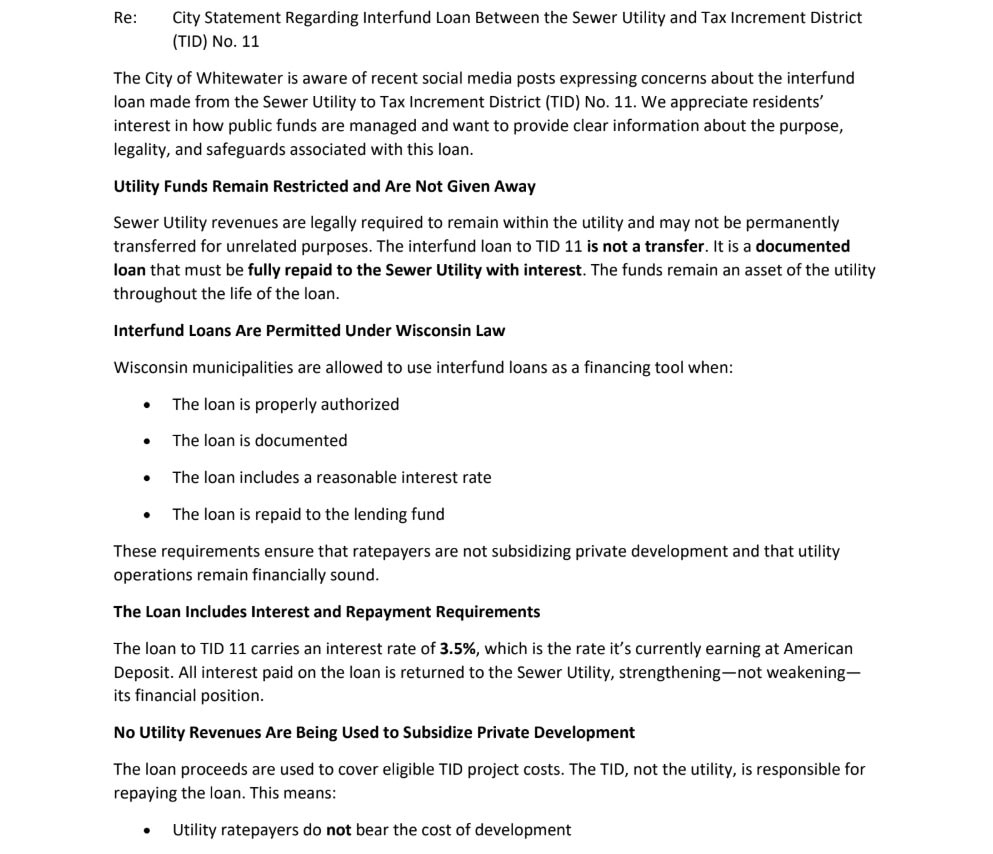
A majority of council members appeared to be swayed by Comptroller Jeremiah Thomas’s argument that the money currently earns “roughly” 3.5% interest and this would at least be a break-even situation. There was an assertion by city staff that it could be a “money-maker.”
The city manager argued that the city Plan Commission and Community Development Authority had both reviewed the project and endorsed it. One council member pointed out that the Plan Commission does not routinely review financing details.
What wasn’t considered thoroughly by council members was the city’s financial advisor’s caution that the agreement would have city staff reviewing and paying the project costs with reimbursement by revolving loan funds contributed by wastewater utility reserves which would “take considerable staff time.” There was also mention by the consultant of the potential to use a state funded revolving loan program which would require payment of a higher interest rate by the developer.
Another of the city’s financial advising firm suggestions is that they consider a commonly used standard “PAYGO” agreement or ‘pay-as-you go” revolving loan program where the developer pays as the project progresses rather than have funding in place, got little or no discussion at last night’s meeting although it may have been discussed in closed session in an earlier meeting. The consultant’s report suggested that under PAYGO “the developer takes the majority of the risk.”
Other concerns were raised by citizens over the lack of experience on the part of the developer, the appropriateness of public funding favoring one developer over another and the lack of the agreed upon loan interest not capturing any compensation for the risk of failure of the project.
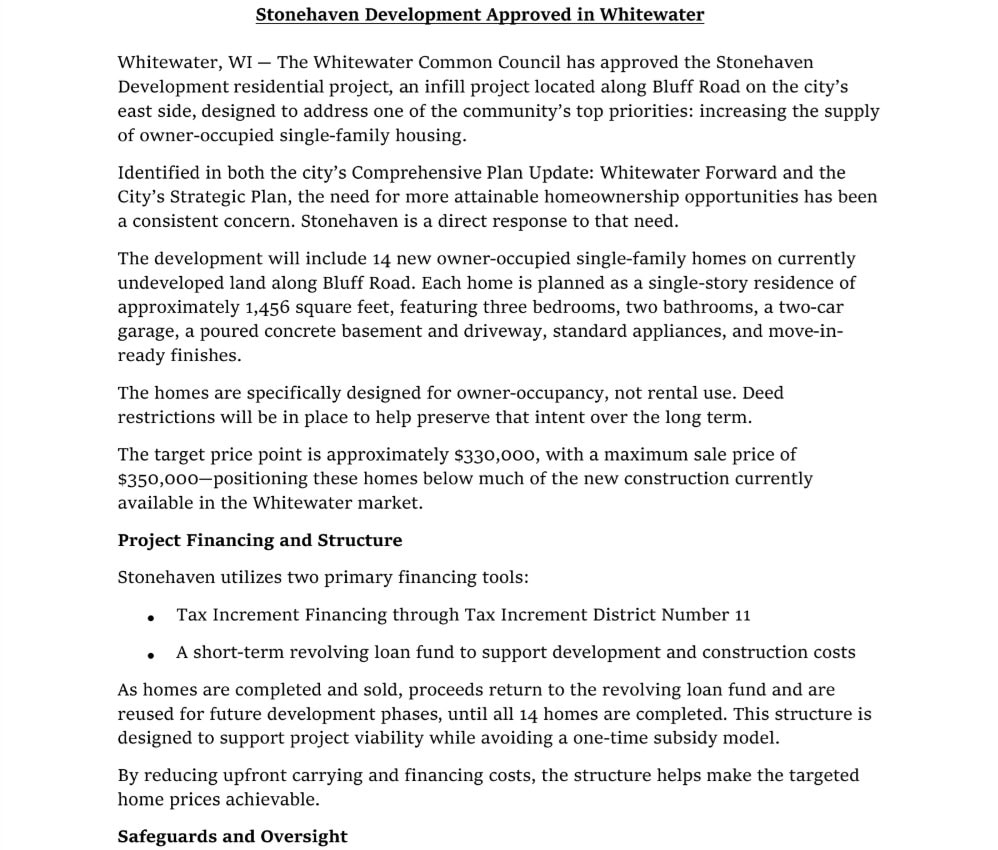
The development calls for 14 modular homes to be built on relatively small lots adjacent to an active railroad line. Four units would be built at a time. The developer is projecting that the homes will be selling in the low to mid $300’s, which would be lower than most other current developments. A city authored financial analysis of the developer’s ability to have adequate financial backing to complete the project at each phase indicated only 15% of the cost of constructing each phase of four homes would be covered by the developer.
Concerns voiced over the acknowledged inexperience of the developer did not sway the council members who voted in favor of the agreement rather than slowing down the process or to consider putting out a similarly financed project out to bid by other developers. It was noted that while much of the property that is involved is owned by the city, other parcels are privately owned.
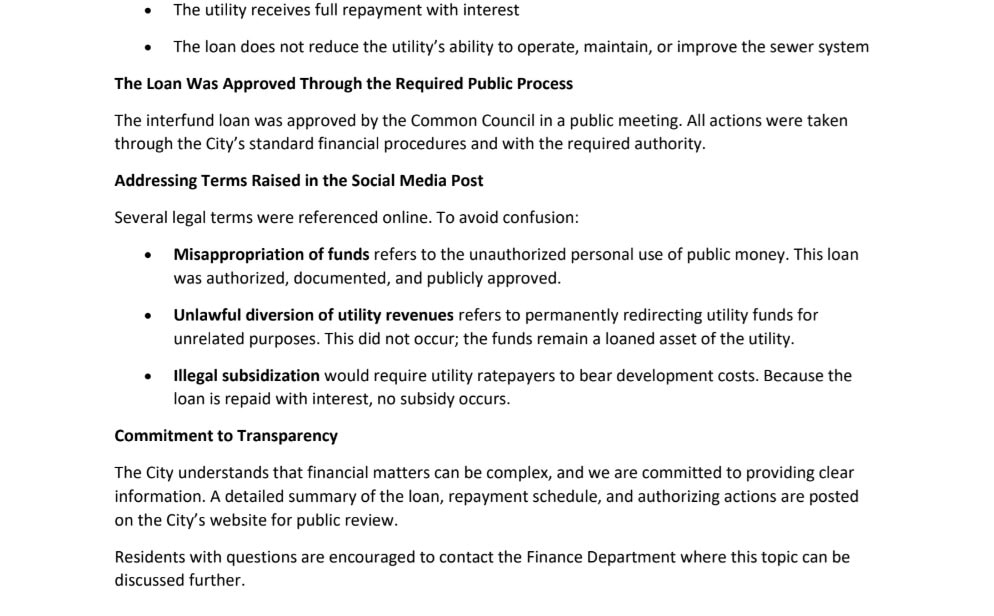
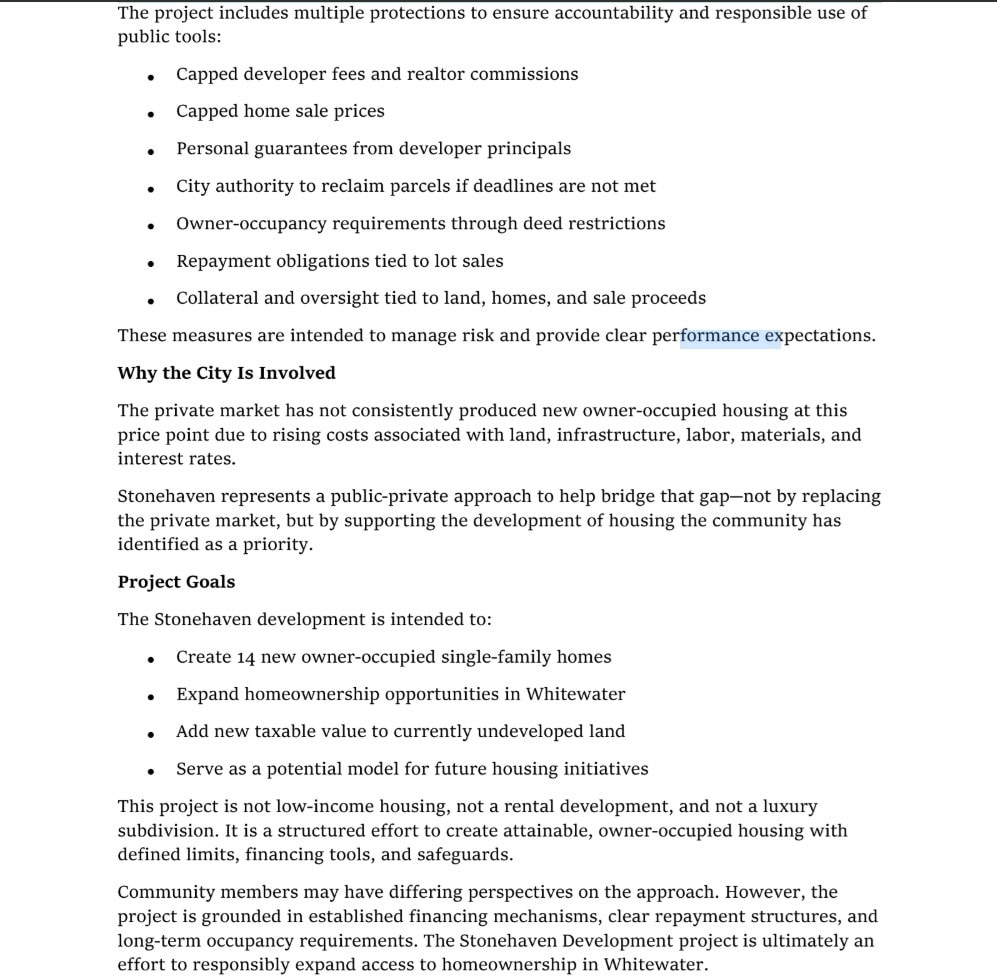
City Press Release
The following press release regarding the project was provided by the city on April 22.
Additional document provided by the city
The following memo, written by Rachelle Blitch, city director of financial and administrative services, was sent to the city manager and Common Council on April 22. A copy was distributed to the press.