


Rebecca Fredericks shared the following perspective:
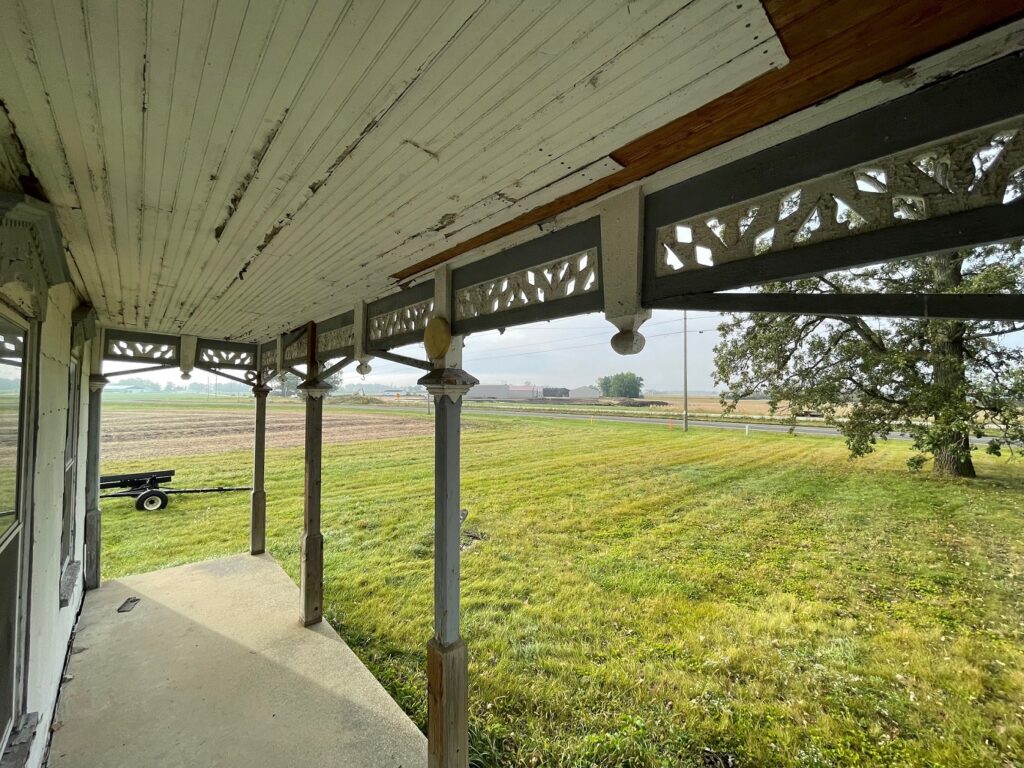
I spent a couple golden hours this past fall wandering around a dilapidated old farm house just outside Whitewater. The house was set for demolition, as it was plagued with asbestos and deteriorated beyond what could be overcome. But inside and outside, the house was still so beautiful, loaded with beadboard and ornate moldings, delicate spindles, and the lacey type of ornamental wooden millwork that simply doesn’t exist anymore. The entire place was peeling and faded, and the floors were uneven. The walls were leaning away in sickly angles, and those carved wood pieces I loved so much were now delicate and feather-light, having spent so long exposed to the elements. And still, in the waning afternoon sunlight, the house stood tall and stately, still so beautiful. With the tiniest bit of a squint, I could blur away a hundred years of wear and tear and see that spectacular place as it STILL WAS: a thing so valued and precious that someone toiled away on it day after day, adding value and meaning and beauty to something so functional: a building. I wish you could see what I saw that day, but you cannot; it doesn’t exist anymore. In many cases, when something is gone, it truly is gone forever.
The same will be the case for every lost acre of farmland if the Whitewater Solar project is successful in its mission to install solar panels and supporting structures and fences on over 2500 acres of prime farmland. The land is inherently valuable as it is, that is no question. But that may only be truly appreciated by many when it has been lost. This isn’t an argument about the lost views of rolling green fields, it’s about different values. This is about lost potential for growing our own food, and sustaining this country. It’s about not stripping away a valuable natural resource–the soil–and pouring concrete and driving stakes into drainage systems that permanently alter the functional use of the land. It will simply never be the same again. It will be stripped of its topsoil and baked for decades under solar panels. And then, when the solar farm is valueless, what then? Actually, who knows? No one has ever seen the way this ends. You’d have to believe that the Earth, invested in and worked on for years can simply be “returned to it’s previous state.”
I’m actually not against solar energy, on its face. Alternative fuels may in fact have their place. I can simply think of a million better places to put it than directly on something we can’t stand to lose.
For anyone interested in sharing their thoughts, the Wisconsin PSC invites public comments THROUGH 12/23 ONLY at the following link: https://apps.psc.wi.gov/ERF/ERF/comment/filecomment.aspx?util=9828&case=CE&num=100
Editor’s note: The Whitewater Banner does not have a position on this proposed project. We provided an overview with various perspectives in this article that we published on December 21.