Wishing you a Happy and Healthy New Year. Thank you for reading The Whitewater Banner.





Wishing you a Happy and Healthy New Year. Thank you for reading The Whitewater Banner.

(Jefferson County press release) All Jefferson County Snowmobile Trails will be open at 5:00 p.m. on Friday, December 31, 2020.
This includes all County Trails – both north and south.
Some trails may be closed due to open water.
Plowed fields may be rough.
Please ride safely.
Please stay on the marked trails and obey all signage.
Please call the Snowmobile Alliance 24-hour Hotline at 920-699-SNOW (7669) daily for current information. Snowmobile trails in adjoining counties may be closed. Trail users should check with each county to determine trail status.


Every week the Irvin L. Young Memorial Library offers a new take home craft activity!
Craft videos are posted Mondays at 11:00 a.m. and take-and-make kits are available during that week.
Children’s Crafts – January 4 and 19
Adult Crafts – January 11 and 25
Visit the Library’s Facebook page or YouTube channel to view live programs or watch recordings of past library programs. Visit our website for more information.
whitewaterlibrary.org

Per City Clerk Michele Smith, as of December 30 the following is the status of the candidacy of those persons who have taken out nominating papers for the Common Council election which will be held on April 6, 2021.
Aldermanic District 1: Incumbent Carol McCormick has filed all paperwork and her name will be on the ballot.
Aldermanic District 3: Incumbent Brienne Brown has completed registration paperwork but is still obtaining signatures on the nomination papers.
Aldermanic District 5: Neil Hicks has completed all paperwork and his name will appear on the ballot. Incumbent Greg Majkrzak III has completed all paperwork and his name will appear on the ballot.
Councilmember at Large: Daniel Machalik has completed registration paperwork but is still obtaining signatures on the nomination papers. Lisa Dawsey Smith has completed all paperwork and her name will appear on the ballot. (Incumbent Patrick Singer is not running for reelection.)
Information on district boundaries is available from the City Clerk’s office at (262) 473-0102 or at msmith@whitewater-wi.gov . The City Clerk’s office can also explain the paperwork and circulation of signature requirements which are slightly different for the citywide at-large position than for the individual numbered district spots. Nomination papers must be submitted by Tuesday, January 5, 2021 at 5:00 p.m.
**************************************************************************************************************************
Per School Board Secretary Jaclyn Tueting, as of December 18 the following candidates had filed to run for one of the two open positions on the Whitewater Unified School Board for the election on April 6, 2021.
Incumbent Tom Ganser has completed all paperwork and his name will appear on the ballot.
Maryann Zimmerman has completed all paperwork and her name will appear on the ballot.
Information may be obtained from the School Board Secretary, Jaclyn Tueting, at jtueting@wwusd.org, 419 S. Elizabeth St., or 262-472-8702. The deadline for filing for candidacy with Ms. Tueting is 5:00 p.m. on Tuesday, January 5, 2021. The office will be open on January 4 and 5 from 7:30 a.m. to 5:00 p.m. Candidates are not required to submit nominating petitions. They do not run for a specific seat; in this case, the two candidates with the most votes will be elected.
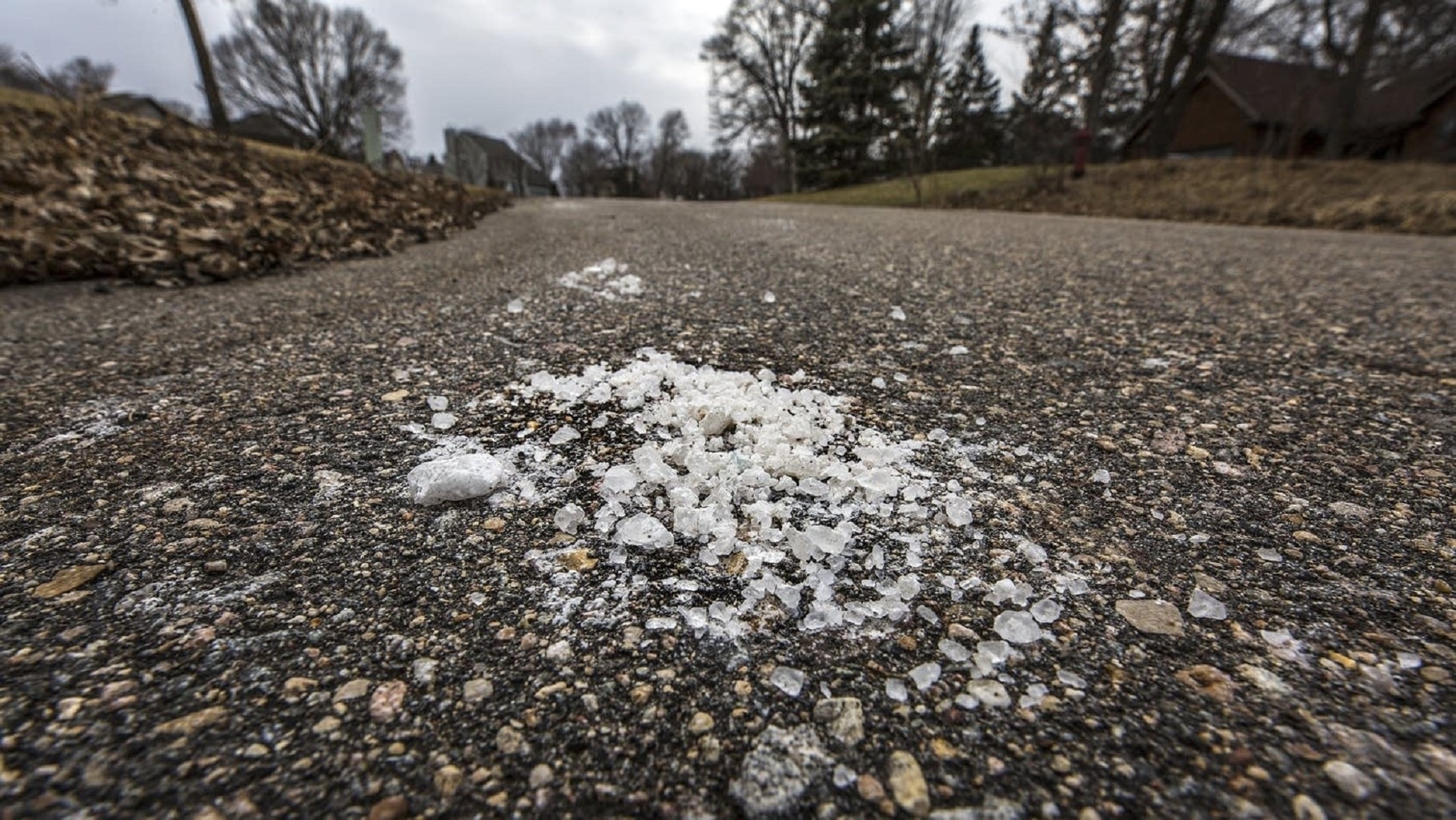
Per an article in the December 29 Wisconsin State Journal titled, “Despite half century campaign, salt continues to threaten Madison lakes, drinking water,” salt that is applied to roads, driveways and sidewalks, “…dissolves in water that finds its way into lakes, streams and even the groundwater that provides the city’s drinking water.” It’s predicted that within fifteen years the water from one of Madison’s wells will begin to taste salty.
Whitewater’s Urban Forestry Commission is concerned about the negative affects of salt on the quality of our lakes, including the wildlife. They encourage you to “Salt smarter at home!”
Residents should try to manually remove snow as soon as possible to avoid slick conditions and unnecessary salt use, especially on paths and sidewalks.
A good rule of thumb is to use 12 ounces of rock salt on 10 sidewalk squares or a 20-foot driveway. How much is 12 ounces? Use an old coffee mug as a salt scoop, and you’ve got it.
You do not have to feel “the crunch” for salt to do its job. Salt lowers the freezing temperature of water so snow and ice can be more easily removed. Putting more salt on a surface does not make snow and ice melt faster or eliminate the need for plowing or shoveling.
If the air temperature is below 15 degrees, sodium chloride won’t work! Switch to sand or a different ice melter.
The Wisconsin Salt Wise Partnership is a partnership of Dane County organizations working to reduce salt pollution. Though we aren’t in Dane County, their concerns should be ours as well. Salt Wise is urging homeowners, municipalities, and private contractors to make a commitment to reduce salt use this winter. Using excess salt harms plants and animals, pollutes our water, damages buildings and corrodes vehicles, roads and bridges. Once you put salt down, it doesn’t go away. Instead, it travels into our lakes, rivers, streams and wetlands, putting our aquatic life at risk and endangering our freshwater resources. Salt also alters the composition of soil, slows plant growth and weakens the concrete, brick and stone that make up our homes, garages, bridges, and roads.
According to a recent report from Public Health Madison Dane County, more than 38,000 tons of salt were spread on Madison and Dane Co. roads during the winter of 2016-2017, and that doesn’t include what was spread on parking lots, sidewalks and driveways. That is enough to pollute over 29 billion gallons of water. There is a way to cut down on salt use and keep our roads, parking lots and driveways safe: Use only what you need — and that’s less than you might think!
Believe it or not, just a coffee mug of salt is enough to treat an entire 20-foot driveway or 10 sidewalk squares. Scatter the scatter salt so the pattern should look like the image below.

Other strategies include:
Do your part to help out our community and local water resources. Be Wisconsin Salt Wise! Find out more at www.wisaltwise.com.

(UW-W press release) The following students have been trained and certified to be University of
Wisconsin-Whitewater resident assistants for the 2020-21 academic year.
Whitewater, WI – Anai Parker, who is majoring in psychology
Whitewater, WI – Oliver Wink, who is majoring in social work
RAs are student staff members who serve as positive resources for other students on their residence hall floor, and encourage community-based learning and interaction among residents.
“The RAs are a critical component to our students’ UW-Whitewater experience. They demonstrate positive leadership and serve as role models to many of our students,” said Amanda Krier-Jenkins, assistant director – staff and academic development. “Collectively they have been a part of hundreds of academic interventions, dozens of community-building events and initiatives, and they support the community standards that allow residents to maximize their academic and personal success.”
RAs must maintain at least a 2.0 GPA, full-time student status and complete several interviews with peers and academic staff members to hold this position. Students receive numerous benefits, as well as outstanding experience in communication skills and leadership.
URGENT - WINTER WEATHER MESSAGE
National Weather Service Milwaukee/Sullivan WI
907 AM CST Tue Dec 29 2020

WIZ056>058-062>064-067>070-292315-
/O.CON.KMKX.WS.W.0003.201229T2200Z-201230T1800Z/
Sauk-Columbia-Dodge-Iowa-Dane-Jefferson-Lafayette-Green-Rock-
Walworth-
Including the cities of Baraboo, Reedsburg, Prairie Du Sac,
Sauk City, Portage, Columbus, Lake Wisconsin, Lodi, Beaver Dam,
Waupun, Mayville, Dodgeville, Mineral Point, Barneveld, Madison,
Watertown, Fort Atkinson, Jefferson, Darlington, Shullsburg,
Benton, Belmont, Argyle, Blanchardville, Monroe, Brodhead,
Janesville, Beloit, Whitewater, Delavan, Elkhorn, Lake Geneva,
and East Troy
907 AM CST Tue Dec 29 2020

...WINTER STORM WARNING REMAINS IN EFFECT FROM 4 PM THIS
AFTERNOON TO NOON CST WEDNESDAY...

* WHAT...Wet heavy snow expected. Total snow accumulations of 6
  to 8 inches.

* WHERE...Dodge, Jefferson and Walworth Counties.

* WHEN...From 4 PM this afternoon to noon CST Wednesday.

* IMPACTS...Travel could be very difficult. The hazardous
  conditions could impact the morning or evening commute.

PRECAUTIONARY/PREPAREDNESS ACTIONS...

If you must travel, keep an extra flashlight, food, and water in
your vehicle in case of an emergency.

The latest road conditions for the state you are calling from can
be obtained by calling 5 1 1.

(City of Whitewater submission) The City of Whitewater Department of Public Works will collect Christmas trees on Tuesday, January 5, and Tuesday, January 12, 2021. Please place your tree on the terrace by 5:00 a.m. on one of those dates.
Residents who wish to have a tree picked up before or after the above scheduled dates must call the Department of Public Works at 473-0560 before 5 a.m. on Tuesday that week to schedule a brush pick up.
Trees that have been flocked or contain wire will not be collected. Please place these trees for collection by John’s Disposal on the second Thursday of the month, your bulk pick up day.
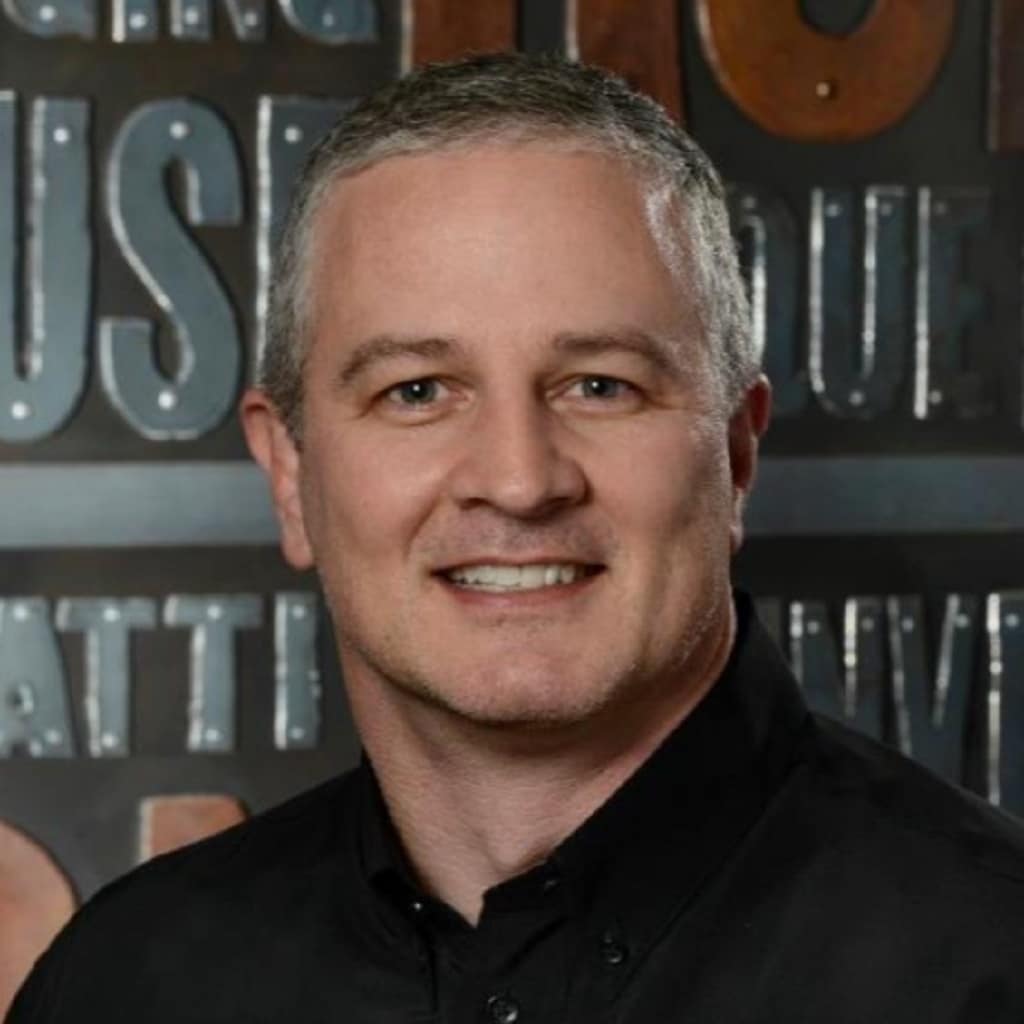
Banner note: Per Carol Holford, his aunt, “Paul Jones is a 1989 graduate from Whitewater High School. Paul married Tina Gorby, also a WHS graduate. They have three children, Ciara, Sydney and Donovan and live in Fox Point, WI.” Our thanks to Ms. Holford for providing us with this story.
(From Marquette Today, December 21, 2020)
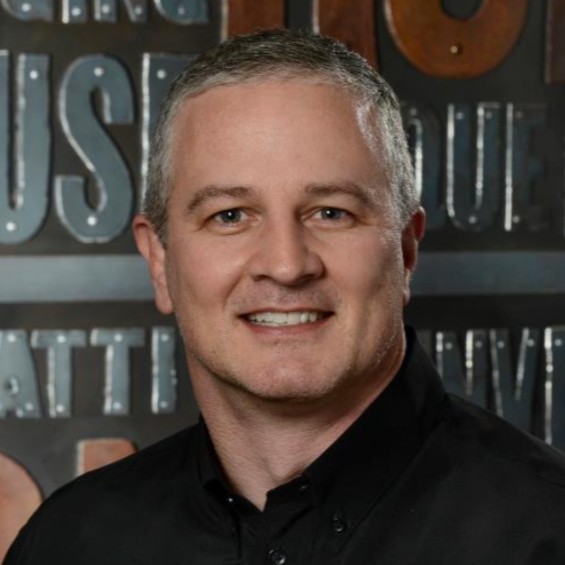
The university has named Paul Jones as its new vice president and general counsel, President Michael R. Lovell announced today.
Jones, who has served as intrapreneur-in-residence in Marquette’s 707 Innovation Hub since February 2020, will begin in his new role on Monday, Jan. 4, 2021.
Jones joins Marquette after spending 10 years as an executive officer at Harley-Davidson as the company’s chief legal officer, as well as other strategic business roles. He represented Harley-Davidson in co-founding the Near West Side Partners, of which Marquette is an anchor institution, and served as a member of the NWSP Board of Directors and chair of the Steering Committee.
“Paul is a familiar figure on campus and he embraces the mission and values of Marquette University in his time with the 707 Hub and through his work with the Near West Side Partners,” President Lovell said. “We are excited by the wisdom and experience he will bring to Marquette, and I have the utmost confidence that he will lead the Office of General Counsel strategically and with our university values in mind.”
“I’m truly humbled and extremely excited to join the leadership team at Marquette University and I appreciate President Lovell offering me this opportunity,” Jones said. “I’ve worked closely with many people at Marquette during my time at Harley-Davidson, with the Near West Side Partners and now at the 707 Hub. Marquette is an excellent Catholic, Jesuit university, and I look forward to engaging in its exciting future and serving its mission.”
While at Harley-Davidson, Jones was responsible for managing the company’s global legal risk and overseeing all legal matters – including product integrity, product recall and public policy/government affairs functions. From 2015 to 2018, he also worked to transform and lead a wide range of key business functions, including corporate strategy, business development, business intelligence, and strategic licensing and partnerships.
In his capacity as intrapreneur-in-residence in the 707 Hub, Jones has overseen student-run venture capital programs, served as a mentor for student-led business startups, worked to strengthen and coordinate collaboration for innovation programing and activity across the university, and is helping to develop an intrapreneurship pathway as a program of distinction.
He is also a member of the Marquette Law School Dean’s Advisory Board and serves as vice chair of the Greater Milwaukee Foundation Board.
Jones has been recognized as a “Diversity Champion” and “Top Corporate Counsel” by the Milwaukee Business Journal.
Jones was previously a partner at the law firm Foley & Lardner LLP in Milwaukee. He earned his law degree from Georgetown University and holds advanced degrees from Northwestern University’s Kellogg School of Management and the University of Oxford’s Saïd Business School.
President Lovell expressed his appreciation for the work done during the past several months by the Office of the General Counsel since the retirement of former Vice President and General Counsel Cindy Bauer. “I want to especially thank Senior Associate General Counsel Jeff Kipfmueller for his continuing dedication to Marquette in leading the office as acting vice president since April,” President Lovell said. “Jeff has served Marquette for more than 25 years and I’m grateful for his enduring commitment to our university.”