Editor’s Note: The following was provided by the University of Wisconsin-Whitewater Police Department.
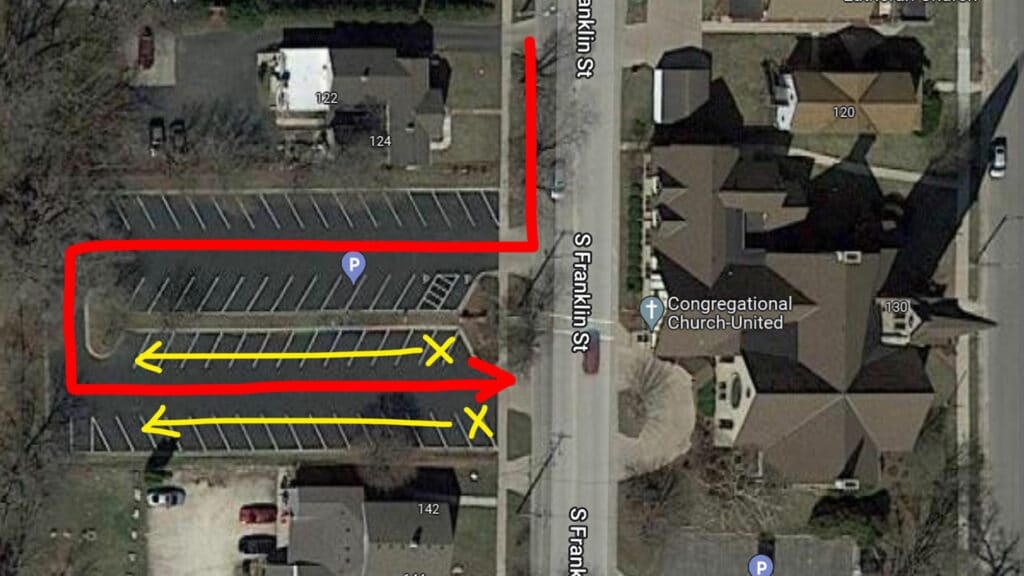
We’re excited to announce that we have the official details for our drive-in pancake fundraiser! Stop by Congregational UCC on May 7th from 7:30 a.m.-10:30 a.m. to pick up your free pancake breakfast. Additionally, you can meet K-9 Truss and many of the UW-Whitewater police officers!
We are also having a 50/50 raffle at the pancake breakfast! Thanks to companies from around the community, you could be a lucky winner of some great prizes! All the proceeds from the 50/50 raffle will go back directly to the UW-Whitewater Police Department’s K-9 Unit.
We’ve attached the map for our drive-thru as well; if you have any questions or want to donate ahead of time give us a call at (262) 352-5666.
Editor’s Note: The following was provided by the University of Wisconsin-Whitewater’s College of Arts and Communication, Department of Theatre/Dance.
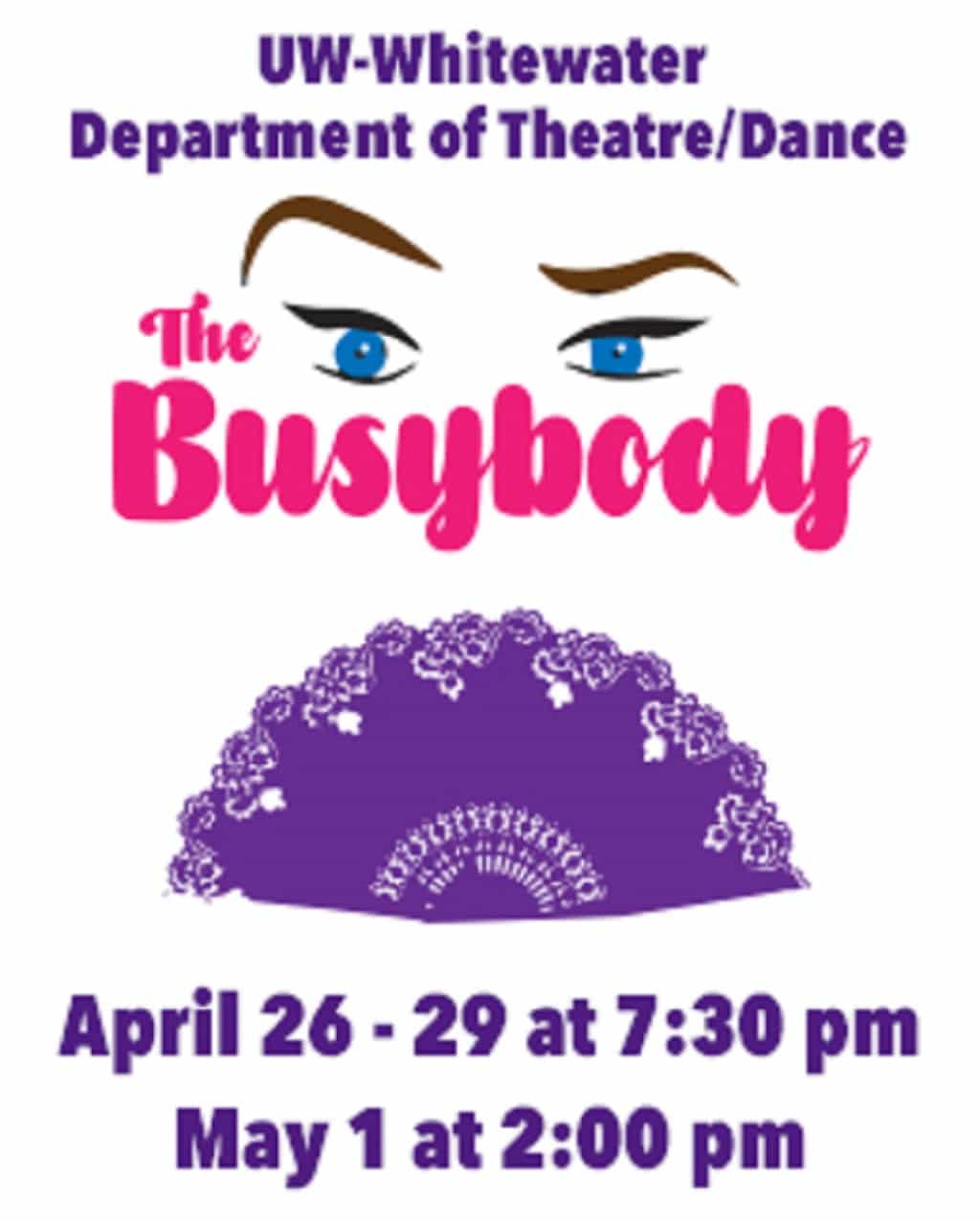
The College of Arts and Communication at the University of Wisconsin-Whitewater announces the final show of the Theatre/Dance season with “The Busybody” by Susanna Centlivre. Directed by Sara J. Griffin, this production will run in Barnett Theatre April 26-29 at 7:30 p.m. and May 1st at 2:00 p.m. In addition, an outdoor performance will be held on April 30th at 2:00 p.m. at the Frawley Family Amphitheater in Cravath Lakefront Park. Tickets are on sale for the performances in Barnett and can be purchased online at tickets.uww.edu or by calling (262) 472-2222. The outdoor performance is free to attend and is a bring your own chairs, snacks and beverages event. The Barnett Theatre is located in the Greenhill Center of the Arts at 950 W. Main St., Whitewater, WI 53190. Masks are suggested for anyone attending events in the Greenhill Center of the Arts and the Young Auditorium. Do not come to campus if you are ill. For the most up to date campus safety information, visit the Warhawks are Back webpage.
Parents just don’t understand! In a time when arranged marriages were the social expectation, a renegade couple and their friends plot to escape the lousy marriages their controlling caretakers have set up. Will a nosey nobleman ruin their plans or save the day? This hilarious restoration comedy, written by one of the most highly acclaimed female playwrights of the 18th century is full of wit, adventure, cunning and love.
Centlivre wrote many plays based on the social expectation of her own life from 1669 – 1723 in England. No stranger to the idea of arranged marriage, she was known to intertwine politics and comedy to get her own political ideas to the audience. Themes of feminism in comedy were extremely prevalent in her work and it’s because of this that many of her earlier works were written anonymously in order to avoid discrimination. “The Busybody” was the first one of her plays to become popular, followed by another five years later titled “The Wonder! A Woman Keeps a Secret.”
On choosing this production Griffin states, “We, as a department, are striving to diversify the playwrights we choose to showcase in our season, and I am so thrilled to direct this Restoration era gem of a play written by a woman! Finding a play written in that time period, by a woman, that isn’t problematic to the audiences of today is a tall order. But Susanna did it, and created a delightful tale that the cast and I are beyond delighted to share.” No stranger to feminist concepts and restoration comedies, Griffin has adapted the script in an effort to bring modern and current language to the forefront. “What fun is a play if all the references are over your head, or don’t make sense to you? The only way a play stands the test of time is if audiences can continue to relate. If the language is a barrier to that, the play either needs adapting or it will no longer be produced. I’m not suggesting that we discard historical plays because their language is antiquated, far from it. But we must be actively looking for ways to make that language resonate with our audiences, or we are missing the point of theater entirely. The plays should be for the audience, not an opportunity for an artistic flex.”
The cast includes: Harry Heinrich playing Sir Francis Gripe, Makayla Fedler playing Miranda, Emma Dutcher as Scentwell, Bryce Giammo as Charles, Kemi Ajao in the role of Whisper, Carter Waelchli [WHS ’21] as Marplot, Robert Chelius as Sir Jealous Traffick, Erin McKee as Isabinda, Valerie Gyorke in the role of Patch and Sam Behling in the role of Sir George Airy.
Editor’s Note: The following was provided by the Fort Community Credit Union (FCCU.)
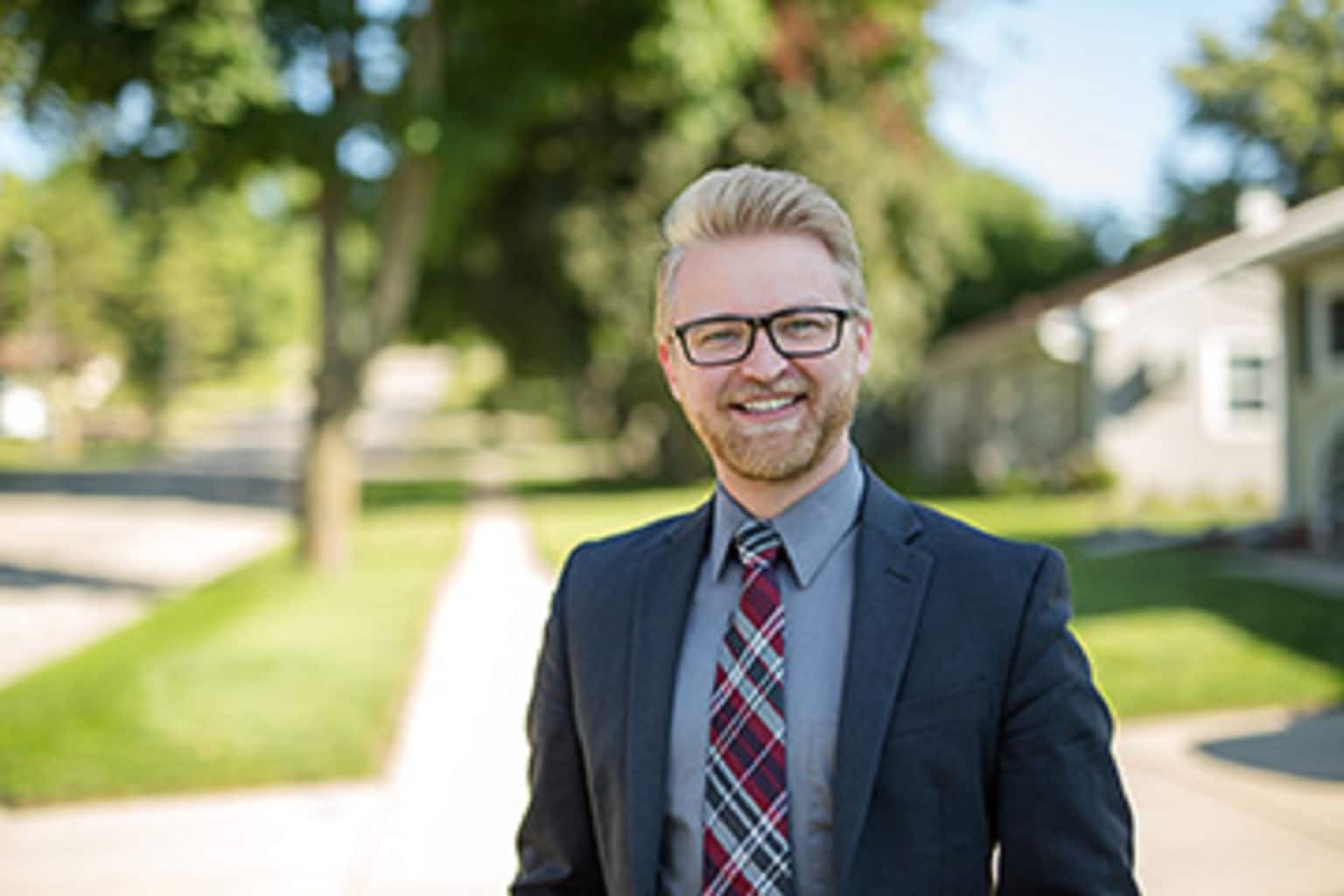
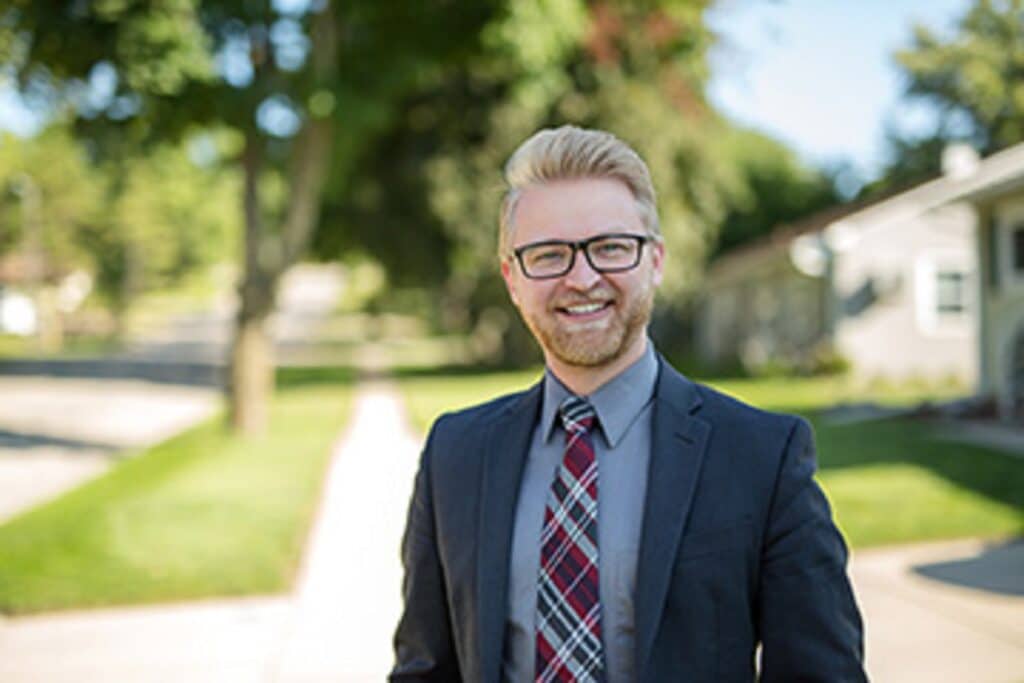
Fort Community Credit Union (FCCU) is pleased to announce the promotion of Jeffery Anderson to Director of Marketing. In 2017, Anderson joined FCCU as a Marketing Intern while pursuing a Bachelor of Business Administration in International Business with a Digital Marketing Certificate at the University of Wisconsin-Whitewater. Following his graduation in 2018, Anderson joined FCCU full-time as Marketing & Digital Media Specialist.
Jeffery Anderson
“Jeffery’s ingenuity and leadership have been instrumental in FCCU’s success over the past five years, especially as digital channels continue to become more important in the financial services industry,” said Danielle Frawley, Executive Vice President and Chief Experience Officer at FCCU. “We are incredibly proud of the talent Jeffery, and the entire Marketing Team, bring to FCCU.”
Anderson spends much of his free time volunteering in the community. In 2018, Anderson joined for The Flock, a group of soccer supporters who raise awareness and funds for charitable organizations in southern Wisconsin. Anderson became the Marketing Committee Lead in 2019, helping the organization raise nearly $60,000 in the first two years. Anderson also served on the inaugural Lemon Council for Fort Atkinson’s Lemonade Day, an in-depth program that teachers kids how to start and run their own businesses via a lemonade stand.
Anderson also enjoys reading and spending time with his dog Marcel, also known as FCCU’s honorary “Chief Cuteness Officer.”
About FCCU: Established in 1940, Fort Community Credit Union (FCCU) is a member-owned financial cooperative open to anyone living or working in Dane, Dodge, Jefferson, Rock, Walworth, or Waukesha counties. With branch locations in Fort Atkinson, Jefferson, Watertown, and Whitewater, FCCU holds $339 million in assets and has more than 21,000 members. For more information about FCCU and the products and services they offer, visit fortcommunity.com or call (920) 563-7305.
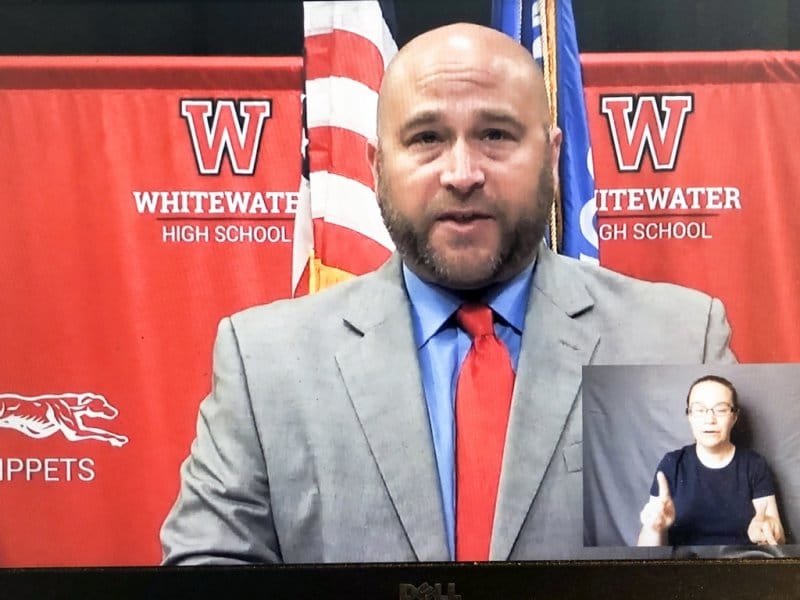
According to a press release from the Whitewater Unified School District on April 18, “Mr. Michael Lovenberg has resigned as Whitewater High School Principal effective June 30, 2022. Mr. Lovenberg has served as WHS principal since 2017. Mr. Lovenberg stated, “I would like to thank the Whitewater Unified School District for the opportunity to be the Principal of Whitewater High School for the past five years. I have enjoyed working with the staff, students and families of Whitewater High School and wish the community of Whitewater nothing but the best.”
“The District would like to thank Mr. Lovenberg for his continued desire to ensure student success throughout the last five years.”
“The Whitewater Unified School District has officially begun its search for the next Whitewater High School principal. The position would begin on July 1, 2022. Interested candidates should apply on WECAN. The district will hold listening sessions for High School Staff, as well as a community survey. Candidates will be interviewed by teams composed of administrators, school board representatives, staff and will have student participation. The district is committed to a thorough and informed process with hopes of finalizing this decision in a timely manner in order to secure the best individual and appropriate preparation for the 2022-23 school year.”
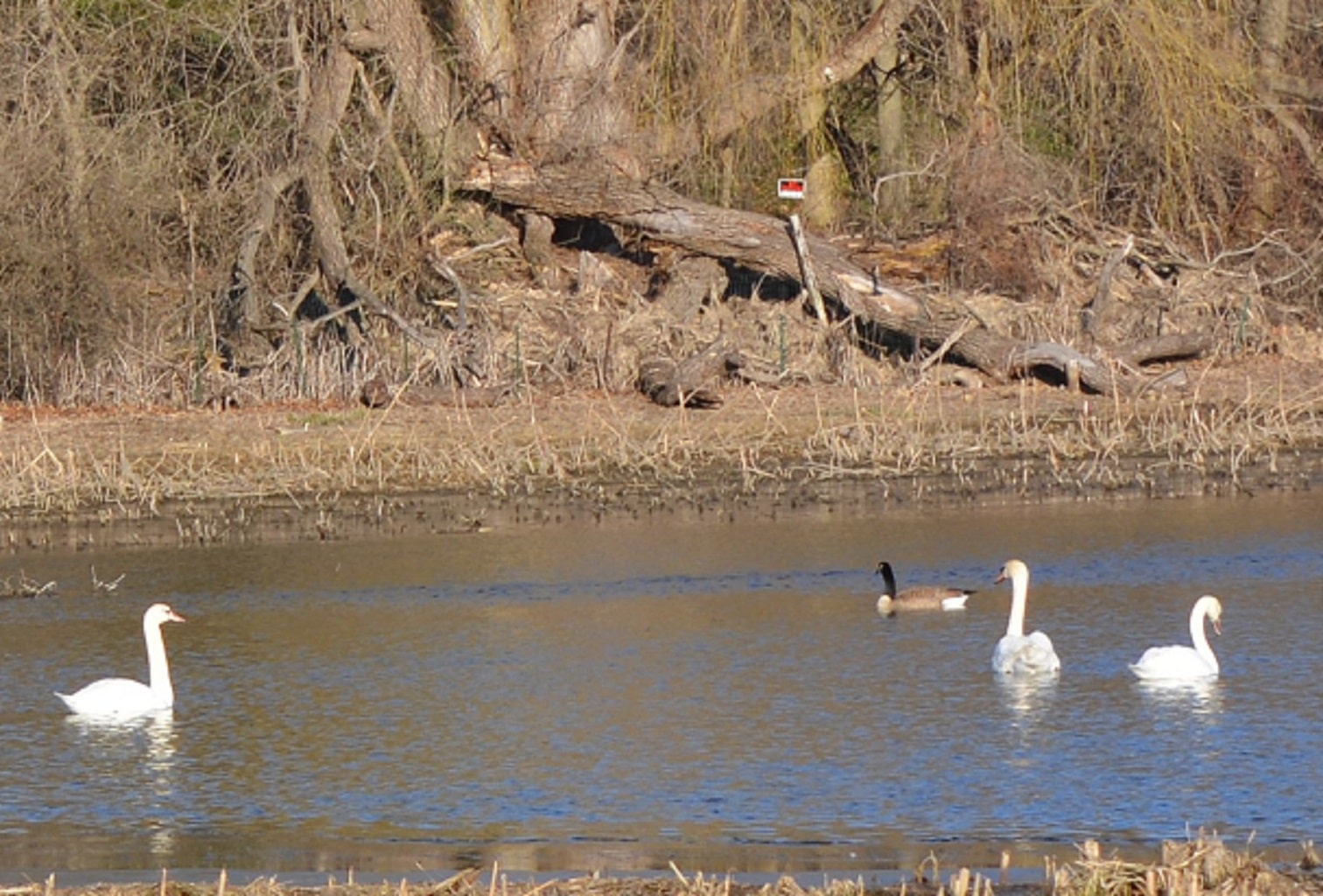
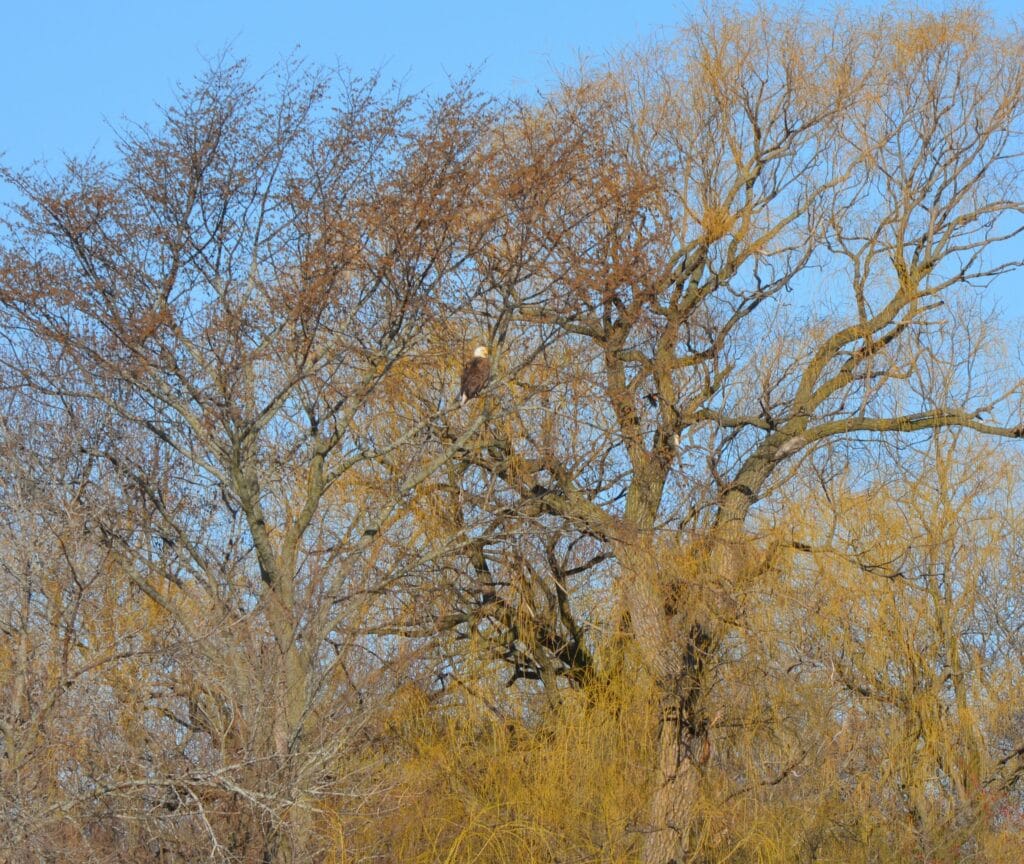
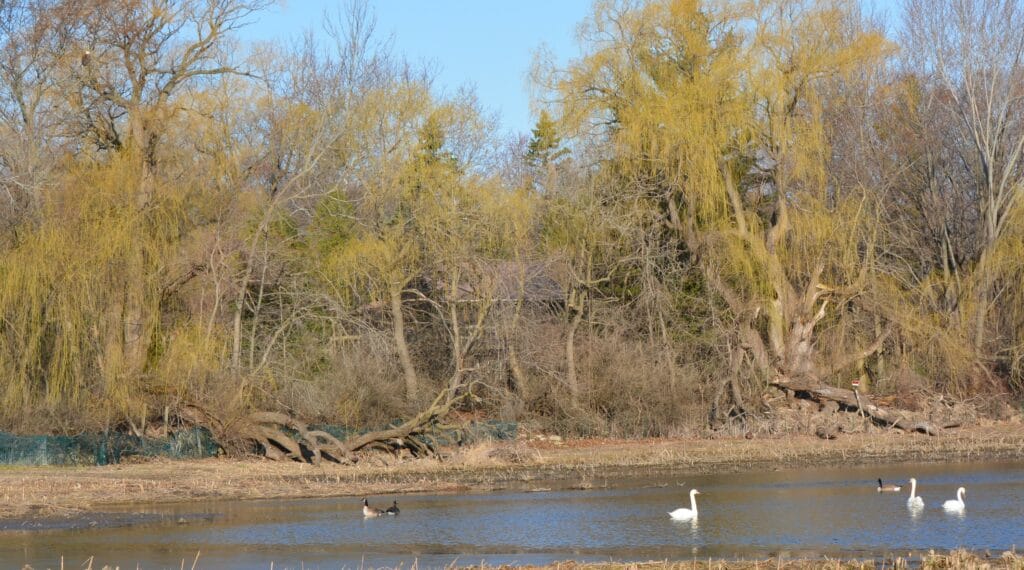
Steve Watson writes, “On my morning walk on April 16, I was watching these three swans on Cravath Lake. An eagle appeared and circled over and landed in a tree overlooking the swans and geese.”
Three swans and geese on Cravath Lake.Bald eagle at Cravath LakeBald eagle in upper left corner with swans below
Our thanks to Steve Watson for sharing more interesting nature photos.
— Our Readers Share: We hope that you might have something that you’d be willing to share. Anything that’s been created by someone else should, of course, be credited, and you should ask their permission if you’re able. We cannot post copyrighted material without permission. We can’t guarantee that we’ll have space for all submissions, and contributions will be subject to editorial board approval. The one definite exclusion is anything politically oriented. We will assume that you’re willing for us to include your name as the submitter unless you indicate that you prefer to remain anonymous. Send to whitewaterbanner@gmail.com or click on “submit a story” near the top right of our homepage. Thanks for thinking about this!
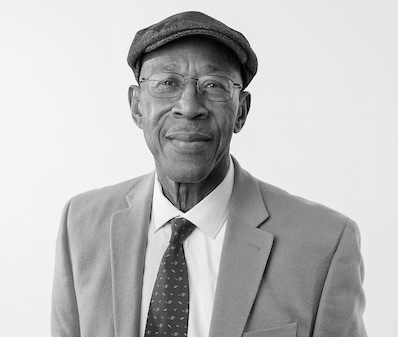
Roger Pulliam (UW-Whitewater Photo/Craig Schreiner)
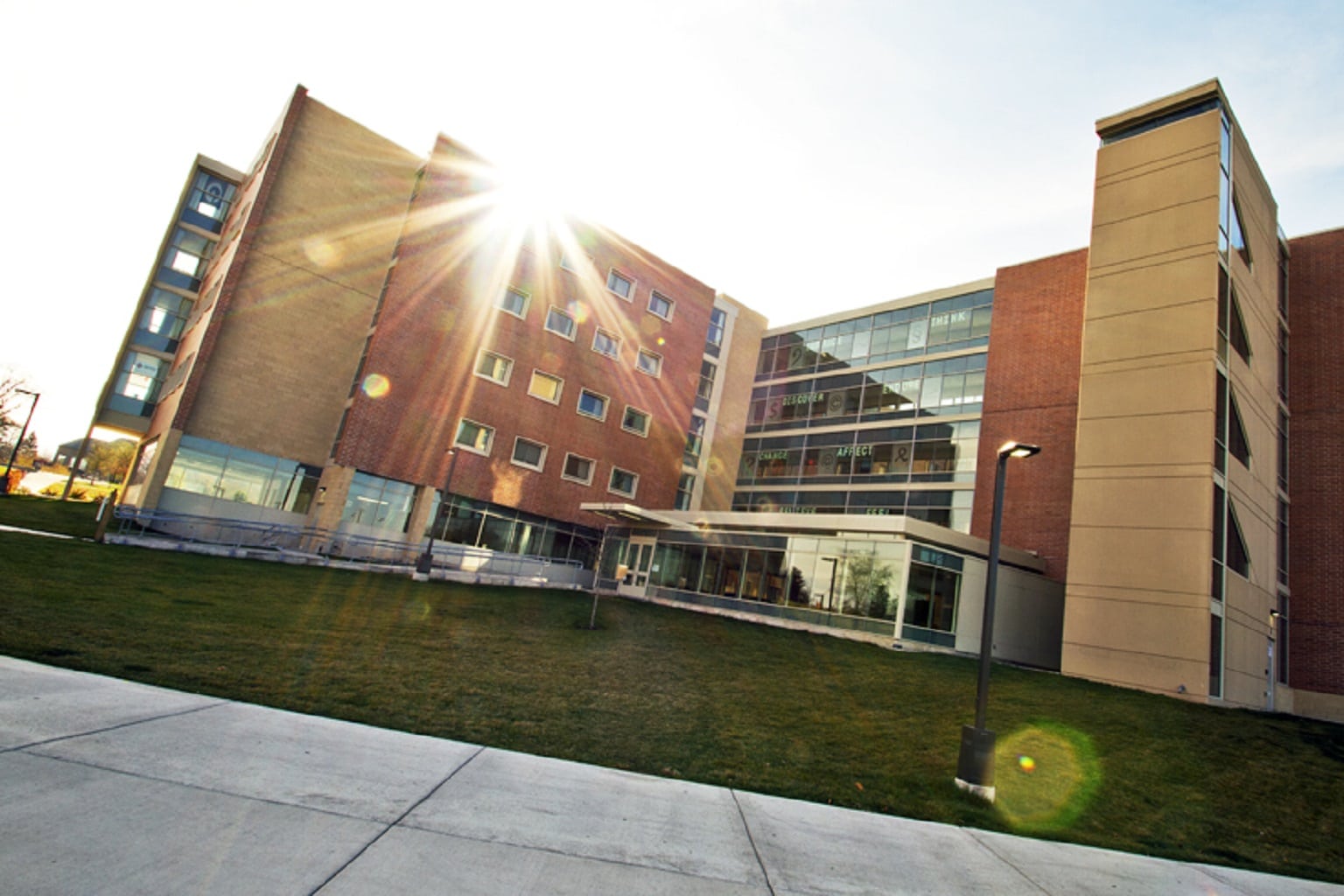
Readers driving by Starin Road and Prince Street recently have probably noticed a new sign on the residence hall that has been known as Starin Hall since 2010.
According to an article in the Royal Purple, “On Saturday, April 2 the UW-Whitewater community gathered in the University Center to celebrate the life and work of Dr. Roger Pulliam through the renaming of Starin Hall to Pulliam Hall. “His influence stretched well beyond the Whitewater community and touched the lives of students of color in this state,” said Vice-Chancellor of Student Affairs Artanya Wesley. “He uses an expansive network to expose Black students to high standards of academic excellence, professionalism and giving students critical life skills to lead successful lives. Dr. Pulliam exemplified Black excellence long before it became a hashtag and was popular on social media.”
Opened in 2010, Starin Hall is a 207,900-square-foot residence hall located near the central academic zone of UW-Whitewater’s 400-acre campus. The building holds suite-style units with a 446-bed capacity, two staff offices, one faculty office, and a common kitchen, laundry room and computer lab. It was the first state-owned LEED-certified residence hall in Wisconsin.
The UW System Board of Regents approved the naming resolution at its meeting Thursday, July 8, 2021. The request was previously approved by all of UW-Whitewater’s shared governance groups — Academic Staff Assembly, Faculty Senate, University Staff Council, and Whitewater Student Government.
Pulliam, who passed away in February 2020, had a 60-year career in education in which he showed an unrelenting devotion to representing, including, and advocating for diverse students and educators and promoting the success of his students and community. At UW-Whitewater, he worked in various roles from 1989 to 2018. During his tenure, he served as assistant vice chancellor of academic support services, director of advancement and, most recently, interim chief diversity officer.
Further information regarding Pulliam may be found in an article that was published on The Banner on July 20, 2021.
By Lynn Binnie Whitewater Banner volunteer staff whitewaterbanner@gmail.com
Congressional Districts: Whitewater Shifts Again
Voters who have lived in Whitewater since at least 2001 have lived through a minimum of three changes of congressional district. The history of those changes and the representatives for those districts are shown below.
The 1990 census redistricting left Whitewater in District 1, where it had been located for decades. The most recent representatives were: Les Aspin (D) 1971-93 Peter Barca (D) 1993-95 Mark Neumann (R) 1995-99 Paul Ryan (R) 1999-2002
The 2000 census placed the city in District 2, a consistently Democratic district. Tammy Baldwin (D) 2002-2012
The 2010 census moved Whitewater to District 5, a reliably Republican district. Jim Sensenbrenner (R) 2012-21 Scott Fitzgerald (R) 2021 – present
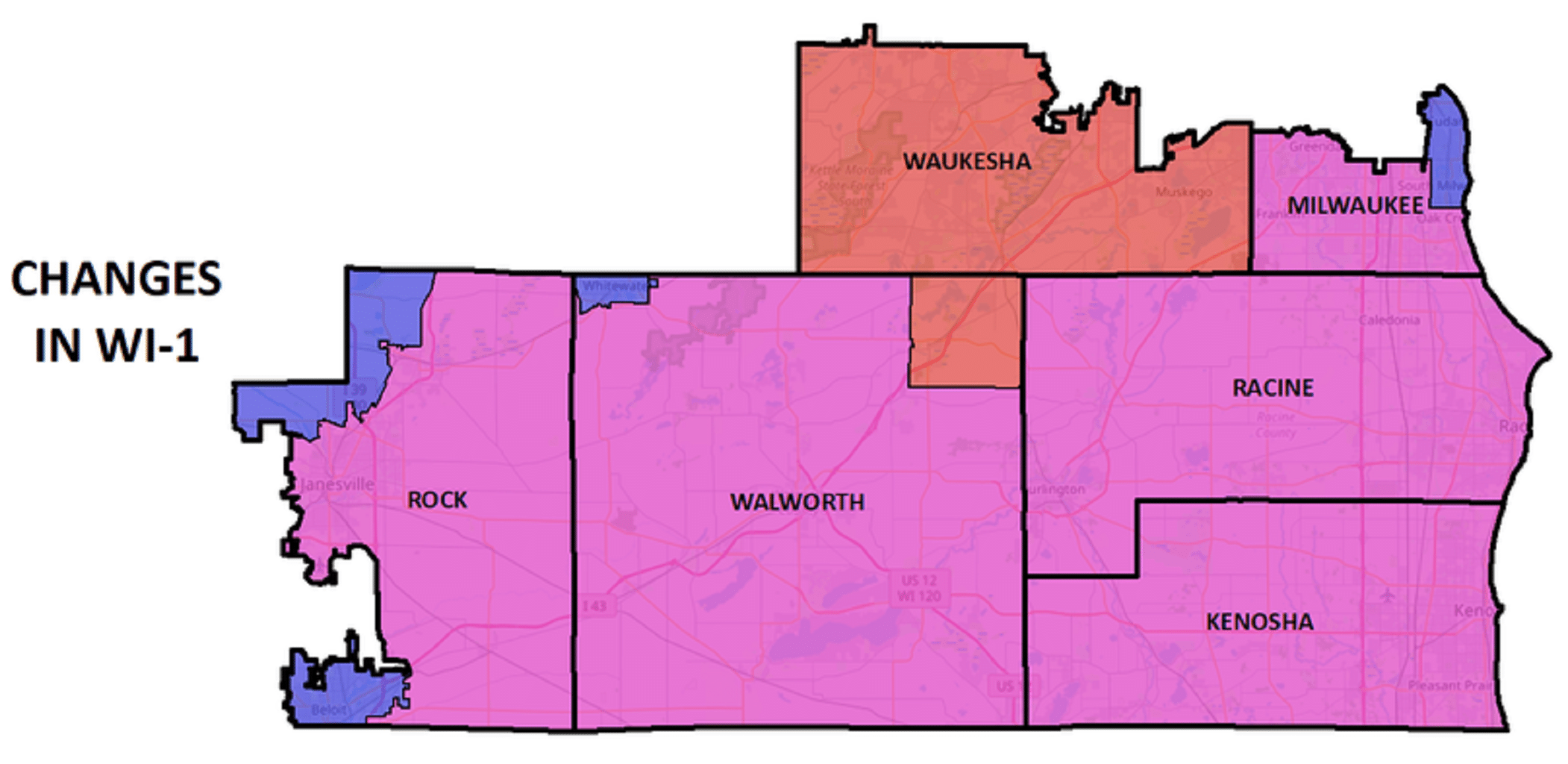
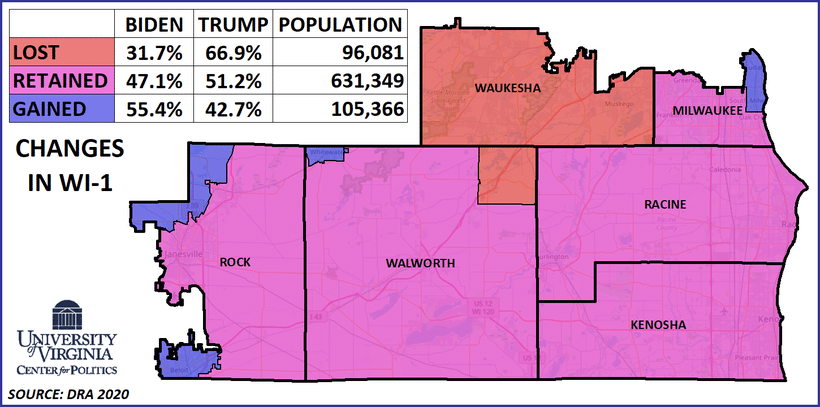
The 2020 census has resulted in Whitewater returning to District 1, a right-leaning district where Bryan Steil (R) is serving his second term. Although Steil does not appear to have announced that he is running for re-election, his early fundraising was reported to be strong. Democrat Ann Roe of Janesville announced in July, 2021 that she would be running for the seat. Whitewater is depicted in blue in the upper left corner of Walworth County in the map below.
Depicted are the additions (blue) and subtractions (red) to existing District 1 (lavender)
A decision by the U.S. Supreme Court has resulted in Whitewater moving back to Congressional District 1 effective January, 2023. It’s the district that represented the city’s citizens for decades until 2002. Since that time the city was in District 2 until 2012, and then until next January, in District 5. The decision will move the city from a district that’s represented by Scott Fitzgerald to one currently served by Bryan Steil. The November election will determine who represents the district for the next two years. Some experts believe that Whitewater’s repositioning could contribute to making District 1 more competitive.
The U.S. Constitution requires congressional districts to be redrawn after each census, and, as usual, Wisconsin’s redistricting following the 2020 census has been controversial. The Republican majority legislature proposed one set of maps, and the Democratic governor ultimately proposed two different ones, with the decision then being placed in the hands of the state Supreme Court. On March 3 that court initially chose Gov. Evers’ proposal, indicating that it met most closely the court’s directive that redistricting should result in as little change as possible. That decision was appealed by GOP leaders to the U.S. Supreme Court, which on March 23 approved the governor’s proposed congressional districts, but sent the state legislative map back to the state court for further review. On April 15 the Wisconsin Supreme Court reversed itself and adopted the legislature’s proposed maps. It was just in time, as candidates for offices that are on the November ballot were able to circulate nominating petitions beginning that very date. Partisan primaries will be held Aug. 9, 2022. The election is on Nov. 8, 2022. It is anticipated that the maps may still be subject to appeal, but it appears that the districts are all settled at least for this year.
This November, Whitewater will be voting for the U.S. Representative in District 1, which has leaned Republican for over twenty years. As shown in the illustration above, however, the new boundaries of District 1 included some significant changes. Additions are Democratic leaning areas around Beloit and Janesville, as well as Whitewater. At the same time, the new district is losing a portion of Waukesha County, a Republican stronghold.
J. Miles Coleman, the associate editor for Sabato’s Crystal Ball at the University of Virginia’s Center for Politics, said both changes benefit Democrats. Former Republican President Donald Trump carried the 1st by about nine percentage points in 2020, but Coleman said Trump’s margin in the new district would have been just two points.
“That could be maybe the most competitive district in the state over the next decade,” Coleman said. “I know that Steil seems to be pretty well entrenched. He fits the area well. But you never know.”
UPDATE: Sources currently available do not appear to indicate whether the entire city of Whitewater will be part of Congressional District 1. It appears that the Jefferson County portion may remain in District 5. Clarification will be provided as soon as available.
This article addresses the impact of redistricting on our Congressional District assignment; changes are also occurring to our state legislative districts, which will be addressed in a future article.