




By Lynn Binnie Whitewater Banner volunteer staff whitewaterbanner@gmail.com
It’s rather common for a fast food restaurant to donate something like 10% of their sales for a few hours or even a day to a designated school or nonprofit organization. This is the 14th year, though, that Jersey Mike’s stores nationwide have scheduled a “Day of Giving” when 100% of their sales are donated to a cause that’s selected by the restaurant owners in each market. This year that date is Wednesday, March 27, and all 41 stores in the state will be donating their sales to Special Olympics WI.
According to Jersey Mike’s, “At the first nationwide fundraiser in 2011, all of Jersey Mike’s 454 locations raised $600,000 for 66 charities. Since then, Jersey Mike’s annual Month of Giving has raised more than $88 million for local charities. This March, Jersey Mike’s hopes to exceed last year’s record-breaking national fundraising total of $21 million and help local charities striving to fulfill their missions and make a difference.”
Editor’s note: The following press release was received from the Whitewater Unified School District.
Ferradermis earned the prestigious FIRST Impact Award at the Northern Lights Regional in Duluth, Minnesota, earlier this month. This achievement secured the team’s spot in the championship competition.
The FIRST Championship is a global competition for youth robotics teams, providing a platform for collaboration and creativity. Ferradermis will face off against 83 other Impact Award winners, vying for the opportunity to join the FIRST Hall of Fame.
The team’s trip to Houston was made possible by generous donations from several community members, organizations, and supporting businesses that covered the entire cost.
“I cannot express enough gratitude for the incredible support our program continues to receive from our community,” said Laura Masbruch, the team’s advisor. “I’m confident the team will represent WUSD well in Houston and do their best to bring home another title for our booming program!”
Special regard goes to an anonymous donor, Applied Material Solutions, the Weber family, anonymous WUSD staff, NAES, The Coburn Company, Streib Construction, and Keystone Real Estate Investments LLC for their considerable contributions of $1,000 or more to the Ferradermis program for this trip. The team also received donations from others across the community.
For more information about Ferradermis and the team’s journey to the FIRST Championship, visit www.ferradermis.org.
Katherine Staniszewski of Whitewater has been accepted for enrollment for the 2024 spring trimester in the Doctor of Chiropractic degree program at Palmer College of Chiropractic’s Main Campus in Davenport, Iowa.
Palmer College of Chiropractic, the first and largest college in the chiropractic profession, has campuses in Davenport, Iowa; San Jose, California; and Port Orange, Florida.
Photos courtesy of Tom Ganser, taken at the March 15 event.
Comment on the Police Department Facebook page: “Last week our staff had the opportunity to read to two classes at Lincoln Elementary through our Kiwanis Cops ‘N Kids book reading program. Each student was provided with a free book and as always, their questions did not disappoint!”
Fort HealthCare is pleased to announce the receipt of a generous donation of $12,050 from Trinity Lutheran Church of Fort Atkinson in memory and honor of Dr. Frank Beran, a beloved figure in our community whose legacy of compassion and service continues to inspire.
Dr. Beran, who served the Fort Atkinson community for over 50 years, left an unforgettable mark on those he cared for and worked alongside. His commitment to excellence in patient care, his dedication to his staff, and his boundless love for the community were evident throughout his career.
Stephanie Beran, his devoted wife of 48 years, fondly recalls Dr. Beran’s impact on the lives of countless individuals. “He impacted generations, and we’re hoping to keep that going,” she reflects.
In tribute to Dr. Beran’s legacy of service and generosity, Trinity Lutheran Church has directed this donation to assist patients in settling medical debts, exemplifying the spirit of generosity and compassion that defined Dr. Beran’s life. Inspired by Dr. Beran’s spirit of generosity, they matched the $6,025 in memorial gifts, doubling the impact of this honorary donation.
“Frank was known for his dedication to the well-being of his community. He always extended a helping hand to those in need, whether through providing medical advice or offering a listening ear. His patients were not just patients to him, they were friends,” noted Stephanie.
“We are deeply touched by Trinity Lutheran Church’s gracious donation in honor of Dr. Beran,” states Michael Anderson, MD, Fort HealthCare President & CEO. “This donation embodies the essence of community support and reflects Dr. Beran’s legacy of care and compassion.”
Stephanie expresses her hope that Trinity Lutheran Church’s donation would inspire others to lend a hand in supporting the community, saying, “You never know the impact one idea has to inspire someone else.”
Pastor Amy Waelchli expressed the church’s commitment to honoring Dr. Beran’s memory through acts of kindness and support for those in need. “Dr. Beran’s life of service inspired us to extend a helping hand to individuals facing medical debt within our community. This donation is a testament to his lasting impact on our community.”
Stephanie recalled a quote from former President Jimmy Carter, “The only things that we can truly give to each other are the only things that we truly need—an ear to listen, a heart to care, a word of encouragement and a hand to help.” She elaborated, “This is how Frank lived, and this is what he was to his community.”
The funds will be utilized to alleviate the medical debt burden of deserving patients, including individuals facing significant challenges such as terminal illness.
Fort HealthCare extends its heartfelt gratitude to Trinity Lutheran Church and all those who contributed to this initiative. Through their generosity, Dr. Beran’s legacy of compassion will continue to uplift and support those in need within our community.
Photos Courtesy of Tom Ganser: These were taken on March 13. There will be two building pads constructed, one of which will be for Aldi, with the other business not yet identified.
Tom Ganser: “I’m pretty sure this was the last wall standing. It was down the next day.”
From left, Dana Schmock, Theresa Peterson, Luis Godinez, Kait Volling, Cara Craig, Kayla Gardner and Nora Berigan, along with Shasta Westaby, who is not present, are the first master-of-science students to graduate from a new master’s program in the Early Childhood Education department at UW-Whitewater on Saturday, Dec. 16, 2023. In this picture, they have just received their academic hoods at the Community Engagement Center. in Whitewater. (UW-Whitewater photo/Finn Hartnett)
Editor’s note: The below press release was received from UW-Whitewater.
Responding to an ongoing need for early childhood education advocacy to meet critical workforce needs, the University of Wisconsin-Whitewater created an online degree designed for professionals and recent college graduates who aspire to advance their careers through a focus on policy studies.
A lack of availability and access to early childhood education and care in the United States has been long seen as a crisis with serious impacts on families, business productivity, and tax revenue. A study by ReadyNation found that the nation’s infant-toddler childcare crisis now costs $122 billion in lost earnings, productivity, and revenue every year. In Wisconsin, where many rural communities lack care, a report prepared for the Wisconsin Economic Development Institute found that “Wisconsin businesses and employers perceive that a lack of affordable childcare in the state is negatively impacting the state economy and their businesses. Approximately 4 out of 5 Wisconsin employers say the state economy is impacted by parents’ access to affordable, high-quality childcare.”
UW-Whitewater launched the Master of Science in Education in Early Childhood Education Policy in 2022 to give professionals the tools needed to address early childhood education system solutions, preparing them to work with schools, non-profit organizations, governmental agencies, advocacy groups, and institutes of higher education. The program includes 30 credits of instruction and an internship.
In December 2023, its first-ever graduates earned their diplomas.
Dana Schmock, a workforce engagement specialist at the Wisconsin Early Childhood Association, was one of the eight students who formed the first cohort to earn the degree, which is the only such program in the state of Wisconsin and one of the few programs in the nation.
“I signed up for this master’s degree because early childhood is the most integral part of a person’s life,” said Schmock. “After being in the field for my entire professional career thus far, I realized the lack of equity and quantity in quality early childhood education and care experiences. By addressing the current problems and challenges, I am able to use policy to positively impact the field.”
Shasta Westaby, the owner and lead teacher of Just Playing Child Care family child care in Rice Lake, Wisconsin, also earned her degree. Westaby said already she knew she was making a lasting impact on children and families in her role as a childcare provider.
“(But) I wanted to go bigger and have a lasting impact on the field of early childhood education,” said Westaby. “This program puts me in a position to be a better advocate with an understanding of policies, research, and how to go from an idea to proposing bills and policies to decision-makers.”
Luis Godinez, who works in educational support for Milwaukee Area Technical College’s Child Development Program, signed up for the program to become an advocate for early childhood education policy in his community and to engage and network in nonprofit operations.
“I was able to expand my network for nonprofit and community engagement goals, gaining valuable insights and potential partnership with other like-minded students,” said Godinez. “I aim to apply my knowledge by creating connections between the needs of families and other early childhood educators, advocating for necessary policies.”
UW-Whitewater Professor Lucinda Heimer, who serves as director of the master’s degree program, reflected on her students, who work in family childcare, school districts, state agencies and nonprofits.
“Some of them will continue in their positions, some may change their career dramatically, made possible by some of the experiences they had,” said Heimer. “This program is special because it provides space to build community and depth and understanding so students can impact the system. It brings together people who have been working in silos.”
She added, “Through the program, the practitioners begin to see themselves as leaders. They see how their stories and advocacy impact policy to support the field, children, and families to address access and equitable solutions in the early years.“
Heimer pointed to the structure of the program, which is completely online to accommodate working professionals and can be completed in as few as 15 months.
“The pandemic really opened up awareness about how coursework like this could be accomplished online,” said Heimer. “At the same time, our students craved synchronous meetings and interaction. So even if those meetings are online, they show up. The accessibility piece is huge — we have one student in Nigeria and one in Louisiana.”
When asked to reflect on her experience in the program, Westaby, the Rice Lake family childcare owner, spoke to the impact she expects it to have.
“The reach of this degree is going to be powerful,” Westaby said. “The work we did in this program is going to change this field and give unmeasurable volume to the voices of the early childhood professionals who obtain this degree. You have given us the tools and knowledge to change this field for children, families and educators.”
Cara Craig, a home visitor with Head Start/Early Head Start in Chicago, agreed.
“(This program) was exactly what I was hoping for — rigorous, supportive, interactive, empowering, and creating connections!”
After completing the program in December, Craig said, “I am carrying knowledge, power, voice, inspiration, and purpose into my life”.
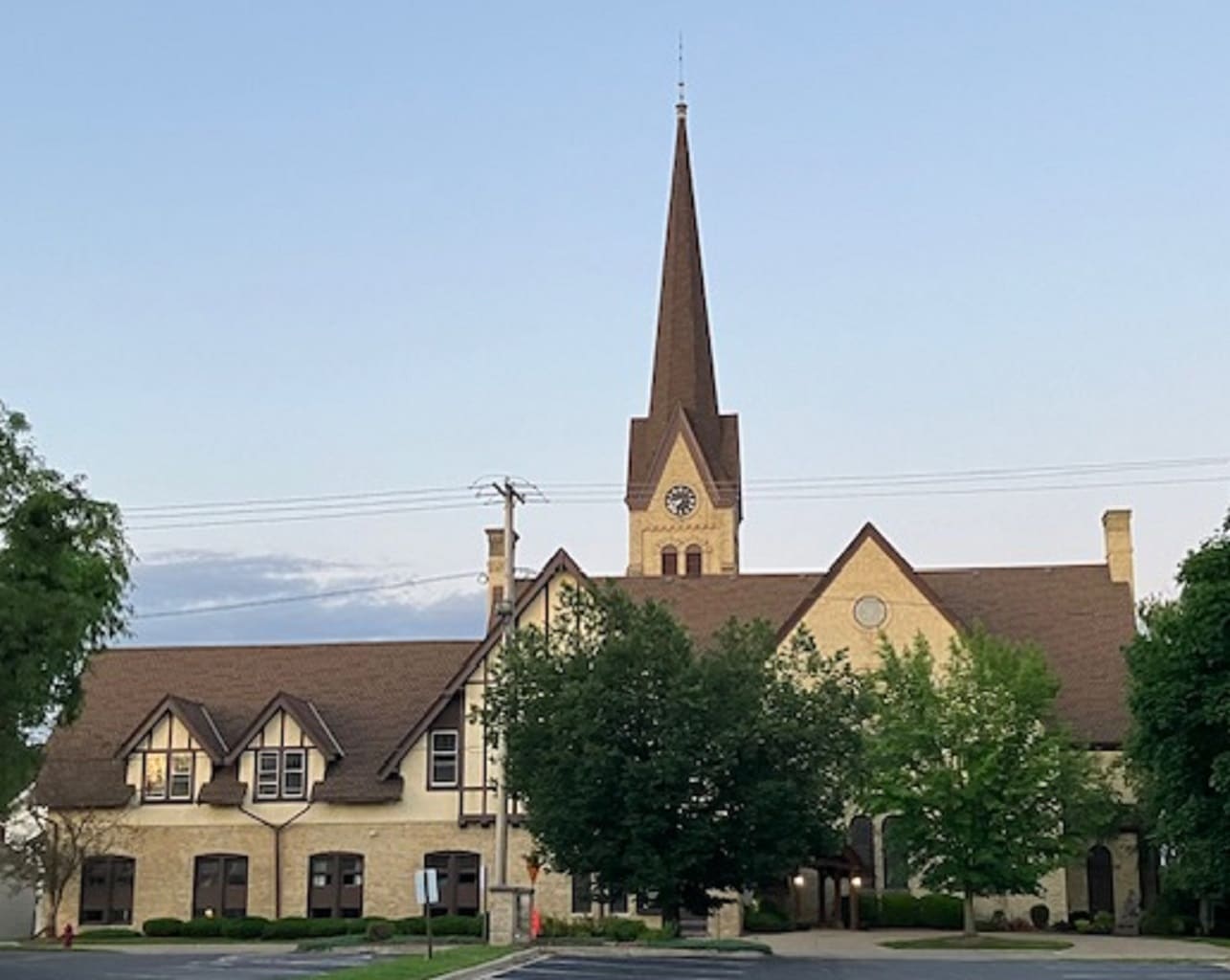
First English Lutheran Church at 401 W Main Street has the following events, open to the public, during Holy Week:
– Monday, March 25th 9:00 a.m. until Wednesday, March 28th at 9:00 p.m., the church will be open for a self-guided tour of the Stations of the Cross. Enter off the parking lot, at the rear of the church and continue forward to the sanctuary for further instruction. Anytime, day or night, you are welcome to come, pray or meditate, and walk the Stations of the Cross with art and recommended scripture readings and prayers.
– Thursday, March 29th at 7 p.m., all are welcome to our Maundy Thursday evening service.
– Friday, March 30th at Noon, the Whitewater Ministerial Association’s Ecumenical Good Friday service begins at First United Methodist Church, 145 S Prairie Street, and continues to the Congregational Church at 12:45, First English Lutheran Church at 1:30, and concludes at 2:00 p.m.
– Sunday, March 31st come celebrate Easter with us. Breakfast is available from 7:30 a.m. to 10:00 a.m., and is free, worship services will be at 7:30 a.m. for our contemporary guitar service and the usual 9:30 am for the traditional service with choir and brass.
By Lynn Binnie Whitewater Banner volunteer staff whitewaterbanner@gmail.com
The Banner does not take a position on political candidates or issues. The following information is provided since it appears that a number of citizens are puzzled by the “Vote No” signs that have appeared on some lawns. We would have also featured a “Vote Yes” sign in this article if we had seen one, but thus far, we have not. If a reader sees a “Yes” sign, please email the address to the Banner at whitewaterbanner@gmail.com.
Neither the city nor the school district is conducting a referendum on the April 2 election. Rather, there are two state constitutional amendments proposed on the ballot. According to the Movement Advancement Project, 19 states allow for citizens to propose such an amendment by initiative. Wisconsin does not have such a provision; instead, a constitutional amendment may only be considered when it has been passed by a majority of the members of both houses of the legislature in consecutive two-year sessions. The governor plays no role. After approval in the legislature, the voters must approve a referendum by a majority vote.
Question 1 reads as follows: “Use of private funds in election administration. Shall section 7 (1) of article III of the constitution be created to provide that private donations and grants may not be applied for, accepted, expended, or used in connection with the conduct of any primary, election, or referendum?”
Explanation of the Proposed Constitutional Amendment (provided by the Legislative Reference Bureau): This constitutional amendment provides that no state agency or officer or employee in state government and no political subdivision of the state or officer or employee of a political subdivision may apply for, accept, expend, or use any moneys or equipment in connection with the conduct of any primary, election, or referendum if the moneys or equipment are donated or granted by an individual or nongovernmental entity.
A “yes” vote – supports the changes to the constitution. A “no” vote – opposes the changes to the constitution.
This proposed amendment received the following support in the legislature. In 2022: Passed in the Senate by a vote of 21-11, and in the House with a vote of 58-32. In 2023: Passed in the Senate 21-10, and in the House, 60-35. The vote to place Question 1 on the ballot was along party lines with Republicans in favor and Democrats opposed.
Question 2 reads as follows: “Election officials. Shall section 7 (2) of article III of the constitution be created to provide that only election officials designated by law may perform tasks in the conduct of primaries, elections, and referendums?”
Explanation of the Proposed Constitutional Amendment (provided by the Legislative Reference Bureau): The constitutional amendment prohibits any individual other than an election official designated by law from performing any task in the conduct of any primary, election, or referendum.
A “yes” vote – supports the changes to the constitution. A “no” vote – opposes the changes to the constitution.
This proposed constitutional amendment received the following support in the legislature: In 2022: Passed in the Senate by a vote of 21-11, and in the House with a vote of 58-32. In 2023: Passed in the Senate 21-10, and in the House, 60-35. The vote to place Question 2 on the ballot was along party lines with Republicans in favor and Democrats opposed.
Further information regarding the amendments may be found by entering your address at vote411.org. Under the section “about this measure,” click on “more information,” which includes arguments for/against each proposal, as well as individuals/organizations that support/oppose each amendment. That site will also show the candidates for the various races on your ballot, including their responses (if any) to several questions.