

Editor’s Note: The following press release was provided by University of Wisconsin-Madison Extension.
Have you noticed small black caterpillars eating the leaves of your oak, maple, birch and other
trees and shrubs? These caterpillars continue eating and growing, turning into larger caterpillars
with long hairs and distinctive red and blue dots on their backs. These particular caterpillars will
keep eating until July before they spin a cocoon and pupate, emerging as adult spongy moths.
Each year, spongy moth (Lymantria dispar) caterpillars defoliate thousands of acres of hardwood
forests, yard trees and other urban trees throughout the northeastern United States, including
Wisconsin. Here are some common questions and answers about spongy moths and what you should do about them.
Spongy moth? Is this a new pest?
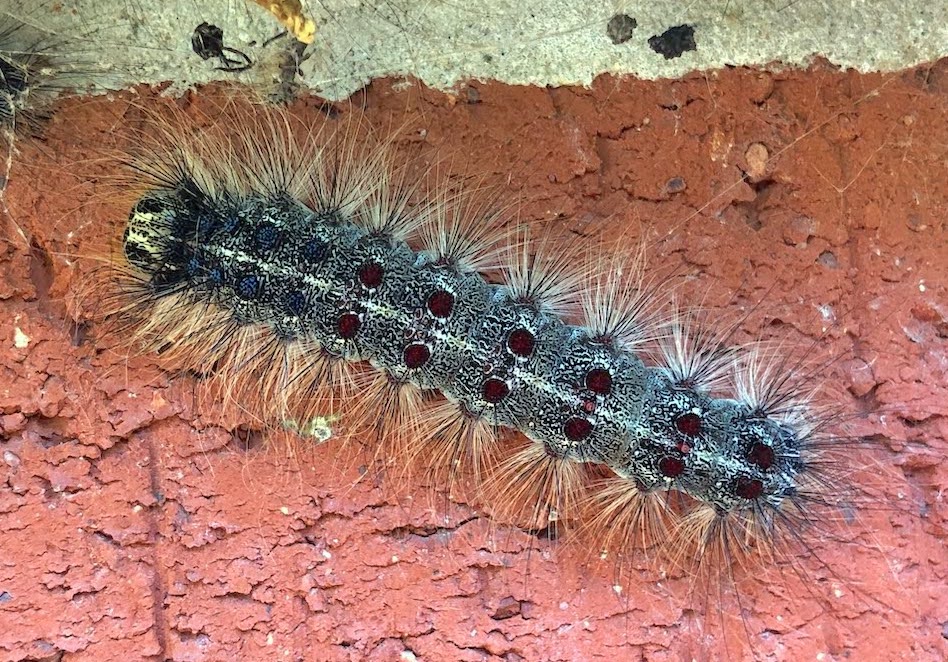
No, the name spongy moth replaced the previous name of this insect, gypsy moth, earlier in 2022.
Why haven’t I seen them before?
Spongy moths have been present in Walworth County for years, but have gone mostly unnoticed. Last year’s drought conditions allowed their populations to explode so many residents are notic-
ing them for the first time or in higher numbers than before.
I have many trees on my property. Should I be worried?
Please do not panic! The caterpillars are voracious feeders and can defoliate trees; however,
healthy trees and shrubs are likely to survive. The caterpillars are a nuisance and you can work to
help reduce their numbers. (Note: The caterpillar hairs can cause skin reactions in some people).
What should I do?
Not all caterpillars are bad. Make sure you properly identify any insect or caterpillar that might
be causing damage before practicing any management strategy. Right now, you can be reducing the number of spongy moth caterpillars by putting up burlap collection bands to collect the cater-
pillars and remove them. Visit the spongy moth information page to learn about what spongy moths look like, their life cycle, and management options throughout the year. https://go.wisc.edu/kz1yc1
If you have questions about spongy moths or other gardening questions, please contact Julie
Hill, Horticulture Outreach Specialist at julie.hill@wisc.edu or by calling the UW-Extension
Walworth County office at 262-741-4958. You can also find our local Master Gardeners at the
Lake Geneva Farmers Market every Thursday morning to answer your gardening questions.