

Defying the Odds: A Small-Town Dreamer’s Journey to Big-12 Soccer


Cara Yang, a senior at Whitewater High School, signs her contract with the University of Utah

In a world where Division I soccer often favors height and athletic prototypes, one young athlete is proving that heart, discipline, and determination can overcome any obstacle. At just 5 feet 2 inches tall, and hailing from a quiet small town with limited local opportunities, Cara Yang’s story is one of relentless pursuit and ultimate triumph.

For eight years, Cara committed everything to her dream of playing college soccer at the highest level. Living far from training facilities, she endured over an hour drive for weekday practices–close to three hours total on the road, multiple times a week. Weekends meant even longer journeys for games and tournaments, often turning family time into a blur of highways and hotel rooms.

The sacrifices were immense. She missed school activities, skipped social gatherings, and said no to hangouts with friends. “It wasn’t easy,” she reflects. “But every missed event was as step toward something bigger.” While her peers enjoyed typical high school experience, Cara balanced rigorous academics with exhaustive training, all fueled by an unwavering vision of competing on a big stage.

Then in her junior year of high school, heartbreak struck. During an early season conference game, Cara was tackled and felt the devastating pop–an ACL tear. The diagnosis crushed her: surgery, months off the field, the fear that her dream was slipping away. Recovery was brutal. Endless physical therapy sessions, grueling rehab exercises, pain that tested her limits. She rebuilt her strength from scratch–hip work, balance drills, slow jobs turning into sprints. Doubts tried to creep in, but she refused to quit. Her comeback was emotional. The injury may have slowed her down–it stole months, forced her to adapt–but it never stopped her.

Her perseverance paid off in the best way possible: a commitment to play for the University of Utah. Surrounded by family, coaches, and friends, she signed her official contract, marking the culmination of years of quiet dedication.

Cara’s journey reminds us that talent comes in all sizes, and dreams don’t measure height–they measure commitment and how we rise after the fall. As she prepares to step on the field in the Big 12, she’s not just representing her small town; she’s inspiring every undersized athlete who dares to dream big.

Editor’s note: This article was submitted by Joy Yang.

Honoring Veterans at Heart Prairie Cemetery

Representative Brienne Brown presented a wreath commemorating the military branch of the Space Force

Wreaths Across America event organizers Jim Holden and Peggy Schutt

Whitewater American Legion Post 173 gun salute

Wreaths Across America Ceremony in LaGrange

On Saturday, December 20th, a crowd of one hundred gathered at Heart Prairie Cemetery in LaGrange to participate in the postponed national Wreaths Across America (WAA) event. The purpose of this gathering was to honor the fallen veterans who are buried in the cemetery.

Those in attendance paid tribute by placing 42 wreaths on the gravesites of veterans who had served the United States from the War of 1812 through the Vietnam conflict. Each wreath symbolized respect and remembrance for the sacrifices made by these individuals.

The ceremony was organized and conducted by Peggy Schutt, a member of the Daughters of the American Revolution, Samuel Phoenix Chapter. Collaborating with Jim Holden, the sexton of the cemetery, they established a high benchmark for the event. During the ceremony, Schutt read a statement provided by WAA, affirming the event’s mission: to remember the nation’s fallen heroes, honor their service, and educate future generations about the value of freedom.

Wreaths were placed in honor of each branch of military service, as well as a special wreath dedicated to those who are missing in action or prisoners of war (MIA/POWS). The ceremony featured remarks from Senator Steve Nass of LaGrange, Representative Brienne Brown of Whitewater, and John Scholz, the Walworth County Veterans Service Officer. Their words highlighted the significance of the event and the enduring gratitude owed to the veterans.

To conclude the opening ceremony, the Whitewater American Legion Post 173 provided a gun salute and played TAPS, offering a solemn tribute to those who have served and sacrificed for the country.

Editor’s note: This press release was provided by Pat Blackmer.

Local UW-W Students Earn Grants for Undergraduate Research

Nearly 30 students at the University of Wisconsin-Whitewater earned grants to conduct undergraduate research during the 2025-26 academic year.

The following students from your coverage area conducted research this fall:

Whitewater, WI 53190: Aiden Murray, whose major at UW-Whitewater is Physical Education.

Whitewater, WI 53190: Holly Shannon, whose major at UW-Whitewater is Environmental Science.

Academic Year (AY) Grants are awarded to a student or a small group of students of sophomore status or higher leading a research project endorsed by a UW-Whitewater faculty or staff member. Individual recipients of Academic Year Grants can receive up to $750, and groups can receive up to $1,500.

Funds through the grants support research supplies, travel, and publication costs. Students supported by Academic Year Grants must present at either the National Conference on Undergraduate Research (NCUR) or at the Universities of Wisconsin Symposium. (Costs associated with attending those events are covered by UW-Whitewater’s Undergraduate Research, Innovative, and Creative Activities (URICA) program.)

Students who conduct undergraduate research at UW-Whitewater are paired with faculty or staff mentors to conduct research. While working 1:1 with faculty and staff mentors to assist with research, students develop critical soft skills – including communication, critical thinking, and problem solving – that employers seek in job candidates.

To learn more about Academic Year Grants and undergraduate research at UW-Whitewater, visit uww.edu/urp.

Editor’s note: This press release was provided by UW-Whitewater.

New Blackout & Retro License Plate Designs Introduced

Gov. Evers, WisDOT Unveil New Blackout and Retro License Plate Designs for Wisconsin Drivers
Bipartisan state budget signed by Gov. Evers provided funding to release the much-anticipated plates, which are estimated to generate more than $25 million for the state’s transportation fund in the first three years
Gov. Tony Evers, together with the Wisconsin Department of Transportation (WisDOT), recently unveiled the designs of Wisconsin’s newest state license plates, a Blackout design and a Retro butter yellow design, depicted below. The bipartisan 2025-27 Biennial Budget signed by Gov. Evers included $5.5 million in funding to support the introduction of these two new specialty license plates, which are estimated to generate more than $25 million for the state’s transportation fund in the first three years. The additional revenue for the state transportation fund will help build upon the Evers Administration’s efforts to invest in Wisconsin’s infrastructure to ensure it meets the needs of a 21st-century workforce and economy. Since 2019, the Evers Administration has improved more than 9,600 miles of roads and 2,400 bridges statewide. The two new license plates, which WisDOT fast-tracked development of the plates in order to ensure they would be ready for public distribution, will be available beginning in early January 2026. 

“These new specialty plates are a win-win for Wisconsin. They not only meet long-standing demand for new plate designs Wisconsinites can choose from, but will also provide new, ongoing resources so we can continue working to fix the darn roads across our state,” said Gov. Evers. “Bringing back the butter yellow Retro plate offers folks a sense of nostalgia while celebrating Wisconsin’s heritage as America’s Dairyland, and the new Blackout plate provides a contemporary look that folks have been asking for. Both plates embody a special sense of Wisconsin style, and I look forward to seeing them out on our roads.”

The new Blackout plate features an all-black background with white letters, numbers, and outline. WisDOT estimates over half a million Blackout plates could be on the road within three years. An image of the Blackout design is available here. An image of the Retro butter yellow design is available here. An image of the Retro butter yellow and Blackout design side by side is available here and below. 


“As the former Wisconsin DMV administrator and now transportation secretary, I’m excited to see these new plates become a reality,” said WisDOT Secretary Kristina Boardman. “The design of the Blackout plate is simple, clean, and complements many vehicle colors. This style has been very popular in our neighboring states, and anticipation for these plates has been building here in Wisconsin for quite some time.”

The Retro yellow or “butter” license plate harkens back to the 1970s, featuring the familiar black letters on a sharp, yellow background.  

“Some call it the butter plate, others call it the Retro plate but if you had one in the 1970s, it was just the Wisconsin license plate,” continued Secretary Boardman. “We put in some effort to get just the right shade of yellow. It’s nostalgic, it’s familiar to many, and I am planning to order one myself.” 

According to WisDOT, both license plates will feature the state name on top like all current Wisconsin plates, and the slogan “America’s Dairyland” will display beneath the numbers and letters on the Retro plate. Standard-issued plates will have a sequence of numbers and letters that are also unique. The Blackout plates will begin with ZAA 1001, and the Retro plates will begin with YAA 1001. The simplified design allows for up to seven characters for those wanting to personalize their plates.

FEES AND ORDERING PROCESS
Both plates come with a one-time $15 issuance fee, plus a $25 annual registration fee. The income generated from the registration of these plates will help finance infrastructure improvement projects all across the state.  

These plates will be available online, in most DMVs, at participating dealers, and third parties who already stock Wisconsin plates. The plates join dozens of others available to order online through DMV’s new web app wisconsindmv.gov/specialplates.  

The app streamlines the ordering process, helps customers select a plate from more than 60 options organized by interest areas, and makes delivery faster. Customers whose order requires no special eligibility, which includes the Blackout and Retro plate, and does not include a personalized message, could receive their plates within a week instead of several weeks via the traditional mail-in process. Approximately 25 percent of plates ordered through the new app are mailed out the next day.

The guided online process allows the customer the option to personalize their plate with a custom message. The plate is then previewed to show the personalized message on the plate as they type it. The message is concurrently verified with the database to check for duplicates or known inappropriate words or phrases.  

This convenient process continues by allowing the customer to renew their vehicle registration at the same time. Finally, instead of needing to mail a check or money order, customers can pay online using modern, secure payment methods. 

DMV Customer Service Centers (wisconsindmv.gov/centers) that provide license plates/registration will also have stock on hand beginning in early January.

Editor’s note: The above press release was provided by the Office of the Governor.

Orin Smith Announces Candidacy for At-Large Council Position

Orin Smith


My name is Orin Smith, and I currently serve as the Alderman for District 2 on the Whitewater Common Council. I am announcing my candidacy for the at-large alderman seat in the upcoming spring election.

Serving District 2 has been a meaningful responsibility and a privilege. Representing a district with a strong undergraduate student population has shaped how I think about accessibility, communication, and the importance of meeting people where they are. I am proud of the work I’ve done alongside residents, fellow council members, and city staff, and I remain committed to representing District 2 fully through the remainder of my term.

As more undergraduate students express interest in serving, I see an opportunity for District 2 to continue being represented by someone closely connected to the experiences that shape that part of our community. At the same time, I remain deeply committed to serving residents across Whitewater. Running for the at-large seat allows me to continue the work I care about, supporting meaningful community engagement, identifying avenues for local affordability, and building connections between neighbors, while focusing on the needs of people throughout the city rather than any single district.

I also bring a perspective that is common in Whitewater, but not always represented. I came here as a student and chose to stay. As a renter, I understand that the costs of living show up differently for different people, whether through rent, taxes, or other household expenses. Over time, Whitewater became my home, the place where I found community, a partner, and a career. That experience guides how I approach local leadership and decision-making, balancing affordability, shared responsibility, and care for the people who call Whitewater home.

If elected, I will continue to prioritize accessible governance, thoughtful collaboration, and decision-making that reflects the lived experiences of Whitewater residents. I believe strongly in local government that listens first and works to bring people together rather than divide them.

The spring election will be held on April 7th, 2026.

orinsmith018@gmail.com
(608) 739-1604

Making Dog Treats with UW-W Students at Fairhaven for the 75th Time


Story and photos courtesy of Tom Ganser

Residents of Fairhaven joined with members of the University of Wisconsin-Whitewater Phi Eta Sigma, a national honor society, and Empower, an organization designed to utilize the skills of its members in order to empower the world and our community around us, in making 2,428 dog treats in Fairhaven’s Olm Fellowship Hall on November 14.  According to Brian Robinson, director of marketing, community relations & leisure services, this was about the 75th time that Fairhaven residents and UW-W students have worked side-by-side in this marvelous intergenerational activity.

UW-W Music Dept. Thanks Local Businesses for Supporting 30th Annual Gala Concert

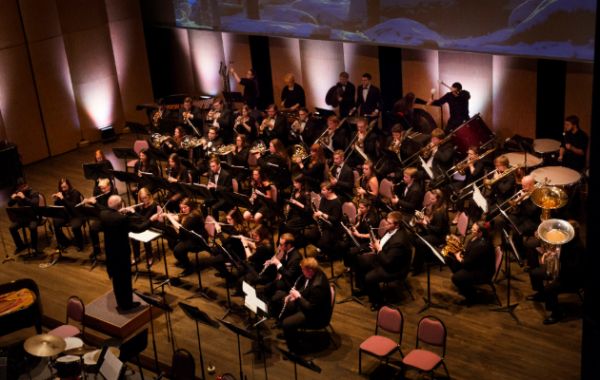
The University of Wisconsin–Whitewater Department of Music extends its sincere gratitude to the many local businesses, organizations, and individuals whose generous support helped make the 30th Annual Gala Concert a resounding success. Through program sponsorships and donated raffle basket items, these community partners played a vital role in supporting music scholarships for UW–Whitewater students.

Now in its 30th year, the Gala Concert celebrates excellence in music performance while raising essential funds to help student musicians pursue their artistic and academic goals. Profits from this milestone event directly support scholarships that ease financial barriers and empower the next generation of artists and educators.

The Department of Music gratefully acknowledges the following program sponsors for their financial support:
$750 Sponsors
First Citizens State Bank
DLK Enterprises

$500 Sponsors
PremierBank
McCullough’s LTC Pharmacy
Mulberry Glen Campus – Independent & Assisted Living

$250 Sponsors
The Coburn Company, Inc.
Burtness Chevrolet, Buick, GMC
841 Brewhouse
Culver’s – MJ Whitewater LLC
Ketterhagen Motor Sales
Tincher Realty, Inc.
Fairhaven Senior Services & Prairie Village
Jessica’s Restaurant
The Sweet Spot Coffee Shop LLC
Whitewater Cinemas LLC
White House of Music
The Community Space
Second Salem

The department also offers heartfelt thanks to the many basket raffle donors, whose contributions added excitement to the event and helped raise additional scholarship funds:

A Better Physique LLC; Aranda–Be Unique; Associated Bank; BaristaCats Café; Brain Freeze; Busy Barn Farm Adventures LLC & The Gathering Barn; Casey’s General Stores, Inc.; Carol L. Paur; Carrie Oster; Center Street Café; China House; Creative Forces; Culver’s – MJ Whitewater LLC; Dale’s Bootery; Dr. Diana Shapiro; Eagle Nutrition; Fanatico; Floral Villa Flowers & Gifts; Frosty Freeze; Glorify Beauty & Wellness for the Family; Good 2 Go; Gus’ Pizza Palace; Hippychick Penny’s Soaps & Body Care; Holiday Inn Express; Home Lumber; Hometown Pharmacy; Jersey Mike’s Subs; Janye; Knutson Jewelers Inc.; Kwik Trip; LG Axe Throwing; Lewis Station Winery; M&M Total Fitness CrossFit Fort Atkinson; Mary Jane Andersen; Monique’s Nail Services; Pam Van Doren; Pet Supplies Plus; Qēt Botanicals; Rosa’s Pizza; Sandy Pelc; Sim Stations; Starbucks; Staller Estate Winery and Vineyard; Spring Creek Golf Center; Subway; Taco Fiesta; Taco Fresco; Taqueria La Estrella; Tan-a-Latte and Gifts; The Book Teller; The Community Space; The Fuzzy Pig, Inc.; The Rabbit Hole; The Real MacCoys; The Vinery Stained Glass Studio; The Whitewater Arts Alliance; The Young Performing Arts Center; Toppers Pizza; UW-Whitewater College of Arts and Communication; Vintage on Main; Willow Brook Golf Course, LLC; and Whitewater Cinemas LLC.

“The generosity of our local partners demonstrates the strength of our community and its commitment to arts education,” said Christian Ellenwood, Chair of the UW–Whitewater Department of Music. “Their support has a direct and lasting impact on our students, and we are deeply thankful.”

For more information about UW–Whitewater music scholarships or future events, please visit uww.edu/music.
The College of Arts and Communication at the University of Wisconsin-Whitewater offers rigorous programs in music, theatre, dance, and the visual arts; internships; pre-professional opportunities in journalism, advertising, and applied communication; and innovative interdisciplinary studies. Visit the College of Arts and Communication website for more information.  

Habitat for Humanity Walworth County Partnering with Other Organizations to Build Four New Affordable Homes

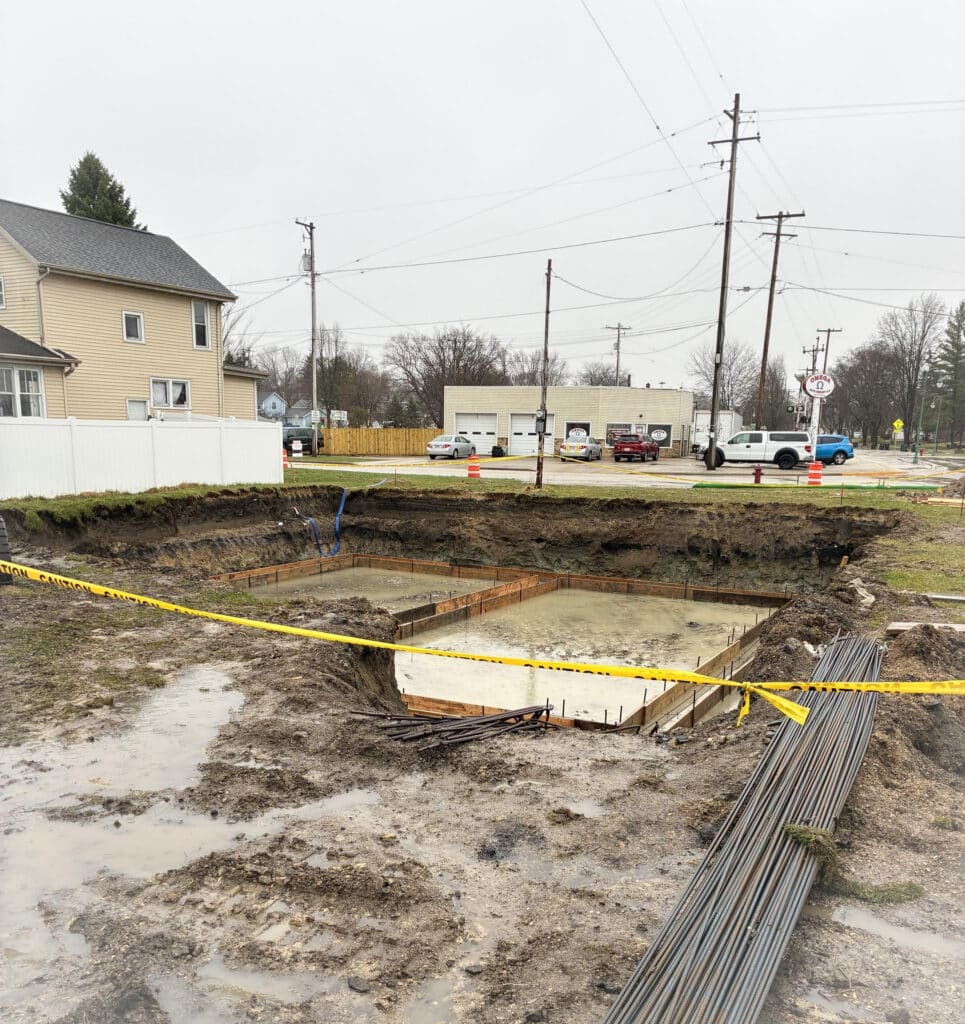
Habitat for Humanity Walworth County partners with the City of Whitewater, Wisconsin, First Citizens State Bank, and local organizations to build four new affordable homes, scheduled for occupancy in Summer 2026

The City of Whitewater, Habitat for Humanity Walworth County, First Citizens State Bank, and numerous corporations and volunteer groups are coming together in a major public–private partnership to construct four new affordable homes just outside downtown Whitewater. This initiative will transform a long-vacant property into safe, stable homes for local workforce families.

The project includes two twin homes (duplexes), built concurrently at 216 E. Main Street, using modern, efficient construction methods, including panelized exterior wall systems and full basements.

John Dawson, Executive Director for Habitat for Humanity Walworth County, believes the future of affordable housing depends on strong partnerships between municipalities, financial institutions, corporations and nonprofit organizations committed to providing sustainable workforce housing.

“The future of affordable housing will be greatly impacted by cities and nonprofits working together toward a common goal: providing workforce housing that is safe, attainable, and sustainable,” said Mason Becker, Economic Development Director for the City of Whitewater. “This partnership represents exactly the kind of collaboration our community needs.”

“We are proud to support a project that reflects Whitewater’s commitment to long-term community vitality,” said John Weidl, City Manager for the City of Whitewater. “For years, our residents and local employers have identified attainable housing as a top priority. By partnering with Habitat for Humanity and First Citizens State Bank, we are turning that priority into real, tangible progress. These homes will strengthen our workforce, support families, and contribute to the stability that allows communities like ours to thrive.”

“First Citizens State Bank is honored to be a cornerstone of progress in the Whitewater area for more than 160 years, and we are excited to join the City and Habitat for Humanity in bringing workforce housing to our growing community,” said Jim Caldwell, CEO & Director of First Citizens State Bank.

Mark Garner, Board President of Habitat for Humanity Walworth County, added, “Through the TIP programs for new homeowners and through partnerships like this one in Whitewater, we are helping families build stability, equity, and long-term financial resilience. These new homes will change lives for generations.”

This project represents the shared commitment of Whitewater officials, Habitat for Humanity Walworth County, First Citizens State Bank, and the many corporations and volunteer teams working together to expand affordable homeownership opportunities in the region.

About Habitat for Humanity Walworth County
Habitat for Humanity Walworth County builds and renovates affordable homes in partnership with families in need of sustainable housing. Through volunteer labor, community partnerships, and donor support, Habitat helps families achieve strength, stability, and self-reliance through homeownership.

Jefferson County Legislative Breakfast Brings Together Elected Officials, County Staff

On December 5, Jefferson County hosted a Legislative Breakfast at the Jefferson County Courthouse. Local, county, state, and federal elected officials joined county staff to discuss issues affecting the county and its residents.

U.S. Senator Ron Johnson and U.S. Representative Scott Fitzgerald opened the session with remarks on federal legislation and their top priorities in Washington, D.C. Sen. Johnson’s presentation centered on government spending, the national debt, and opportunities for reforming the Affordable Care Act. Congressman Fitzgerald spoke about labor and housing issues that make headlines nationally but are especially important to Jefferson County: H1-B visas, undocumented workers in the agriculture, manufacturing, and tourism sectors, and ideas for adding housing stock of the right size and cost to meet consumer demand.

Jefferson County Administrator Michael Luckey provided an overview of County accomplishments in 2025, priorities for 2026, and updates on local issues that impact residents. Key investments include a new Financial Empowerment Center available to all residents and workers, funding for the Broadband Equity, Access, and Deployment (BEAD) Program, and $1.1 million in the 2026 Jefferson County budget to support the Live Local Development Fund, a program that promotes local housing development. Luckey also voiced support for a bill to provide certainty in utility aid payments for liquefied natural gas storage, which he and other county leaders traveled to Madison to testify in favor of.

State legislators Brienne Brown (43rd Assembly District), Cindi Duchow (97th Assembly District), Joan Fitzgerald (46th Assembly District), John Jagler (13th Senate District), William Penterman (38th Assembly District), and Melissa Ratcliff (16th Senate District) presented updates on their work in Madison on behalf of their constituents. Rep. Brown spoke on agriculture bills and veterans’ issues. Rep. Duchow talked about school consolidation and her work on the Gail’s Law bill, which seeks to reduce out-of-pocket expenses for breast cancer screenings. Rep. Fitzgerald focused on farmland-preservation efforts and a bill to advance property tax transparency. In his remarks, Sen. Jagler discussed Supplemental Nutrition Assistance Program (SNAP) reform and ideas for adding affordable housing for seniors and others who lack a variety of options. Rep. Penterman shared his work to create a per diem for homeless veterans and concerns about foreign adversaries owning local agricultural land. Sen. Ratcliff expressed her support of the Knowles-Nelson Stewardship Program and provided details on a tax incremental district (TID) bill to encourage workforce housing development.

Officials from Jefferson County’s cities, villages, and towns addressed attendees to relay updates, achievements, and issues of primary interest to their residents. The Village of Johnson Creek shared updates on housing developments and two commercial additions: the new U.S. headquarters of Abet Laminati and an orthopedic center. The City of Fort Atkinson announced the successful closure of two TIDs. Among city and village representatives, discussions centered on development and infrastructure work, industry and workforce updates including additions to the City of Jefferson’s Food and Beverage (FAB) Innovation Campus, and efforts to add diverse housing stock. Town officials shared concerns about affordability of emergency medical services and discussed solar energy development considerations in rural areas.

This was the third Legislative Breakfast hosted by Jefferson County since 2024. The next Legislative Breakfast is tentatively scheduled for December 2026 at the Jefferson County Courthouse.

Editor’s note: The above press release was provided by Jefferson County.