The holiday season often brings beautiful plants into our homes, but keeping them thriving can be a challenge! This timely program will offer practical tips for keeping popular holiday houseplants healthy and looking their best throughout the season and beyond.
This event is free. This workshop is for adults. Children under 18 are welcome to attend with a custodial guardian. By registering for this event, you are agreeing to the terms and conditions. You may register using the QR code above or at this link.
If you have a disability and require accommodations, please advise us as soon as possible. Requests are confidential. UW-Whitewater provides equal opportunities in employment and programming, including Title IX and ADA. Please contact Kari Borne at bornek@uww.edu or 262-472-1003 for further information.
“Ofrenda de Día de Muertos” Tradition by UW-Whitewater’s Spanish Club and Latinos Unidos on Display at Roberta’s Art Gallery
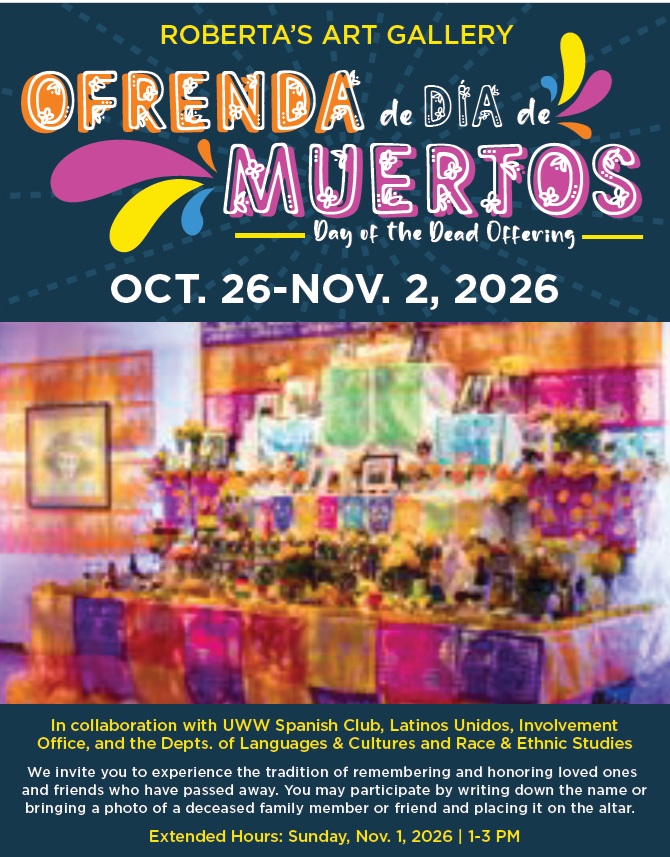
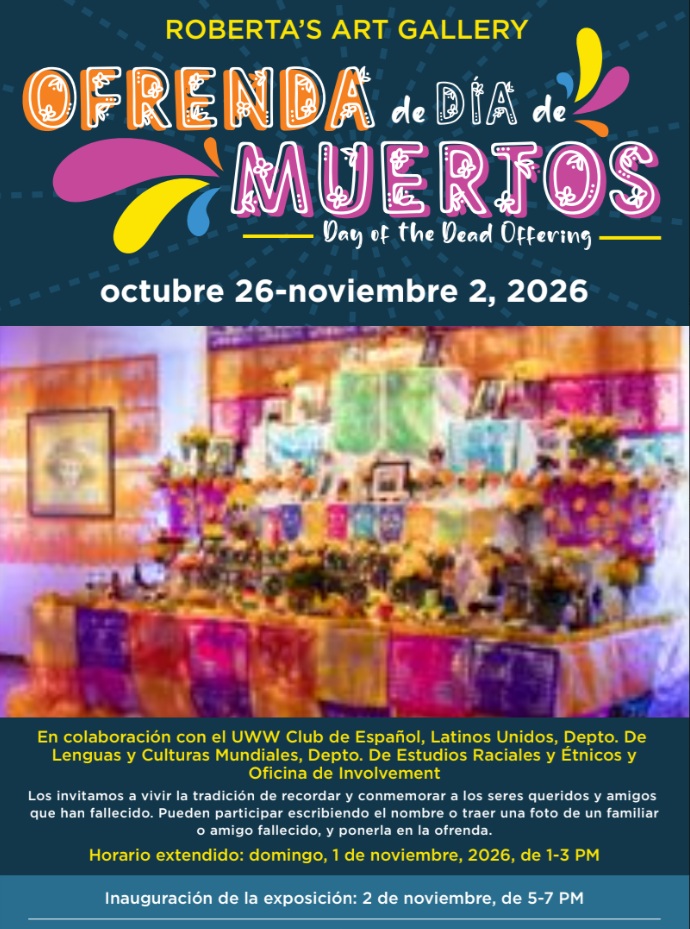
“Ofrenda de Día de Muertos” is a pop-up exhibit dedicated to honoring and remembering the souls of departed loved ones. This cultural display will be at Roberta’s Art Gallery from October 26 through November 2, 2026. Presented by UW-Whitewater’s Spanish Club and Latinos Unidos student organization, the exhibit will feature an interactive altar, or ofrenda, where Whitewater campus and community members can honor loved ones who have passed by writing their names and leaving meaningful items in remembrance. In Mexico, families celebrate this tradition with colorful displays and heartfelt offerings that invite the spirits of the departed to return and once again share in life’s joyful celebrations. The gallery will also be open for special weekend hours on Sunday, November 1, from 1 to 3 p.m., in honor of the Day of the Dead holiday.
The exhibit reception will be held on Monday, November 2, from 5 to 7 p.m., featuring an educational talk by UW-Whitewater’s Spanish Club and Latinos Unidos student organization. After the reception, an open house will take place from 7 to 8 p.m. We will provide traditional light refreshments, including hot chocolate and conchas (Mexican sweet bread). Guests are strongly encouraged to attend and interact.
UW-Whitewater’s Spanish Club, Latinos Unidos student organization, Involvement Office, and the Departments of World Languages & Cultures and Race & Ethnic Studies carefully curated this display.
About Collaborators ● UW-Whitewater’s Spanish Club is a student organization dedicated to promoting the value of the Spanish language and fostering a deeper appreciation for Latinx/e Americans/Hispanic culture. ● Latinos Unidos is a student organization focused on uniting and supporting students while advancing education and awareness of Latinx/e American culture on campus. ● The Involvement Office provides campus programs, student organizations, leadership development, and inclusive initiatives that help students build connections, discover interests, grow as leaders, and feel a sense of belonging in the Warhawk community. ● The Department of World Languages & Cultures offers instruction in French, German, Spanish (including Spanish as a Heritage Language), and additional courses in Arabic, Chinese, and Japanese. Their mission is to foster diverse perspectives, civic engagement, and cultural understanding, and to prepare students for lifelong learning and global citizenship. ● Race & Ethnic Studies is an interdisciplinary academic program that explores the histories, cultures, and experiences of African American, Asian/Asian American, First Nations, Indigenous, Latinx/e Americans, Latin American, and other Communities of Color in the United States.
About Roberta’s Art Gallery Roberta’s Art Gallery is located on the first floor of the James R. Connor University Center (UC) at UW-Whitewater. The gallery hosts multiple exhibits each semester by collaborating with local and regional artists. Exhibit hours are Monday through Thursday, 10 a.m. to 4:30 p.m.; Friday, 10 a.m. to 2 p.m.
Roberta’s Art Gallery strives to make art accessible to all, offering free exhibits and receptions for everyone to enjoy. Whether you’re a student, a Whitewater community member, or someone who wants to support the artist, feel free to stop by. For questions or further information, contact Roberta’s Art Gallery at (262) 472-3193 or ucart@uww.edu, or visit our website.
Ofrenda de Día de Muertos by Dr. Luzma Hernandez
The Day of the Dead is an indigenous tradition blended with beliefs brought by the Spaniards to Tenochtitlan, now called Mexico. It is a feast that takes place when the souls of the deceased visit their living relatives and enjoy what is arranged in offerings made to them.
Traditionally, this feast takes place from October 28 to November 2. The core of this celebration originates from the Indigenous communities who believe that the souls of dead loved ones return at night to visit, sample the food and drinks, and take pleasure in the flowers, decorations, and objects that their relatives arranged in the offering.
The offering, called ofrenda in Spanish, is set up ahead of time to be ready when the souls arrive at the house or place where it is arranged. The belief is that on October 28, those who died in tragic circumstances visit. On October 29, candles are lit for the departed who are less remembered. On October 30-31, babies and children come to visit. On November 1, those who had an exemplary life visit, and on November 2, the official Day of the Dead takes place, where all souls make a visit. In some small Mexican towns, it is common that on the eve of the Day of the Dead, family members go to the cemetery to bring flowers, food, and drinks or play music during the night, early morning, and day to spend that time with the departed. They believe their departed loved ones are present and sharing the bread with them, as it was when they were alive. They eat on and around the gravestones of loved ones.
This display of the ofrenda is arranged in tiers, most commonly with two tiers. The top tier symbolizes heaven, and the bottom tier symbolizes the Earth. Placed on the top tier are photographs of those who had an exemplary life and so are revered. On the bottom tier, the photographs of the deceased are arranged with food, drinks, candy, desserts, bread, and objects related to the loved ones being remembered. Through all of the offerings, there are flowers, candles, skulls, and colorful cut paper, called papel picado in Spanish, to add to the sense of festivity and decoration.
A traditional ofrenda can have up to seven tiers. The seventh and topmost tier symbolizes heaven. The sixth tier is for the souls who haven’t yet entered heaven, and the fifth tier includes elements that purify the spirit, like salt, water, incense, and copal resin. The fourth tier represents the bread that nurtures the souls. The third offers food, drinks, candy, and anything the deceased enjoyed in life, the second displays pictures of the deceased, and finally, the bottom tier contains a form constructed of flowers, fruit, or seeds that are meant to remember the dead.
Some of the essential elements of an ofrenda are marigolds, or cempasúchil, in the Indigenous language of Náhuatl, skulls, cut-patterned paper, and candles. Because of its strong aroma, Cempaúcil, the flower for the dead, guides the souls to this world and to the offering. The skulls can be made of sugar, clay, or gesso with colorful patterns painted on them, which is a reference to the omnipresence of death. The skull was a commonly used symbol in Indigenous culture. The papel picado represents festivity and wind, one of the four elements of this Earth. The candles represent peace and hope for the spirits and the element of light that guides us in our journey through the world.
The Day of the Dead is not a homogeneous fiesta in Mexico, and its expression depends on the particular Indigenous community or social group that is present at each location.
El Día de Muertos y la Ofrenda by Dr. Luzma Hernandez
El Día de Muertos y la ofrenda del Día de muertos es una tradición indígena fusionada con las creencias traídas por los españoles a lo que se llamó Mesoamérica. Es una fiesta en la que las almas de los difuntos visitan a sus familiares y degustan lo que se les brinda en la ofrenda.
Esta fiesta se realiza del 28 de octubre al 2 de noviembre. La esencia de esta celebración proviene de las comunidades indígenas cuya creencia es que las ánimas de los difuntos regresan durante la noche de estos días para disfrutar la comida, bebidas, flores, objetos y adornos que sus parientes les ofrecen.
La ofrenda se prepara con anticipación para que las ánimas visiten el hogar o lugar donde se coloca. Se cree que el 28 de octubre, vienen los que murieron de forma trágica; el 29, se prenden veladoras para los difuntos que ya nadie recuerda; el 30 y 31, visitan los bebés y niños; el 1 de noviembre regresan todos los que tuvieron una vida ejemplar; y el 2, visitan todas las almas.
Es común en algunos poblados mexicanos que a la víspera del 2 de noviembre las familias vayan a los panteones, lleven flores, comida, bebidas o música para pasar la noche, madrugada y parte del día con sus familiares fallecidos. Se cree que las almas de sus familiares están presentes y comparten como lo hacían en vida. Se come en la tumba o alrededor de ella.
La ofrenda del Día de Muertos se pone con la idea de que el espíritu de los difuntos regresa del mundo de los muertos para visitar y confortar a sus familiares vivos. El arreglo de la ofrenda se hace en niveles y cada nivel tiene un significado. Comúnmente, la ofrenda tiene dos niveles, el primero simboliza el cielo y el segundo, el mundo terrenal. En el primer nivel se colocan imágenes de personas ejemplares que están ya en el cielo, y en el segundo, se ponen las fotografías de los seres queridos a quienes se les hace la ofrenda, las comidas, bebidas, dulces, pan u otros objetos relacionados con los difuntos que se recuerdan. En toda la ofrenda se distribuyen las flores, velas, calaveras y el papel picado colorido.
La ofrenda tradicional tiene siete niveles y cada uno tiene un significado. El primero simboliza el cielo; el segundo es para las almas que todavía no han entrado al cielo; el tercero tiene lo que purifica el espíritu como la sal, agua, incienso y copal; el cuarto contiene el pan que nutre a las almas que vienen a visitar; el quinto ofrece los alimentos, bebidas, frutas, dulces y todo que disfrutaba en vida el difunto; el sexto, es para indicar a quien se pone la ofrenda colocando las fotografías de los fallecidos, y el séptimo muestra una figura en forma de cruz que puede ser hecha de flores, semillas o frutas e indica la muerte y remembranza.
Algunos de los elementos esenciales que no deben faltar en una ofrenda son la flor de muerto/ cempasúchil, calaveras, papel picado y velas. El cempasúchil es la flor que por su fuerte aroma sirve de guía a las almas para venir a este mundo y guiarlas a la ofrenda. Las calaveras de azúcar, barro o yeso con adornos coloridos refieren a la muerte que siempre está presente. (Los cráneos o calaveras son un símbolo de la cultura indígena.) El papel picado de colores representa la festividad y el elemento del viento, uno de los cuatro elementos de la tierra. Y las velas, veladoras o cirios representan la paz y esperanza para las almas, así como la luz que guía en este mundo.
El Día de Muertos no es una fiesta homogénea en México, depende del significado o remembranzas del pueblo indígena o grupo social que la festeje.
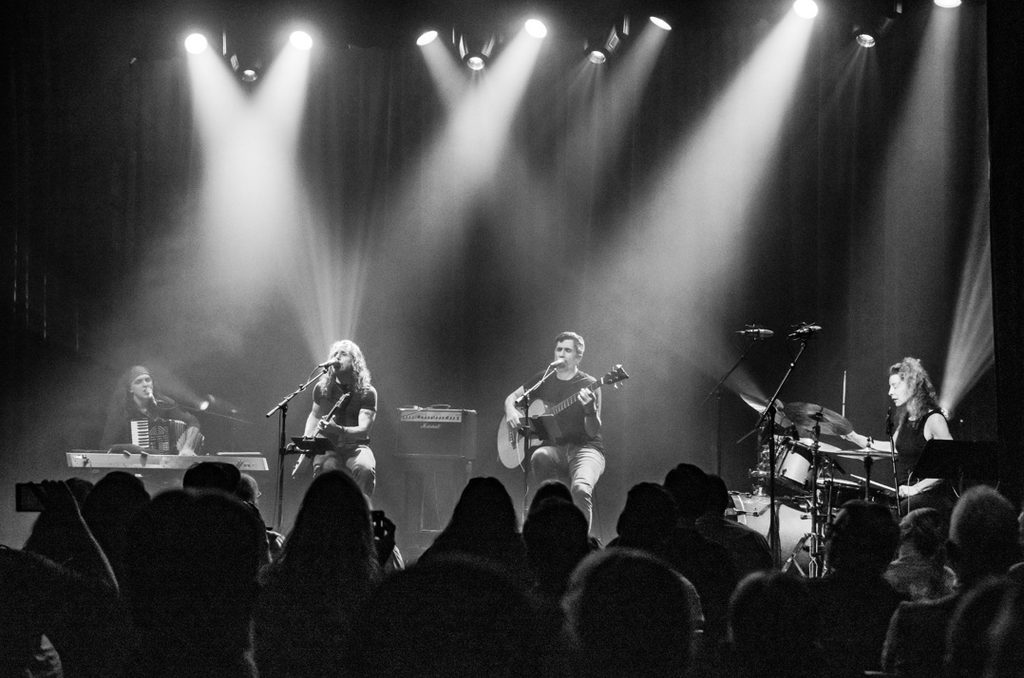
October 30 concert features a band devoted to the Pink Floyd catalog
“They duplicate the sound and hits of Pink Floyd with chilling accuracy, and they play for a hell of a long time.” – Matt Diehl, Rolling Stone
“These guys are great!” – Bob Ezrin, Co-Producer, Pink Floyd’s The Wall
“The Machine look nothing like Pink Floyd, but that doesn’t matter – they sound exactly like Pink Floyd, and that’s what counts.” – Matthew Webber, Spin Magazine
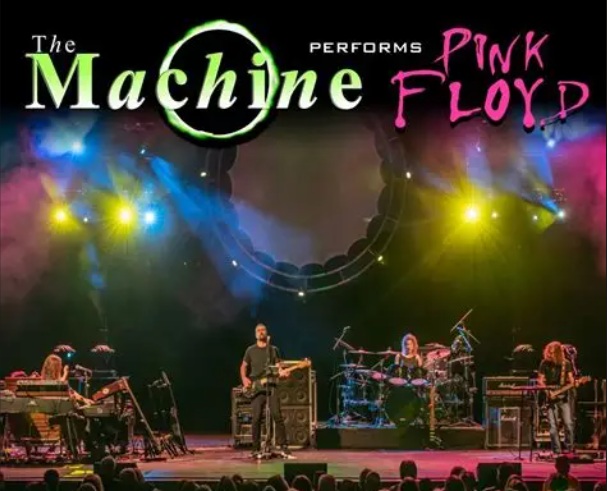
The Machine Performs Pink Floyd comes to The Young Performing Arts Center at the University of Wisconsin–Whitewater on Friday, October 30, at 7 p.m.
The New York quartet has spent decades interpreting Pink Floyd’s music, drawing from the group’s extensive album catalog. Its performances combine familiar songs and deeper selections with improvisation, theatrical lighting and stage production.
The band’s approach reflects different periods of Pink Floyd’s work, from the exploratory playing of the early 1970s to the larger theatrical presentations associated with later tours. For longtime listeners and newer fans, the Whitewater concert offers a Friday evening centered on the sound and atmosphere of Pink Floyd’s music.
The performance takes place at The Young, 930 West Main Street, Whitewater. Parking is free in lots one and two off Prince Street. The lobby opens at 6 p.m. Tickets and current pricing are available at theyoungwhitewater.com or through Ticket Services at 262-472-2222, open Monday-Friday from 9:30 a.m. – 3:00 p.m,
About The Young The Young is a performing arts venue at the University of Wisconsin–Whitewater, presenting live entertainment for campus and regional audiences. Learn more at theyoungwhitewater.com.
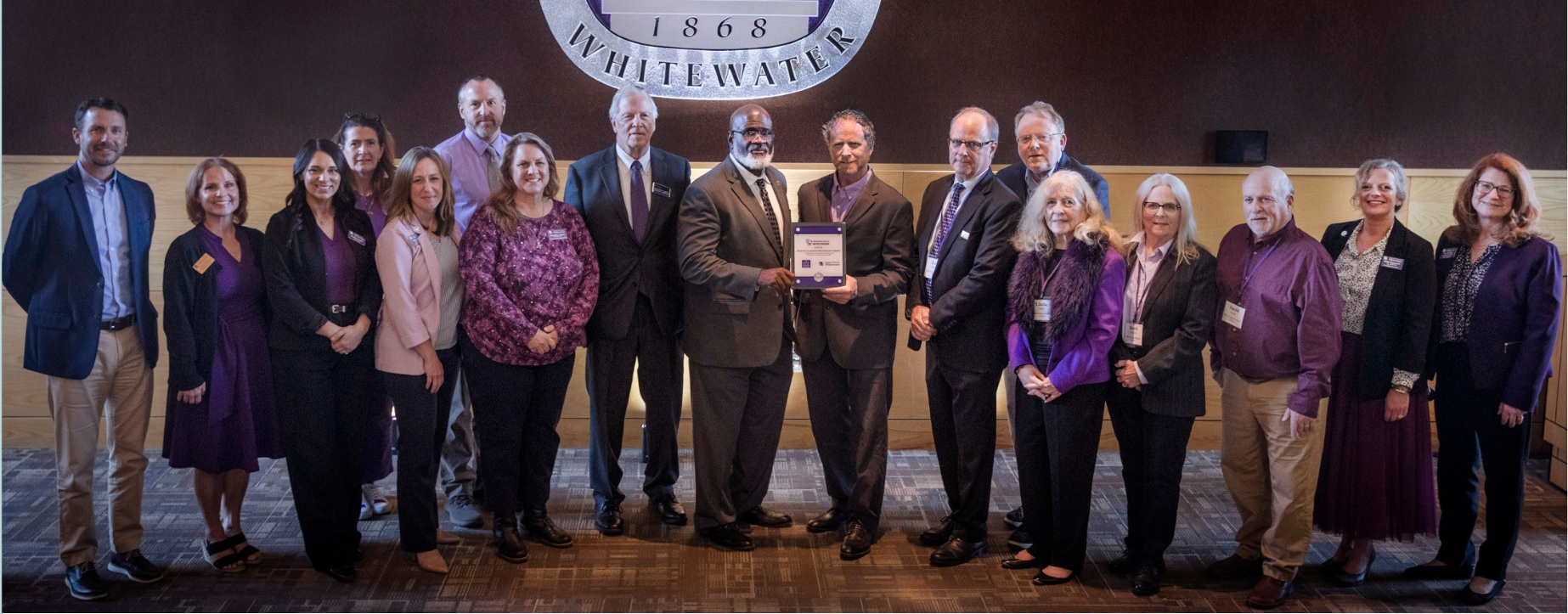
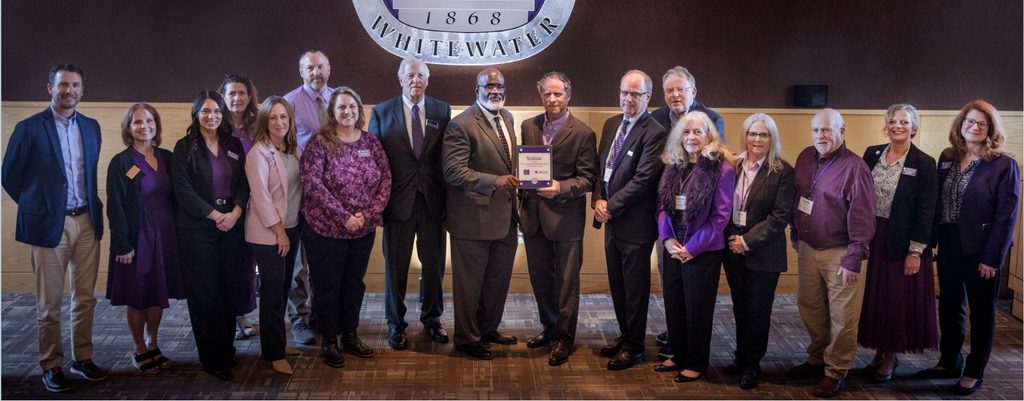
The Universities of Wisconsin recognized DLK Enterprises, Inc., and UW-Whitewater on Friday, Oct. 23, for their shared commitment to student success and the betterment of surrounding communities.
DLK Enterprises, owned by the Kachel family of Whitewater, earned the Universities of Wisconsin Regents Business Partnership Award, which acknowledges and celebrates connections between the Universities of Wisconsin and state businesses that create opportunities for students, fuel innovation in the marketplace, and enhance communities across Wisconsin.
Universities of Wisconsin Board of Regents President Kyle Weatherly presented DLK Enterprises and UW-Whitewater with the award during a presentation at the James R. Connor University Center.
“DLK Enterprises represents the very best of what a university-business partnership can achieve,” said Kyle Weatherly, president of the Universities of Wisconsin Board of Regents. “Working innovatively together with UW-Whitewater, the company has helped shape the student experience and strengthen the university’s connection to the community it serves.”
“The partnership between DLK Enterprises and UW-Whitewater is a strong example of how sustained commitment over many years makes a difference for students and the local community,” said Johannes Britz, Senior Vice President of Academic and Student Affairs of the Universities of Wisconsin. “The partnership goes beyond the generosity of DLK Enterprises and the Kachel family — it strengthens Whitewater and its surrounding communities.”
DLK Enterprises was founded in 1957 by UW-Whitewater alum David L. Kachel and remains family owned and operated. The company, which rents housing properties to students and senior citizens, was built on a vision of supporting the student experience and strengthening the Whitewater community.
DLK Enterprises’ support over the last 60-plus years of Warhawk Athletics, UW-Whitewater’s academic programs, and the arts has been integral in the university’s sustained success.
“DLK Enterprises and the Kachel family have been driving forces to enhance our institution for more than 60 years,” said Corey A. King, UW-Whitewater chancellor. “Beyond the number of projects and initiatives we have worked on together, what makes this relationship special is the trust we have built and our shared commitment to the Wisconsin Idea — creating opportunities for our students and our region that go beyond the borders of our campus.”
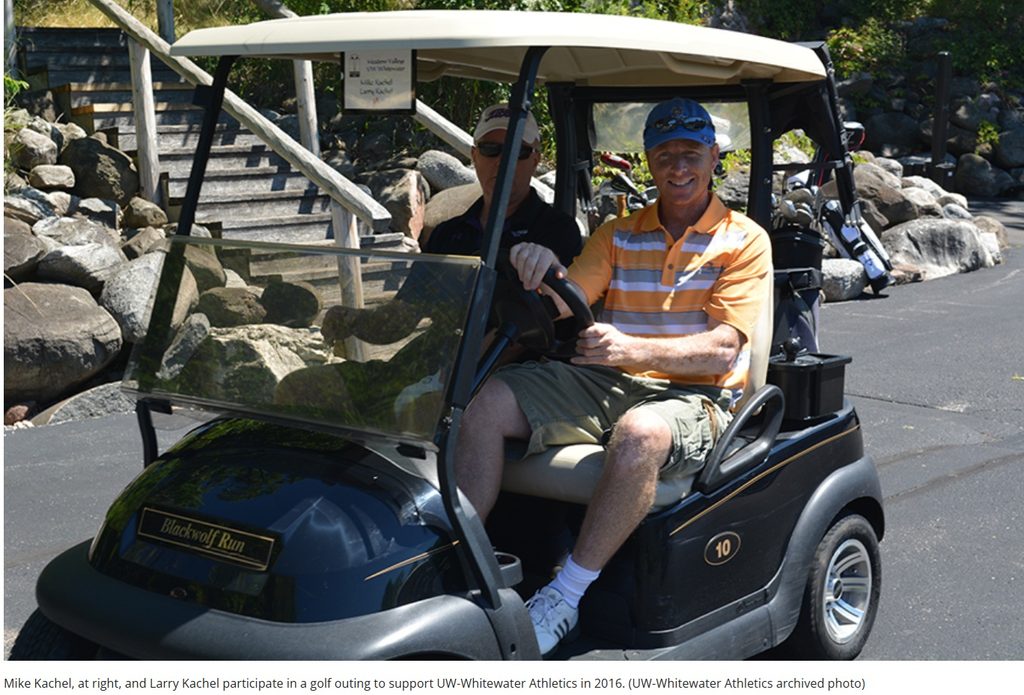
“Our partnership with UW-Whitewater works because we take pride in what we contribute to one another and share a commitment to student success,” said Mike Kachel, president of DLK Enterprises. “We are proud to be alumni-founded, alumni-staffed, and student-centered, and the university’s education and support help make our success possible. Through scholarships, employment opportunities, and reinvestment in the university, we help students build their futures while strengthening the community we call home.”
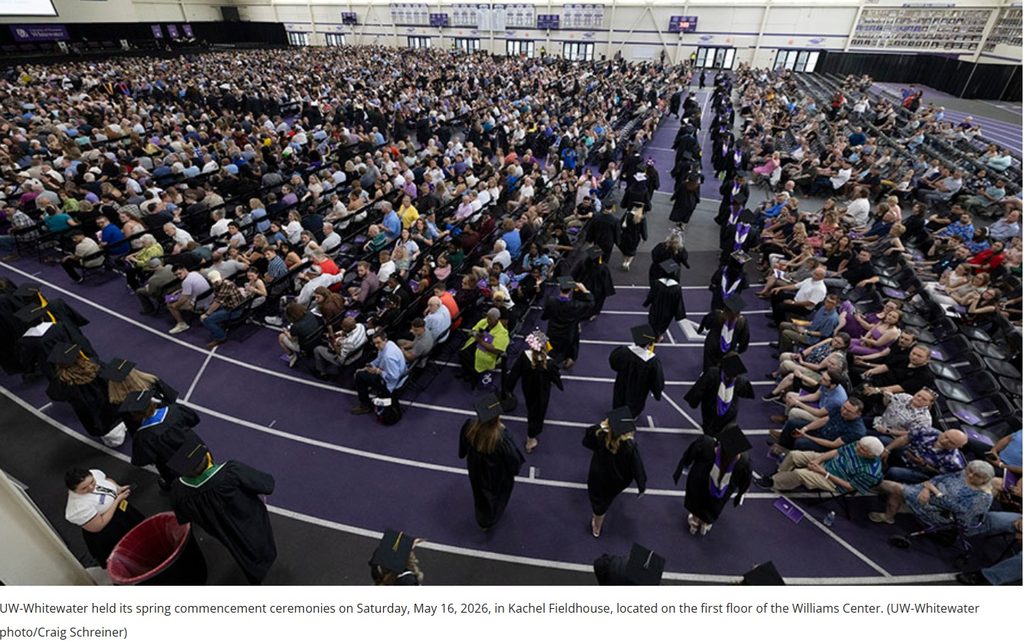
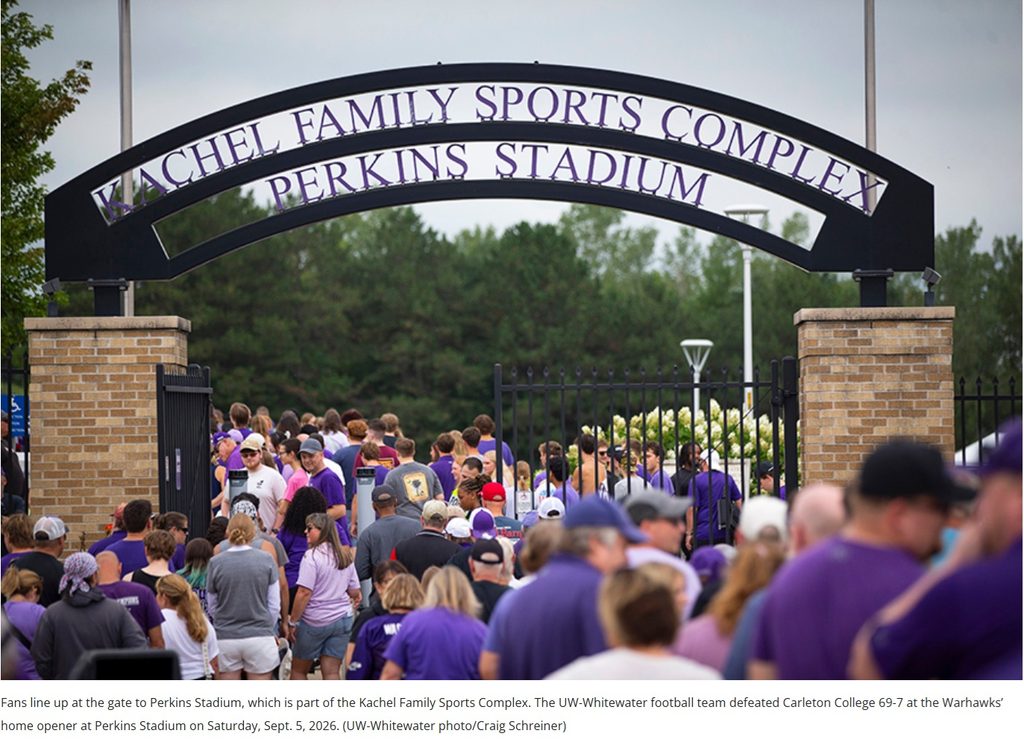
Several facilities on the Whitewater campus bear the Kachel family name, including the DLK/Kachel Fieldhouse, which is celebrating its 25th anniversary this year; the Kachel Family Sports Complex, the outdoor facilities to the north of the fieldhouse; Kachel Gymnasium, dedicated in 2000 and located on the second floor of the Williams Center; the Kachel Center in The Young Performing Arts Center; and the Kachel Center for Innovation and Business Development in Hyland Hall.
The Kachel family was a founding donor for Perkins Stadium, and supported the building of facilities in close proximity, including the Berezowitz Student Athletic Complex and the Coulthart Family Pavilion. Multiple land gifts from the family have allowed construction of university properties, including Pulliam Hall.
The family has funded more than 1,000 UWW student scholarships and has provided meaningful, hands-on employment opportunities for more than 1,200 students and alums in leasing, marketing, property management and operations in various family-owned businesses since the 1960s. It has also sponsored numerous university events, including shows at The Young, fan travel buses for premium athletics events, and several student, club, and team fundraisers.
DLK Enterprises and the Kachel family have been the largest donor to UW-Whitewater to date.
“The effects of DLK Enterprises and the Kachel family are felt everywhere on our campus and in our local community,” said Katie Kuznacic, assistant chancellor for university advancement and UW-Whitewater Foundation president. “Thousands of Warhawks have benefitted from the family’s generosity, collaboration and partnership, and we are grateful for their decades of philanthropic leadership and holistic support.”
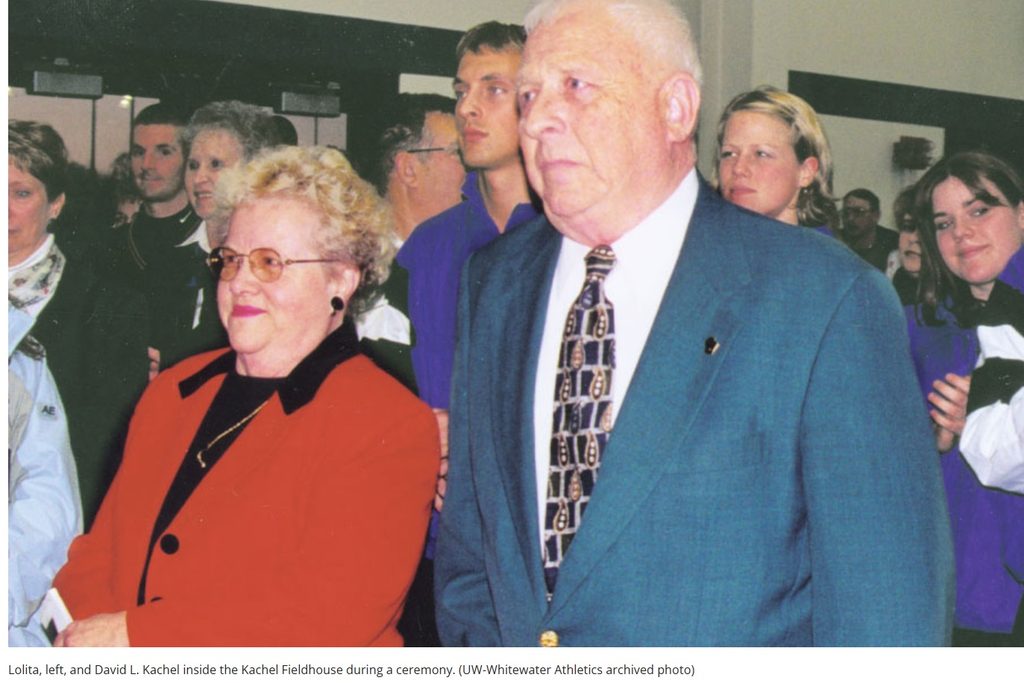
David L. Kachel met his wife, Lolita, at UW-Whitewater. David was a member of the class of 1948, and Lolita earned a bachelor’s degree in business education two years later. David was heavily involved at UW-Whitewater, serving Warhawk Athletics and the College of Business and Economics in leadership roles and through committee and club membership, while Lolita was a member of Visitors Board and the Irvin L. Young Gala Dedication Committee.
The couple earned the Outstanding Service Award from the UWW Alumni Association in 1990 and was inducted into the UW-Whitewater Athletics Hall of Fame in 1998, receiving the Distinguished Service Award for their generous contributions and support of Warhawk Athletics. David passed away in 2011, and Lolita died 10 years later at the age of 92. David was posthumously inducted into the Wisconsin Intercollegiate Athletic Conference Hall of Fame in 2012.
All seven of David and Lolita’s children and six grandchildren attended UW-Whitewater, and the family remains active at the university.
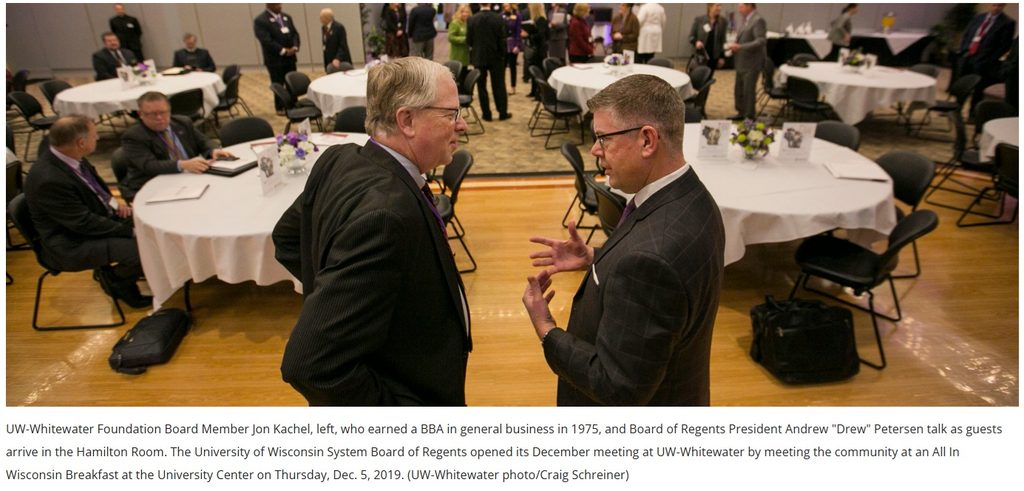
Jon D. Kachel ’75, a community banker for 50 years who last served as president of Commercial Bank, is a UW-Whitewater Foundation Board Director Emeritus and a member of the College of Business and Economics Advisory Board. He continues to be active in fundraising for the university and Whitewater community.
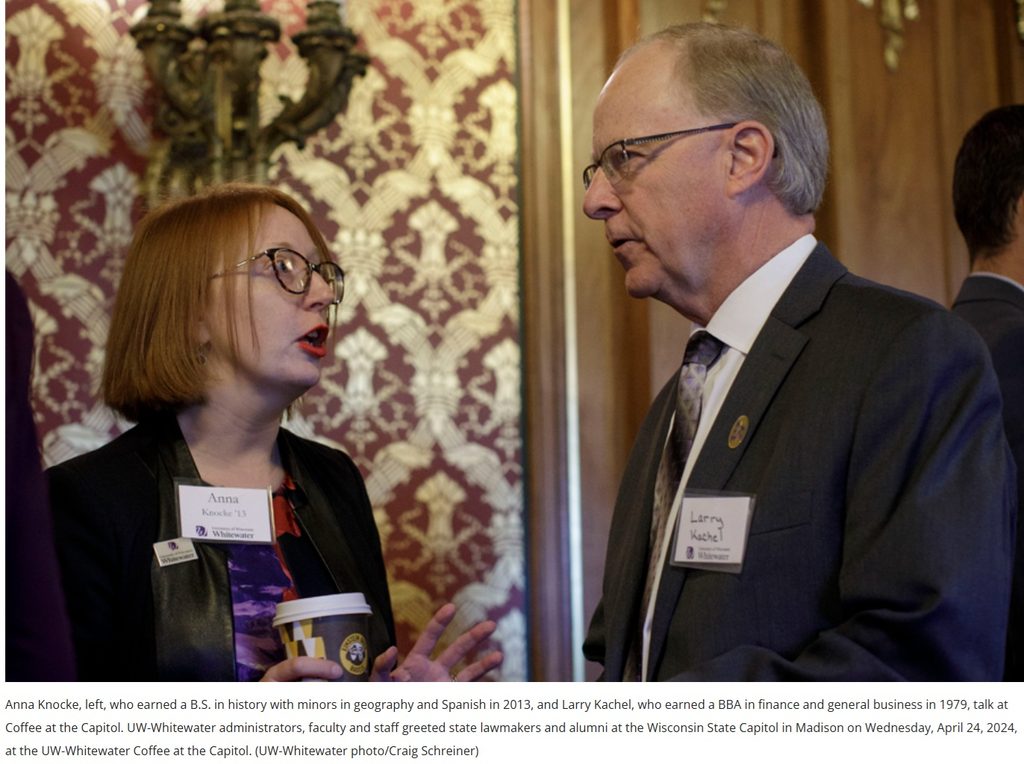
Larry Kachel ‘79, owner of Kachel Financial Group, is a business leader in the Whitewater and Brookfield communities and an advocate for the university, serving on the College of Education and Professional Studies Advisory Board and as a former co-president of the UW-Whitewater Alumni Association.
Mike Kachel ‘94, President of DLK Enterprises, is a member of the Chancellor’s Community Advisory Council and UW-Whitewater Athletics Hall of Fame Board of Directors.
All three family members have served on various chancellor, provost, dean, and athletics search and screen committees as community representatives.
Additional DLK Enterprises Board of Directors include: Linda Kachel, an attorney in Sherman Oaks, California; David S. Kachel, president of Wisconsin Dairy Supply Co.; Thomas Kachel ‘87, self-employed investor and entrepreneur; and Kerri Kachel ‘81, retired science teacher at Whitewater High School.
For decades, members of the family have advocated for UW-Whitewater and shared the story of the institution’s impact with stakeholders at the local, state and federal level, working with members of multiple political parties.
“The impact of this relationship can be seen across campus, throughout the local economy, and in the lives of students who carry their experiences here into the world,” said Mike Kachel. “As we look ahead, we remain committed to working alongside UW-Whitewater, keeping students at the center of our efforts and supporting the university’s goals. Whatever challenges and successes the future holds, we look forward to embracing them together.”
Whitewater Unified School District School Board Spring Election 2027 – 2 Open Seats
Residents of the Whitewater Unified School District are encouraged to consider seeking a position on the School Board. The final day for filing is Tuesday, January 5, 2027, by 5:00 p.m.
Two seats will be on the spring ballot. The incumbents are Jeff Tortomasi and Maryann Zimmerman. Incumbents have until Monday, December 28, by 5:00 p.m. to file their Notification of Noncandidacy. Under section 120.06(6)(b)3m of state statutes, the District Clerk will give the public prompt notice if any incumbent files their Notification of Noncandidacy on the School Board Election page of the District website.
Any person who is a United States citizen and a qualified elector of the Whitewater Unified School District is legally qualified to become a member of the School Board. In addition, Board candidates should have a genuine interest in and devotion to public education, a willingness to give time and effort to the position, a capacity to understand people, and the ability to work cooperatively with others. The School Board is the District policy-making authority and is responsible to the public for the success of all education services offered by the District. This success is dependent on many individuals, but also upon each Board member’s understanding of the workings of the District-wide operations and each member’s ability to participate meaningfully in the decision-making process that governs the District.
The candidate filing documents may be obtained and filed at the office of the School Board Secretary at the Whitewater Unified School District Central Office, 419 South Elizabeth Street, Whitewater. School Board candidates do not circulate nomination papers, but the School Board Secretary, Christine Dodge, will assist to complete necessary filing documents.
CENTRAL OFFICE HOURS
Through Tuesday, December 22 M-Th, 7:30 a.m.-4:00 p.m./ F, 7:30 a.m.-3:30 p.m. Wednesday, December 23 through Friday, January 1 – The Central Office is Closed Monday, January 4 and Tuesday, January 5 7:30 a.m.-5:00 p.m. (5:00 p.m. is the deadline for filing candidacy paperwork on January 5)
Sheriff Fell is pleased to announce that the Rock County Sheriff’s Office will offer our final 2026 Snowmobile Safety Education Course on November 19, 2026, from 6:00 p.m. – 7:00 p.m., and December 5, 2026, from 8:00 a.m. – 2:30 p.m., at the Rock County Sheriff’s Office, 200 East U.S. Highway 14, Janesville, WI 53545. Students must attend both sessions to graduate.
Anyone born on or after January 1, 1985, is required to complete a Snowmobile Safety Education Course to legally operate a snowmobile in areas open to the public within Wisconsin. Students should be at least 12 years of age or turn 12 shortly after the class.
Snowmobile Safety Education Course
Session 1: November 19, from 6:00 p.m. – 7:00 p.m. @ Rock County Sheriff’s Office Session 2: December 5, from 8:00 a.m. – 2:30 p.m. @ Rock County Sheriff’s Office
Class size is limited to 30 students. Upon submission of the registration form, the submitter will see an onscreen confirmation message with course information.
The course fee of $10 per student will be collected at the first session. If the student is under 18 years old, a parent/guardian will need to attend the first session with the student. Students will receive course materials at the first session. Please direct any questions to Deputy Trevor Lund at trevor.lund@co.rock.wi.us.
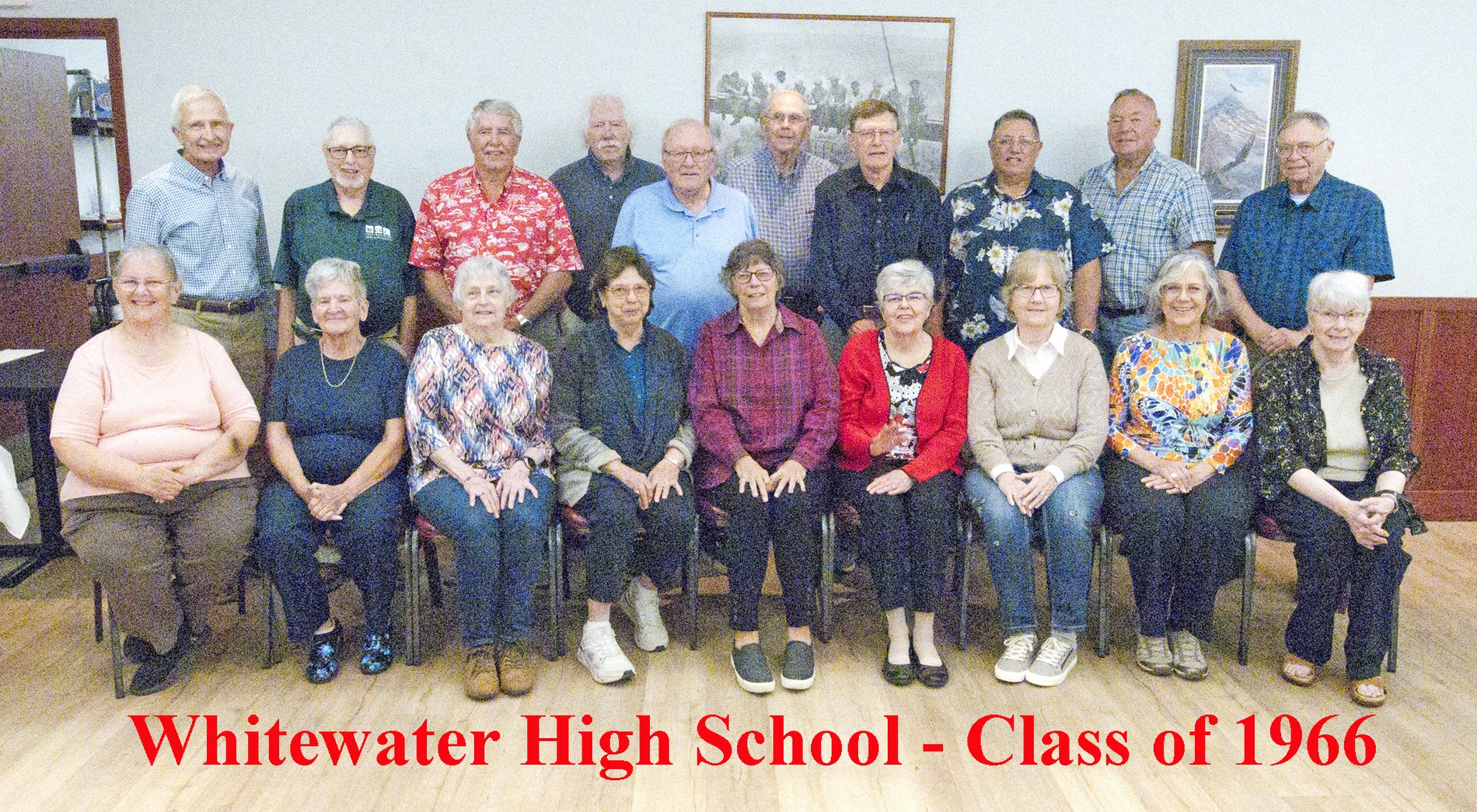
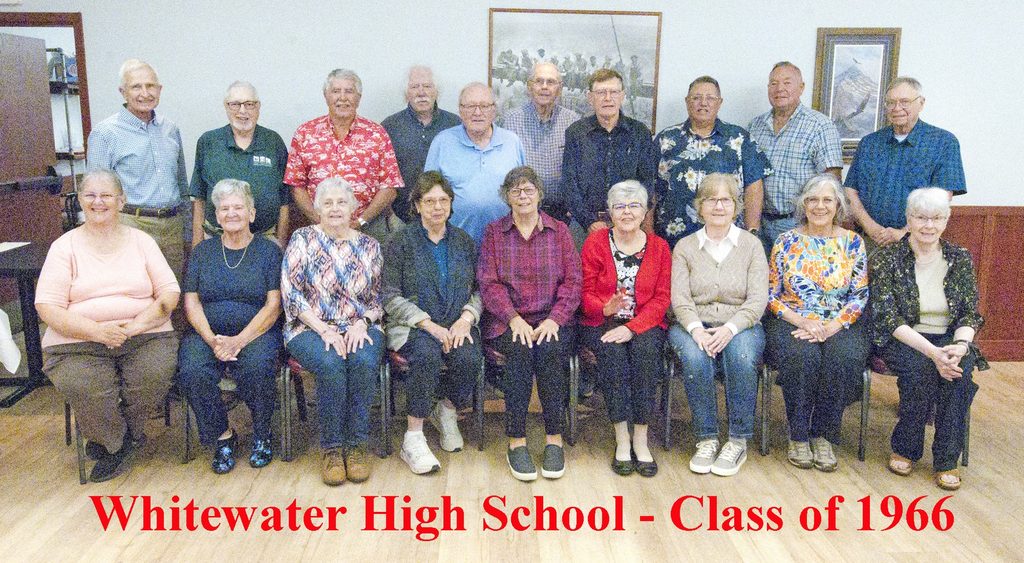
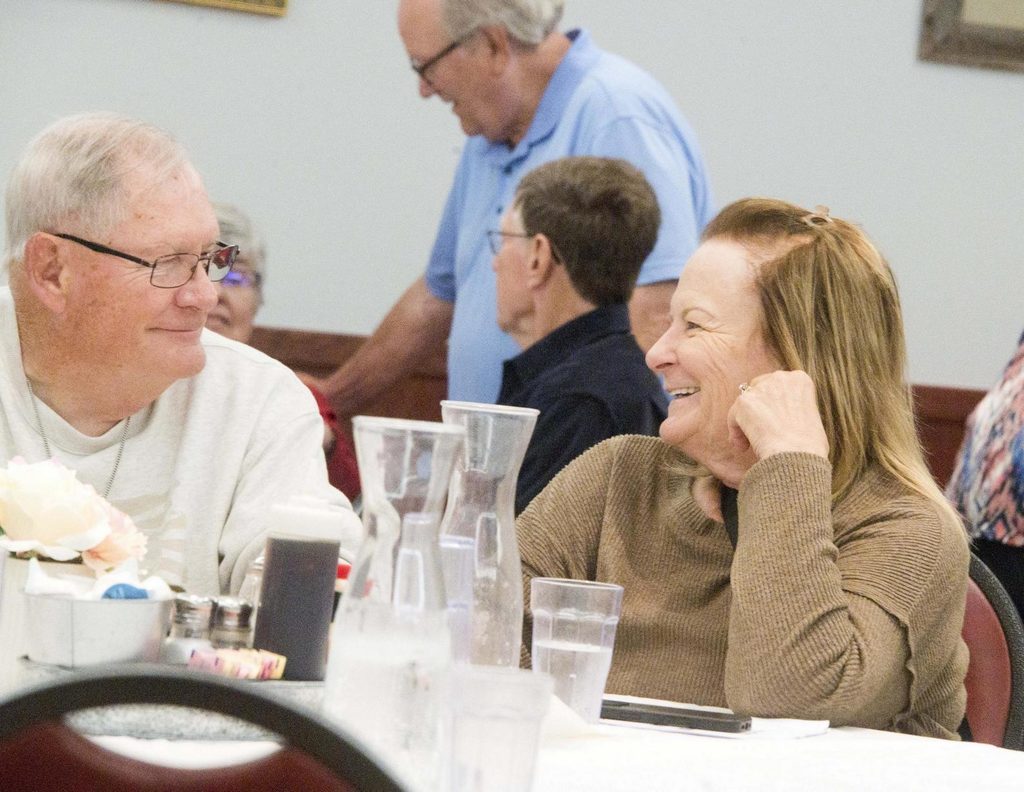
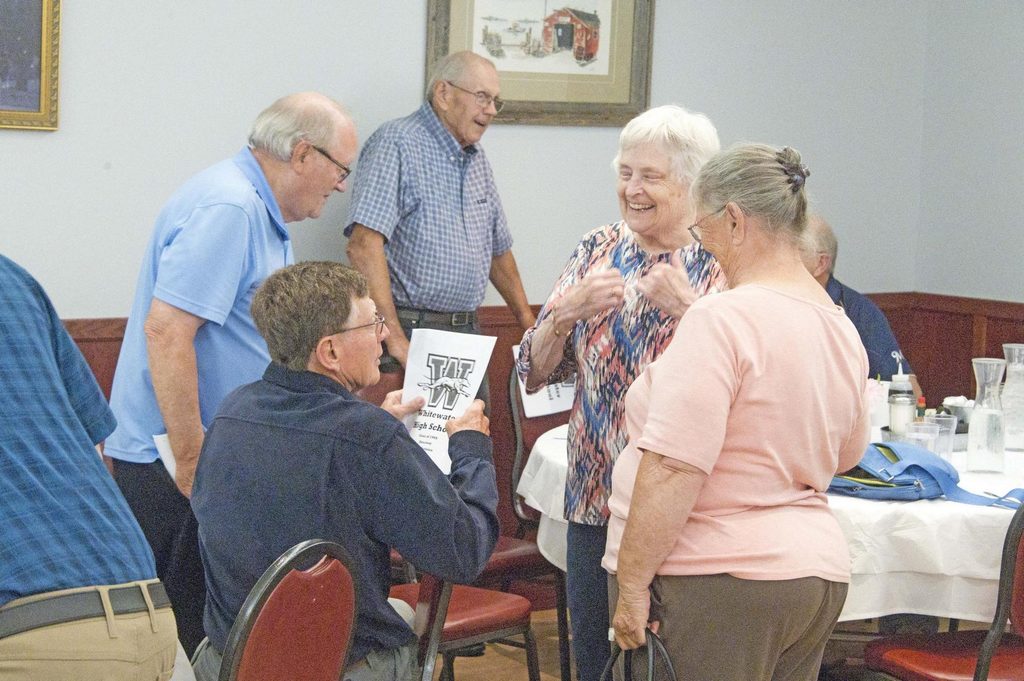
Whitewater High School – Class of 1966 – October 10, 2026
Jessica’s Family Restaurant in Whitewater.
Front row L to R Diane (Reinke) Read, Audrey (Deegan) Nelson, Christine (Miller) Niesen, Judy (Welter) Malone, Marilyn (Mead) Gavin, Sue (Zabel) Holden (Florida), Karen (Klitzke) Schoenbeck, Barbara Winn, Rosanne (Thubauville) Beattie (Minnesota)
Back row L to R William Berg, Larry Ketteman, Scott McKenzie, Murry Luebke, William Lothary, James Schlee, Arthur Holden (Florida), Larry Nugent, David Hintz, Robert Beattie (Minnesota)
Join the Parks and Recreation’s Youth Basketball program! Our Little Dribblers and Shooting Stars boys and girls basketball program focuses on introducing young athletes to the fundamentals of the game in a fun, supportive, and encouraging environment. Players develop essential skills such as dribbling, passing, shooting, and footwork through engaging drills and team-based activities. Beyond basic mechanics, children learn key values like teamwork, sportsmanship, and listening skills while making new friends on the court. Little Dribblers is open for kids in kindergarten or 1st Grade, and Shooting Stars is open for 2nd and 3rd.
Sign up today at wwparks.org, or contact Maddi Reichert at mrecob@whitewater-wi.gov or (262) 473-0119. Registration is open until October 31st, with late registration until November 4.